CM Bhupendra Patel backs MP's E20 fuel experiment
Synopsis
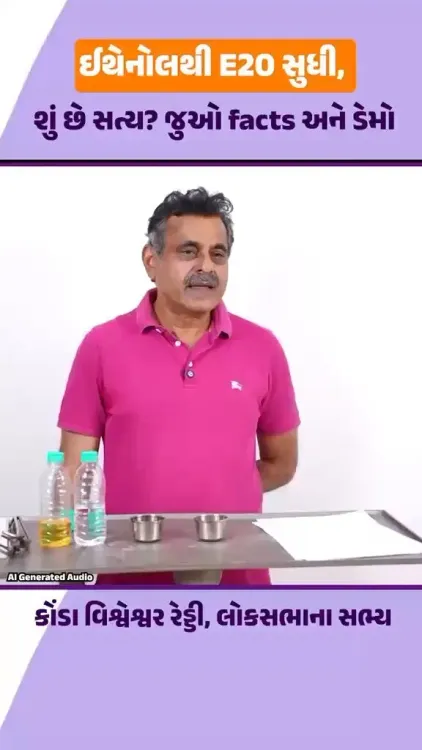
Gujarat CM Bhupendra Patel backed MP Konda Vishweshwar Reddy's live E20 fuel experiment on 12 August 2026, arguing it demolishes misinformation about ethanol blending and advances India's goals of cleaner air, farmer income support, and reduced crude oil imports.
Key Takeaways
Gujarat CM Bhupendra Patel publicly endorsed MP Konda Vishweshwar Reddy's live E20 fuel experiment on 12 August 2026 .
E20 fuel contains 20% ethanol blended with petrol, targeting reduced emissions and lower crude oil imports.
India's 2018 National Biofuel Policy set a 20% blending target , originally aimed at 2025 .
Ethanol is produced domestically — primarily from sugarcane — benefiting farmers and cutting foreign exchange outflows on crude imports.
CM Patel framed the issue as a triple win: cleaner environment, higher farmer incomes, and stronger energy self-reliance under Atmanirbhar Bharat .
The next key milestone is the state-level rollout of E20 pumps and updated blending data from the Ministry of Petroleum for 2025–26 .
A single experiment by a sitting Member of Parliament is being held up as the clearest answer yet to doubts swirling around India's ethanol blending push. Gujarat Chief Minister Bhupendra Patel on Wednesday, 12 August 2026, endorsed the live demonstration conducted by MP Konda Vishweshwar Reddy as definitive proof that E20 fuel works — and that the fears being spread about it are unfounded.
Writing in Gujarati, CM Patel said MP Reddy's experiment would 'સંપૂર્ણપણે દૂર કરી દેશે' ('completely dispel') the rumours and misconceptions being spread about E20 fuel and ethanol blending. His post framed the issue across three interlocking benefits: cleaner air, stronger farmer incomes, and reduced dependence on foreign oil.
What E20 actually is — and why the rumours matter
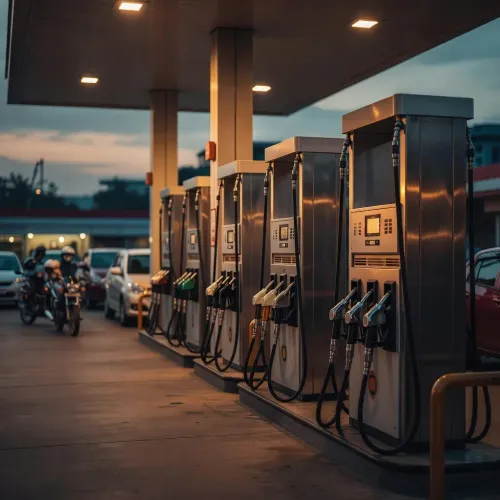
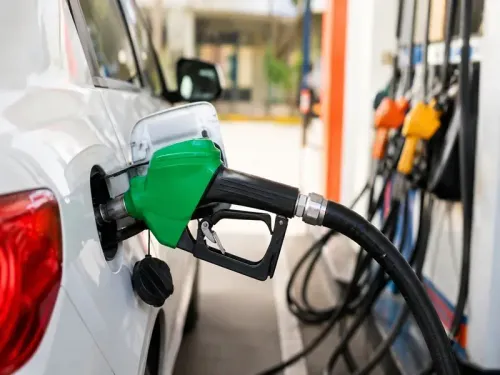
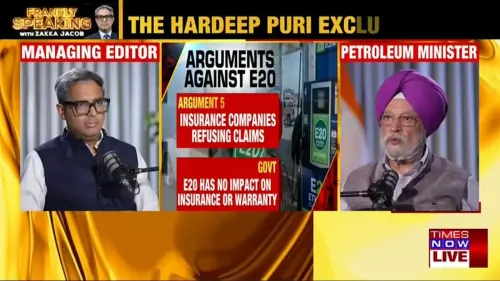
E20 is petrol blended with 20% ethanol, the cornerstone of India's Ethanol Blended Petrol Programme. The central government set a 20% blending target under the 2018 National Biofuel Policy, originally aiming to hit it by 2025. Misinformation about engine damage, mileage loss, and vehicle incompatibility has been a persistent headwind — which is precisely why a real-world, on-camera test by a public figure carries political weight.
CM Patel's post made a pointed contrast: ethanol is produced by Indian farmers and domestic factories, while petrol requires costly foreign imports. Every litre of ethanol blended is a litre of crude oil India does not have to buy from abroad. That is the arithmetic behind Atmanirbhar Bharat's biofuel plank.
Farmers, fuel pumps, and the blending chain
The beneficiaries are not abstract. Sugarcane farmers — among the most politically significant agricultural constituencies in India — receive an assured offtake channel when distilleries convert their produce into ethanol. India has pursued this linkage since the mid-2000s, steadily expanding distillery capacity and negotiating vehicle-compatibility standards with automakers.
The next visible milestone is the state-level rollout of dedicated E20 pumps and updated blending figures from the Ministry of Petroleum for 2025–26. Gujarat, as a state with an established industrial and agricultural base, sits squarely in the middle of that expansion.
CM Patel closed with a call to action: 'આત્મનિર્ભર અને હરિયાળા ભારત તરફ આગળ વધીએ' — 'Let us move toward a self-reliant and green India.' The kicker is that the experiment does the arguing so the policy doesn't have to.
Point of View
The BJP attempts to shift the E20 debate from technocratic policy documents to lived, visible proof. The move is consistent with the party's broader pattern of using grassroots optics to neutralise urban scepticism around fuel and agricultural reforms. With E20 pump rollouts still patchy across states, countering misinformation early is as much about political management of the transition as it is about environmental messaging. Gujarat's voice here also signals that state governments are being enlisted as active advocates, not passive implementers, of the national biofuel target.
NationPress
12 Aug 2026
Frequently Asked Questions
What is E20 fuel and is it safe for my car?
E20 is petrol blended with 20% ethanol, promoted under India's National Biofuel Policy. The government and automakers have worked on vehicle compatibility standards; newer vehicles are generally rated for E20 use, though owners of older vehicles should check manufacturer guidelines.
Why did Gujarat CM Bhupendra Patel post about E20 fuel?
CM Patel shared MP Konda Vishweshwar Reddy's personal experiment with E20 fuel on 12 August 2026 to counter rumours about its safety and effectiveness, framing ethanol blending as beneficial for the environment, farmers, and India's energy independence.
Who is MP Konda Vishweshwar Reddy and what experiment did he conduct?
Konda Vishweshwar Reddy is a Member of Parliament who conducted a live demonstration using E20 fuel to show its real-world viability. CM Patel cited this experiment as evidence that concerns about ethanol blending are unfounded.
How does ethanol blending help Indian farmers?
Ethanol in India is largely produced from sugarcane. The Ethanol Blended Petrol Programme gives sugarcane farmers an assured additional buyer — distilleries that supply oil marketing companies — which supports their income beyond the traditional sugar market.
What is India's ethanol blending target and has it been achieved?
India's 2018 National Biofuel Policy set a target of 20% ethanol blending in petrol, originally by 2025. The government has been progressively scaling up blending percentages; the Ministry of Petroleum's figures for 2025-26 will indicate how close the country is to the full E20 target.