Kejriwal Announces 3 New Free Pilgrimage Routes Under Punjab Scheme
Synopsis
Punjab's Mukhyamantri Tirth Yatra Yojana adds three new free pilgrimage routes — Haridwar-Rishikesh, Mathura-Vrindavan, and Salasar-Khatu Shyam — covering hotels, meals, and luxury bus travel at no cost to pilgrims, AAP convenor Arvind Kejriwal announced on 12 August 2026.
Key Takeaways
The Punjab government launched 3 new routes under Mukhyamantri Tirth Yatra Yojana on 12 August 2026 .
New routes cover Haridwar-Rishikesh (Uttarakhand), Mathura-Vrindavan (Uttar Pradesh), and Salasar-Khatu Shyam (Rajasthan).
Pilgrims bear zero cost — hotels, food, and luxury bus travel are fully funded by the state.
The scheme is implemented by the AAP government under Chief Minister Bhagwant Mann .
The model mirrors a similar free pilgrimage programme previously run by AAP in Delhi .
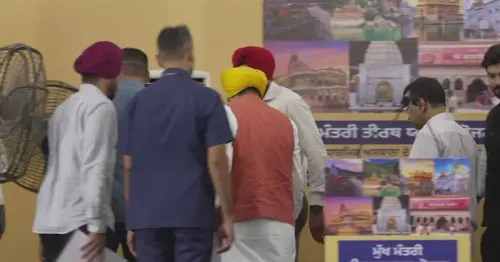
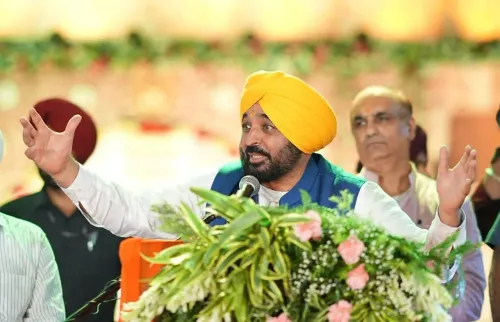
Three sacred journeys — to Haridwar-Rishikesh, Mathura-Vrindavan, and Salasar-Khatu Shyam — are now open to Punjab residents at zero cost, as the state's Mukhyamantri Tirth Yatra Yojana expands its reach on Wednesday, 12 August 2026. AAP convenor Arvind Kejriwal announced the addition of the three new routes, promising pilgrims luxury buses, quality hotels, and full board — all arranged and paid for by the Punjab government.
Posting in Hindi, Kejriwal declared: 'From today, 3 new routes have been launched under Punjab's Mukhyamantri Tirth Yatra Yojana: Haridwar-Rishikesh, Mathura-Vrindavan, and Salasar-Khatu Shyam. Heartiest congratulations to all. Pilgrims will not need to spend even a single paisa. The Punjab government is arranging all facilities including the best hotels, food, and luxury buses.'
Three routes, three major pilgrimage belts
The newly added destinations span three states and three distinct devotional traditions. Haridwar and Rishikesh in Uttarakhand sit at the gateway of the Himalayas, drawing millions of Hindu pilgrims to the banks of the Ganga each year. Mathura and Vrindavan in Uttar Pradesh are the birthplace and childhood home of Lord Krishna, among the most visited sacred towns in northern India. Salasar and Khatu Shyam in Rajasthan anchor a devoted following, particularly among communities from Punjab and Haryana who revere Khatu Shyam — a form of Barbarika — as a presiding deity. By connecting Punjab's pilgrims to all three belts in a single policy move, the AAP-led Punjab government under Chief Minister Bhagwant Mann is extending the scheme's geographic footprint from Uttarakhand's river towns to Rajasthan's temple circuits.What the scheme covers — and who it serves
Under the Mukhyamantri Tirth Yatra Yojana, the state bears the full cost of the pilgrimage: transport on luxury buses, accommodation in quality hotels, and meals throughout the journey. Residents are not required to pay anything out of pocket. The scheme targets devotees — particularly senior citizens and those from lower-income households — who might otherwise find long-distance pilgrimage financially out of reach. Free or subsidised pilgrimage schemes have been a recurring feature of Indian state-level welfare politics across party lines, but the AAP model in Punjab mirrors the template Kejriwal's government deployed in Delhi, where a similar Mukhyamantri Tirth Yatra Yojana for Delhi residents ran for several years. Expanding the programme to new routes is a visible, constituency-friendly signal from a government that has staked much of its identity on direct-benefit welfare delivery.Pilgrims, logistics, and what comes next
The Punjab government will manage registrations, bus scheduling, and hotel coordination for all three new routes. Devotees interested in travelling under the scheme are expected to register through official state channels. The number of beneficiaries already enrolled in the scheme and the frequency of departures on the new routes had not been officially confirmed at the time of the announcement. With three high-footfall pilgrimage corridors now added, the pressure on the government to scale logistics smoothly will be immediate — and the political dividend, for a party that goes into every election on its welfare record, equally direct.Point of View
Direct-benefit welfare schemes that generate grassroots goodwill ahead of electoral cycles. By replicating and scaling the Delhi pilgrimage model in Punjab, the party is reinforcing its brand as a governance-first movement rather than an ideological one. The choice of destinations — spanning Uttarakhand, Uttar Pradesh, and Rajasthan — also signals an intent to connect Punjab's diverse devotional communities to circuits that rival parties have long claimed cultural ownership over. Whether the scheme's logistics can match its ambition will determine how durable the political dividend proves to be.
NationPress
13 Aug 2026
Frequently Asked Questions
What is the Mukhyamantri Tirth Yatra Yojana in Punjab?
It is a Punjab government welfare scheme that provides free pilgrimage travel to residents, covering luxury bus transport, hotel accommodation, and meals at no cost to pilgrims.
Which new routes were added to Punjab's Tirth Yatra Yojana in August 2026?
The three new routes added on 12 August 2026 are Haridwar-Rishikesh, Mathura-Vrindavan, and Salasar-Khatu Shyam.
Who announced the new pilgrimage routes under the Punjab scheme?
AAP national convenor Arvind Kejriwal announced the new routes on social media, with the scheme implemented by the Punjab government led by Chief Minister Bhagwant Mann.
Do pilgrims have to pay anything under Punjab's free pilgrimage scheme?
No. The Punjab government covers all expenses including luxury bus travel, quality hotel stays, and food. Pilgrims are not required to spend any money.
How can Punjab residents register for the Mukhyamantri Tirth Yatra Yojana?
Registration is handled through official Punjab government channels; prospective pilgrims should check the state government's official portal or local administrative offices for enrolment details.