Are Jamaat-e-Islami's Rebranding Efforts in Bangladesh Just an Illusion?
Synopsis
Bangladesh is at a critical juncture as Jamaat-e-Islami attempts to rebrand itself amidst rising radicalism. With national elections approaching, the struggle between moderate voices and extremist factions is intensifying.
Key Takeaways
Bangladesh is facing political instability due to the rise of radical forces.
Jamaat-e-Islami is attempting to rebrand itself as a moderate party.
The upcoming elections could significantly impact the country's future.
Concerns grow regarding the safety of minority communities.
International attention is focused on the developments in Bangladesh.
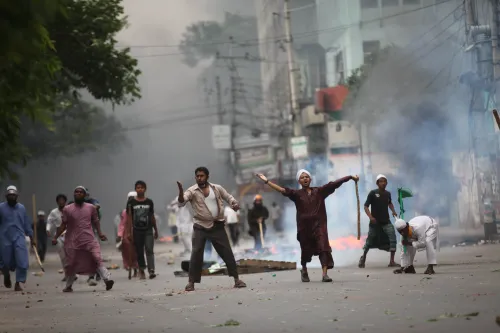
New Delhi, Dec 28 (NationPress) The forced removal of the Sheikh Hasina-led government in Bangladesh last year has fostered an environment where radical, fundamentalist, and Islamist factions are emerging, propelling the nation towards instability and disorder.
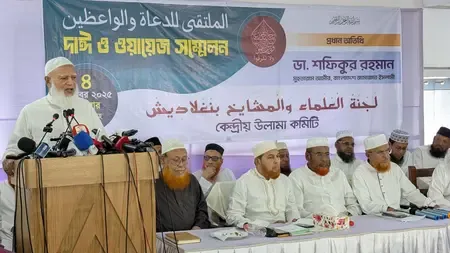
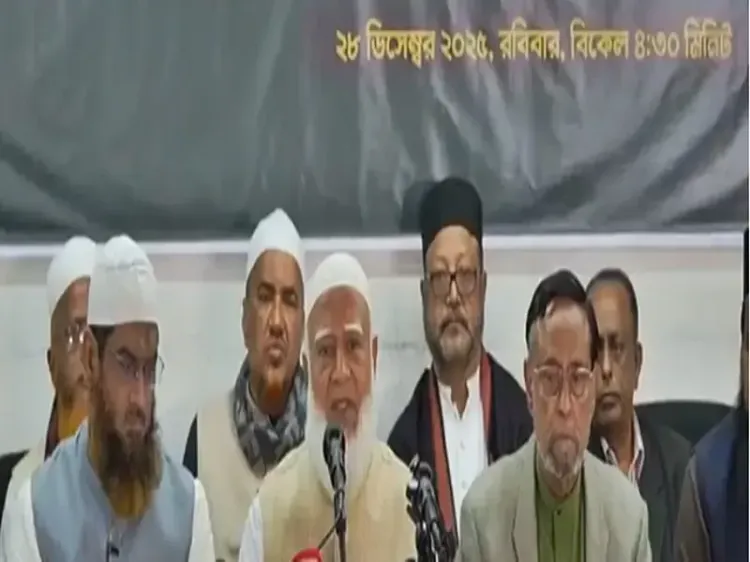
Bangladesh Jamaat-e-Islami (BJI), a radical group, has been vigorously pursuing its political revival, striving to present itself as a moderate and inclusive entity while attempting to reshape its public persona through claims of being "anti-fascist." Nevertheless, Jamaat’s assertions and initiatives have merely laid bare its sinister core, revealing its blatant support for radical groups and criminal organizations, alongside its deep-rooted animosity towards minorities.
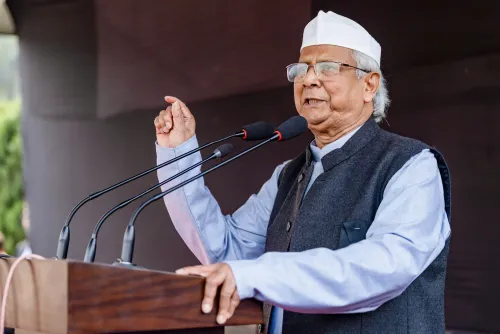
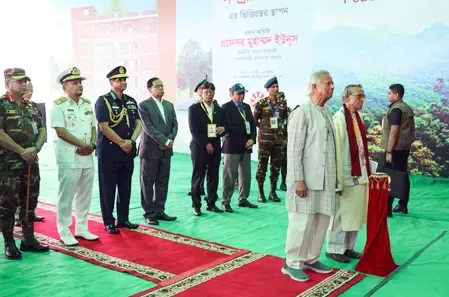
Currently, Bangladesh, under the interim leadership of Muhammad Yunus, finds itself at a pivotal juncture, where citizens face a clear choice between moderate voices and extremist factions. Despite Yunus’ persistent calls for peace and unity, the political landscape of the country continues to lean towards Islamic radicalism, with mainstream dialogue increasingly tainted by intolerance and animosity — traits that embody the ideological foundation of Bangladesh Jamaat-e-Islami.
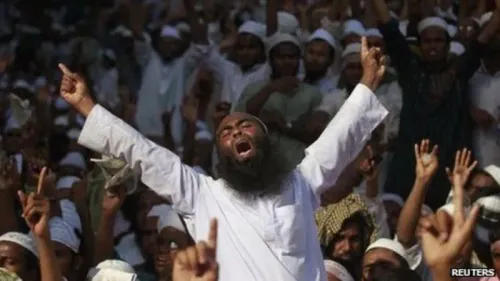
Although Jamaat has attempted to distance itself from its extremist reputation and present itself as a “pro-uprising” force, these efforts are merely superficial. The radical organization has shown an inability to shed its history of violence and continues to perpetuate what many observers label as an “environment of hatred” directed towards the nation’s minority communities.
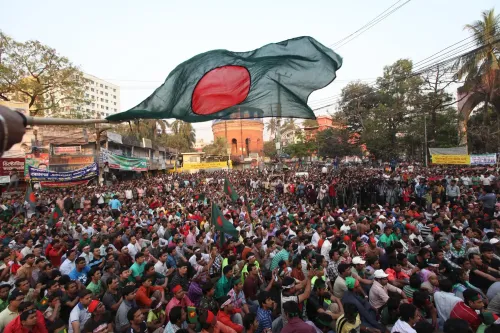
The party has also sought to align itself as an “anti-fascist” and “pro-uprising” force by drawing parallels between the sacrifices of 1971 and those of 2024, framing the latter as Bangladesh’s “second and true independence.”
However, Jamaat-e-Islami’s allegiance to Sharia-based governance and its contempt for constitutional or secular laws are well-documented.
“Jamaat has consistently advocated for Islamic governance over electoral outcomes, asserting that the state would operate based on Islamic principles if it obtains electoral dominance, as the existing constitution and laws are deemed man-made,” stated a report by the International Science for Peace Studies, a research institute focused on South and West Asia.
In the past year, Bangladesh’s political turmoil has coincided with a resurgence of Jamaat and a notable shift toward Islamic rhetoric in mainstream politics.
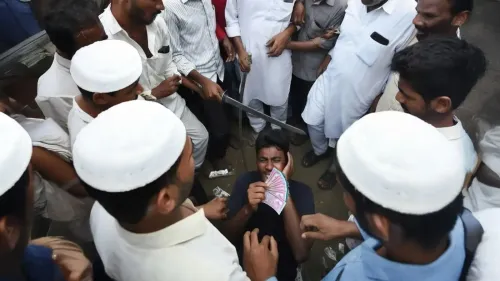
“The nation has experienced an uptick in mob violence fueled by the ascendance of Islamist radicalism. Should Jamaat gain political power, it is likely to further Islamize Bangladesh’s political landscape and legitimize such violence,” the report expressed.
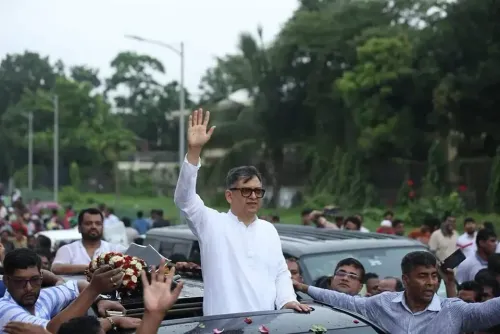
Importantly, Bangladesh’s national elections are set for February 12 next year — the first since the downfall of the Sheikh Hasina-led government. With the Awami League excluded from electoral participation, the Bangladesh Nationalist Party (BNP), Bangladesh Jamaat-e-Islami (BJI), and the National Citizen’s Party (NCP) are the main contenders.
While the BNP is anticipated to contest independently, Jamaat-e-Islami has formed an electoral alliance with seven “like-minded” parties for the upcoming polls.
Point of View
It is crucial to remain impartial while highlighting the rising tensions in Bangladesh. The nation's political landscape is witnessing a significant shift, with the potential for radical elements to gain influence. We must carefully analyze these developments to ensure a comprehensive understanding of their impact on the future.
NationPress
25 Sept 2026
Frequently Asked Questions
What is the current political situation in Bangladesh?
Bangladesh is experiencing a political upheaval following the ousting of Sheikh Hasina's government, leading to a rise in radical forces.
What role does Jamaat-e-Islami play in this context?
Jamaat-e-Islami is attempting to rebrand itself as a moderate political force, despite its radical history and ongoing support for extremist elements.
What are the implications of the upcoming elections?
The national elections scheduled for February 12 could significantly impact Bangladesh's political landscape, especially with Jamaat forming alliances with other parties.
How does this situation affect minorities in Bangladesh?
The rise of radicalism and Jamaat's rhetoric raises concerns about increasing hostility and violence against minority communities in Bangladesh.
What is the international perspective on this situation?
International observers are closely monitoring the situation, as the rise of Islamist radicalism poses challenges to regional stability and democratic values.