Is Jamaat's Influence Driving NCP to the Brink Before Elections?
Synopsis
As Bangladesh gears up for elections on February 12, the National Citizens Party faces existential challenges. Once aligned with Jamaat-e-Islami, internal discord is forcing leaders to reconsider alliances. Will the NCP survive the political upheaval, or will Jamaat's grip lead to its demise? Discover the unfolding drama in Bangladesh's political landscape.
Key Takeaways
Bangladesh's elections are set for February 12.
The NCP faces significant internal strife.
Shifts away from Jamaat-e-Islami are evident among party members.
Increasing violence is a concern for voters.
Jamaat's limited seat offer has angered NCP leaders.
New Delhi, Dec 29 (NationPress) The interim government in Bangladesh, led by Muhammad Yunus, has made a commitment to conduct the much-awaited elections on February 12.
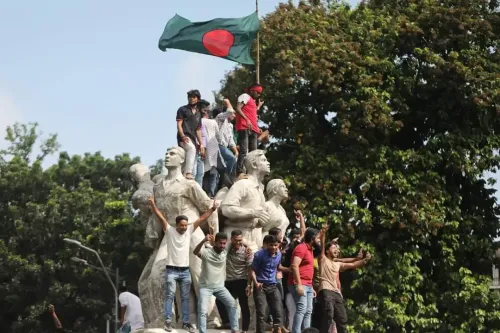
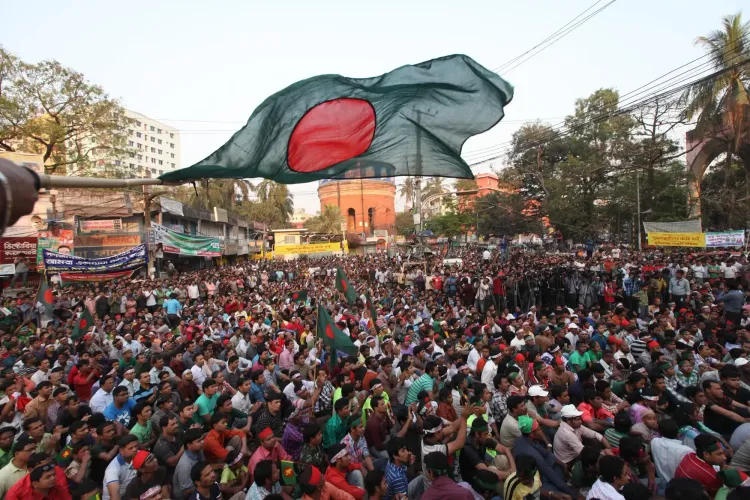
The path forward is fraught with challenges, as political affiliations are shifting quickly amid a rising tide of violence. The National Citizens Party (NCP), established by students who rallied to remove Sheikh Hasina, finds itself in turmoil.
Initially established with strong ties to Jamaat-e-Islami, many members of the NCP are now expressing doubts. While some advocate for alignment with Jamaat ahead of the elections, others believe the Bangladesh Nationalist Party (BNP) may be a more advantageous option. A faction has opted to contest the elections as independents.
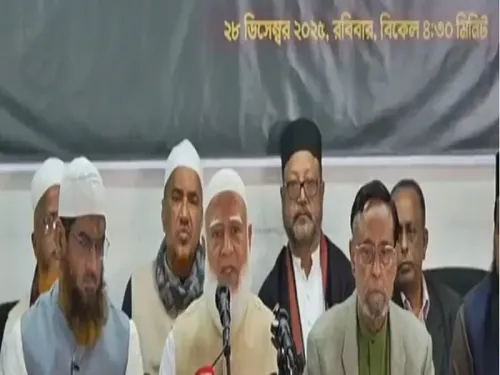
Observers of Bangladeshi politics suggest that this distancing from Jamaat is not a spontaneous development. Many have come to the conclusion that allowing Jamaat to dominate would essentially equate to surrendering the nation to Pakistan. Such sentiments have found support among political experts.
The recent welcoming of ISI, the relaxation of visa policies, and the establishment of a maritime route to Pakistan are viewed as alarming trends by many. There is a growing perception that the ISI aims to transform Bangladesh into a base for terrorism targeting India.
Political analysts argue that the very students who once protested against Sheikh Hasina, citing disorder, now understand that Jamaat’s leadership would plunge the country into further chaos.
Bangladesh has been attracting negative attention due to its declining economy, increasing ties with Pakistan, targeting of minorities, and persistent violence. Students fear that if Jamaat assumes power, these issues will become the new norm, stalling progress and pushing for the implementation of Sharia law, turning the nation into an Islamic state.
Beyond ideological rifts, there are significant political disagreements. Jamaat has proposed only 30 seats in the 350-member Jatiya Sangsad for the NCP, a move that many within the party find unacceptable. They feel exploited, having been used to facilitate Jamaat's objective of ousting Hasina.
Some experts predict that given the current internal strife within the NCP, the party might dissolve before the elections occur. Daily reports of resignations and discord signal a precarious situation, particularly with factions favoring a coalition with the BNP.
The BNP is likely to proceed with caution regarding any potential alliances with the NCP, as it currently finds itself in a strong position. The BNP previously severed ties with Jamaat to avoid a violent ideology, and it does not wish to engage with a party perceived as pro-Jamaat. The rift within the NCP intensified following the resignation of Asrhadul Haque, a prominent leader who criticized Jamaat's control and its financial offer of Rs 1.5 crore Taka for each constituency.
Many students who spearheaded the protests against Hasina initially believed in the need for improved leadership. However, they have since realized that Jamaat's governance would yield no positive outcomes for Bangladesh, relegating it to a puppet state of Pakistan with little focus on development.
Initially, NCP leaders aimed to contest 125 seats, but the disappointing offer from Jamaat has sparked anger. Members are questioning the leadership's willingness to concede too much to Jamaat when the original strategy was to run independently.
Tanjuva Jabeen, the NCP's joint convener, publicly declared her intent to run as an independent candidate from Dhaka-9 after resigning, expressing her opposition to any alliance with Jamaat.
Observers note that Jamaat has effectively fractured the NCP, aiming to avoid a split in votes and preferring a direct contest with the BNP.
Experts warn that Jamaat may ultimately lead to the dissolution of the NCP before or shortly after the elections.
Point of View
The situation in Bangladesh is a complex interplay of political ideologies and shifting alliances. The NCP's struggle highlights the challenges faced by emerging parties in a turbulent political environment. It is crucial to observe how these dynamics unfold as the country approaches the elections, potentially reshaping its future.
NationPress
30 Sept 2026
Frequently Asked Questions
What is the current political situation in Bangladesh?
Bangladesh is preparing for elections scheduled on February 12, with significant internal discord within the National Citizens Party and increasing tensions surrounding Jamaat-e-Islami's influence.
Why are students distancing from Jamaat-e-Islami?
Students and party members are concerned that Jamaat's leadership would lead to further violence and a regression of democratic principles in Bangladesh.
What are the implications of the NCP's internal conflicts?
The internal strife within the NCP could lead to its dissolution before the elections, affecting its ability to compete effectively against major parties.