Did the US House of Representatives Just Tighten Security Measures Against China?
Synopsis
The US House of Representatives has passed a significant funding bill to tighten security measures against China. This legislation aims to enhance export controls, boost trade enforcement, and limit federal technology purchases. It’s a pivotal move in the ongoing efforts to tackle unfair trade practices and protect American interests.
Key Takeaways
Increased export controls on sensitive technologies to China.
Enhanced funding for trade enforcement efforts.
Restrictions on federal technology purchases without security reviews.
Limits on US-China scientific collaboration.
New reporting requirements for official travel to China.
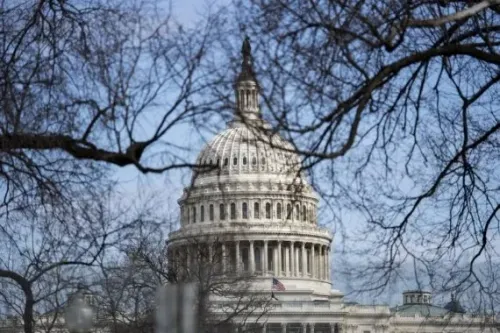
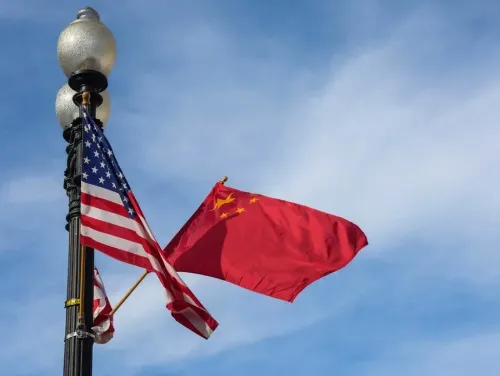
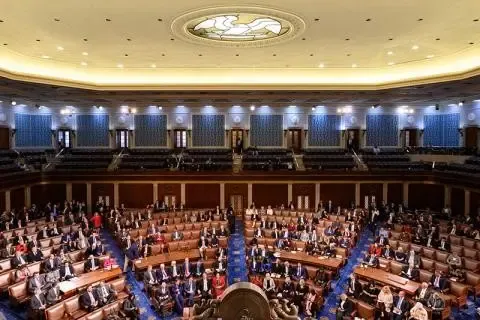
Washington, Jan 9 (NationPress) The US House of Representatives has enacted a funding bill aimed at enhancing export controls, increasing trade enforcement, limiting federal technology acquisitions, and reducing collaboration with China.
This legislation allocates more funds for the enforcement of export controls, designates resources for pursuing trade cases linked to China, prohibits certain federal IT purchases unless they undergo security assessments, and restricts US-China cooperation in fields such as science and space.
Additionally, it includes new reporting obligations for official travel to China and provisions related to energy and nuclear security.
The bill features a $44 million increase for the Bureau of Industry and Security, raising its funding to a total of $235 million. According to the House Select Committee on Strategic Competition between the United States and the Chinese Communist Party, the additional funding will enhance the enforcement of export controls to prevent sensitive US technology from being acquired by the Chinese Communist Party.
Moreover, it designates $16.4 million for the enforcement of anti-dumping and countervailing duties related to China. Proponents argue that this funding is essential for safeguarding American workers and manufacturers against unfair trade practices.
The legislation imposes restrictions on federal agencies concerning the procurement of specific technologies. It bars the Departments of Commerce and Justice, along with NASA and the National Science Foundation, from purchasing IT systems unless comprehensive supply-chain and cybersecurity risk evaluations are conducted. These evaluations must consider the influence of foreign adversaries, particularly China.
Another significant aspect is the limitations on US-China cooperation. The bill prohibits NASA and the Office of Science and Technology Policy from entering into bilateral agreements or cooperation with China or Chinese-owned entities unless explicitly authorized by Congress.
Increased oversight of official travel is also mandated. It requires the Departments of Commerce, NASA, and the National Science Foundation to provide quarterly reports to Congress detailing employee trips to China and their purposes.
Provisions concerning energy and nuclear security are also included. The legislation forbids the sale of crude oil from the Strategic Petroleum Reserve to the Chinese Communist Party. Furthermore, it restricts citizens of China and Russia from accessing US nuclear weapons facilities and prevents the Department of Energy from offering financial aid to any foreign entity deemed a concern.
This funding package encompasses the Departments of Commerce, Justice, and Interior, along with agencies like NASA, the Army Corps of Engineers, and the Environmental Protection Agency. The China-related provisions received support from Select Committee Chairman John Moolenaar in his capacity on the House Appropriations Committee.
“China has spent decades exploiting American openness to advance its authoritarian ambitions,” Moolenaar stated. “This legislation dedicates more resources to enforcing export controls and addressing Chinese trade abuses, while also safeguarding taxpayer dollars, technology, and energy assets from being leveraged to benefit our most significant strategic adversary.”
The House Select Committee on Strategic Competition was established to assess the economic, technological, and security challenges posed by China. The panel is concentrating on tightening controls and mitigating exposure across federal programs.
Point of View
I recognize the importance of this legislative action in addressing the growing concerns regarding China's influence on American technology and trade. While the measures may be seen as a necessary step for national security, it's essential to balance these actions with constructive dialogue and cooperation where possible. This approach ensures that the U.S. remains a leader in innovation while safeguarding its interests.
NationPress
24 Sept 2026
Frequently Asked Questions
What does the new legislation entail?
The legislation tightens export controls, boosts trade enforcement, restricts federal technology purchases, and limits cooperation with China.
How much funding is allocated for the Bureau of Industry and Security?
The bill provides a $44 million increase, bringing the total funding for the Bureau of Industry and Security to $235 million.
What are the implications for US-China cooperation?
The bill bars NASA and the Office of Science and Technology Policy from engaging in bilateral cooperation with China unless authorized by Congress.
What measures are included for energy and nuclear security?
The legislation prohibits the sale of crude oil from the Strategic Petroleum Reserve to the Chinese Communist Party and restricts access to US nuclear facilities for citizens of China and Russia.