US bipartisan bill targets Chinese farmland buys near military sites
Synopsis
US lawmakers are pushing the most expansive crackdown yet on foreign adversary land ownership — broadening CFIUS powers, creating a new 'elevated risk' real estate category, and simultaneously moving to ban Chinese vehicles from American roads. The dual-track legislative push signals Washington's sharpening focus on Chinese economic and technological penetration of critical infrastructure.
Key Takeaways
Select Committee on China Chairman John Moolenaar introduced the Protecting US Farmland and Sensitive Sites from Foreign Adversaries Act on 8 May .
The bill expands CFIUS authority to review real estate deals linked to China, Russia, Iran, and North Korea .
A new 'elevated risk real estate transactions' category covers farmland, ports, telecom infrastructure, and property near military and intelligence facilities.
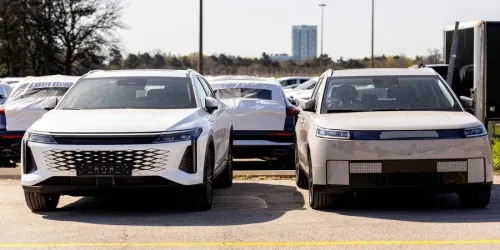
Moolenaar and Congresswoman Debbie Dingell also announced separate legislation to ban Chinese vehicles from US roads.
A bipartisan Senate delegation led by Steve Daines held meetings in Beijing with Premier Li Qiang and Foreign Minister Wang Yi , discussing fentanyl, supply chains, and agricultural trade.
A bipartisan group of US lawmakers on 8 May moved to tighten restrictions on Chinese and other foreign adversary purchases of American farmland and property near sensitive military and infrastructure sites, reflecting growing concerns in Washington over national security and food security. The legislative push marks one of the most sweeping attempts yet to close loopholes in foreign land ownership oversight.
The Farmland Protection Bill
Select Committee on China Chairman John Moolenaar introduced the
Point of View
Which is rare in today's Congress and suggests the national security framing has overcome the usual partisan gridlock. The harder question is enforcement — CFIUS has historically been under-resourced relative to its mandate, and expanding its remit without a proportional capacity increase risks creating rules that look tough on paper but prove porous in practice.
NationPress
26 Sept 2026
Frequently Asked Questions
What is the Protecting US Farmland and Sensitive Sites from Foreign Adversaries Act?
It is a bipartisan US bill introduced by Select Committee on China Chairman John Moolenaar that seeks to expand CFIUS authority to review and block real estate purchases by entities linked to China, Russia, Iran, and North Korea near sensitive military and infrastructure sites. The bill creates a new category of 'elevated risk real estate transactions' covering farmland, ports, data centres, and property near military and intelligence facilities.
Why are US lawmakers concerned about Chinese farmland purchases?
Lawmakers argue that foreign adversary ownership of land near military bases, critical infrastructure, and communications networks poses an unresolvable national security risk. Select Committee Chairman Moolenaar stated that 'food security is national security' and warned that existing loopholes allow adversary-linked entities to acquire strategically sensitive American land.
What does the proposed Chinese vehicle ban involve?
Moolenaar and Congresswoman Debbie Dingell announced plans for separate bipartisan legislation to ban Chinese vehicles from US roads, citing concerns that modern vehicles are 'rolling data collection devices' capable of capturing real-time location, movement, and infrastructure data. The bill would prohibit Chinese vehicles or components from being part of that system.
Which lawmakers are backing the farmland bill?
The bill has bipartisan support from both Republican and Democratic lawmakers, including Representatives Josh Gottheimer, Jimmy Panetta, and Mike Thompson, in addition to lead sponsor John Moolenaar.
What is the broader context of these legislative moves?
The proposals come amid sustained US-China tensions over trade, technology, national security, and Taiwan. A separate bipartisan Senate delegation led by Steve Daines met Chinese Premier Li Qiang and Foreign Minister Wang Yi in Beijing to discuss fentanyl precursors, supply chain security, Iran, and agricultural trade, illustrating the complex and multi-front nature of the bilateral relationship.