New US Legislation Targets Chinese Influence in Military Cargo Transport
Synopsis
A US senator has introduced a bill aimed at preventing Chinese entities from managing military freight, addressing a critical security concern. The legislation includes strict vetting for trucking companies and emphasizes the need to protect sensitive information from adversaries.
Key Takeaways
New legislation introduced to block Chinese firms from military freight contracts.
Requires strict national security vetting for trucking companies.
Establishes a Secure Defence Freight Carrier Registry .
Applies to prime contractors and subcontractors alike.
Companies must maintain certification records for five years .
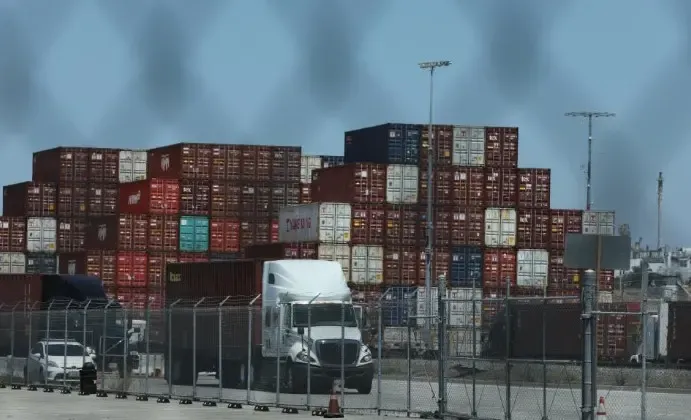
Washington, March 14 (NationPress) A US senator has proposed new legislation aimed at preventing Chinese nationals and businesses with ties to Beijing from managing sensitive military cargo for the United States, asserting that existing regulations leave a significant gap in national security.
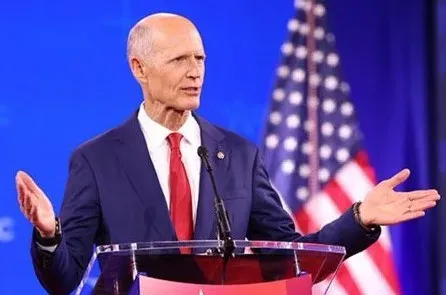
Senator Tom Cotton has put forward the Trucking Security and CCP Disclosure Act, a bill that mandates comprehensive national security evaluations for entities transporting Department of Defense cargo, thereby barring companies associated with China's military or the Chinese Communist Party (CCP) from obtaining such contracts.
This legislation requires trucking firms involved in the transport of US military freight to affirm that they possess no connections to the Chinese Communist Party or any Chinese organizations deemed a threat to national security.
“The Chinese Communist Party continues to gather intelligence on US military technology by taking advantage of truck drivers who manage Department of Defense cargo. My legislation will mandate thorough vetting for all individuals handling military freight, ensuring our adversaries cannot access sensitive information,” stated Cotton.
The bill also instructs the Federal Motor Carrier Safety Administration to create a Secure Defence Freight Carrier Registry—a roster of vetted carriers authorized to transport military goods.
According to the proposed law, trucking companies must prove they are not owned or overseen by Chinese military-affiliated organizations and have no substantial business ties with such firms.
The legislation is applicable not only to primary contractors but also to subcontractors and individual owner-operators engaged in the transportation of defense materials.
Under the bill, companies responsible for transporting Department of Defense cargo must provide a certification verifying they are not “owned or controlled by, and do not have significant business relationships with, any entity listed as a Chinese military company.”
Companies that knowingly submit inaccurate certifications could face suspension or exclusion from defense contracts, along with possible civil penalties.
The proposal mandates that firms maintain certification records for a minimum of five years and undergo periodic national security screenings.
A similar bill has been introduced in the House of Representatives by Representative Elise Stefanik.
Stefanik emphasized that this initiative is intended to address what lawmakers perceive as a serious loophole in current procurement regulations.
“It would astonish many Americans to learn that US law does not already prohibit the Chinese military from securing transportation contracts related to American defense projects. This bipartisan legislation eliminates that gap by establishing a definitive barrier between the Chinese Communist Party and Department of Defense contracts,” she noted.
“American taxpayer funds should never benefit our foremost adversary at the cost of US national security,” Stefanik added.
This legislative proposal emerges amid growing concerns in Washington regarding Chinese participation in supply chains tied to US defense initiatives.
Point of View
The proposed legislation reflects a proactive approach to safeguarding US national security. By ensuring that companies involved in military logistics are thoroughly vetted, lawmakers are addressing the growing concerns regarding foreign influence in critical supply chains.
NationPress
26 Sept 2026
Frequently Asked Questions
What is the main goal of the Trucking Security and CCP Disclosure Act?
The main goal of the Act is to prevent companies with ties to the Chinese Communist Party from managing sensitive military freight, thereby closing potential national security gaps.
Who introduced this legislation?
The legislation was introduced by US Senator Tom Cotton.
What are the consequences for companies that submit false certifications?
Companies that knowingly submit false certifications could face suspension or debarment from defense contracts, along with civil penalties.
What is the role of the Federal Motor Carrier Safety Administration in this legislation?
The Federal Motor Carrier Safety Administration is directed to establish a Secure Defence Freight Carrier Registry to approve carriers that pass national-security vetting.
Is there support for this legislation in Congress?
Yes, a companion bill has been introduced in the House of Representatives by Representative Elise Stefanik, indicating bipartisan support.