US bill targets Chinese tech firms DeepSeek, Unitree over spy concerns

Synopsis
A new US Senate bill takes aim at six Chinese tech firms — including AI giant DeepSeek and robotics company Unitree — branding them potential spy tools linked to the CCP and PLA. Allegations of a hidden remote-access tunnel in Unitree's robots and brainwave data collection by BrainCo on American schoolchildren give this legislation unusually specific teeth.
Key Takeaways
Senator Rick Scott introduced the 'Blocking CCP Spy Tech Act of 2026' in Washington .
The bill targets six Chinese firms — DeepSeek , Game Science , Unitree Robotics , DEEP Robotics , BrainCo , and Manycore Tech — collectively called the 'Six Little Dragons' .
US national security officials would have one year to assess whether the firms pose a threat; confirmed risks could land them on the FCC Covered List .
Unitree Robotics is alleged to have embedded a hidden remote-access tunnel called 'CloudSail' in its systems.
BrainCo reportedly collected brainwave data from students at a Boston school in 2019 and worked with Chinese universities linked to China's defence sector.
Senator Tom Cotton is a co-sponsor; the bill has yet to clear committee.
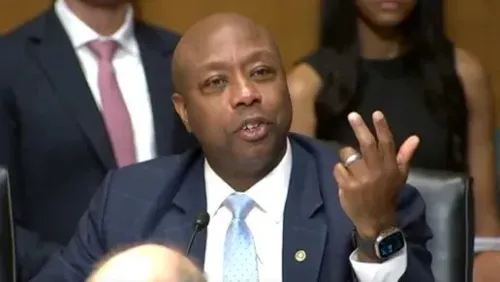
Republican Senator Rick Scott has introduced legislation in Washington that would compel US national security officials to assess whether a cluster of Chinese technology companies pose threats to American national security and public safety. The proposed 'Blocking CCP Spy Tech Act of 2026' specifically targets six firms collectively known as the 'Six Little Dragons' — DeepSeek, Game Science, Unitree Robotics, DEEP Robotics, BrainCo, and Manycore Tech.
What the Bill Proposes
Under the legislation, US national security officials would have one year to investigate whether equipment or services from the six companies threaten national security or public safety. If any firm is found to pose an unacceptable risk, it could be placed on the Federal Communications Commission's (FCC) 'Covered List' — a register of communications equipment and services formally designated as security threats.
All six companies are headquartered in Hangzhou, China, and are widely seen as central to Beijing's push into artificial intelligence, robotics, and digital technologies.
What Scott and Cotton Said
Senator Scott framed the legislation in stark terms. 'Communist China is not our friend. They have chosen to be our enemies and want to destroy us,' he said. He added: 'By prohibiting Communist Chinese companies from accessing American markets, US manufacturing will get a fairer playing field to create family-sustaining jobs. We can't let China steal from us without accountability, and this bill makes sure China can't keep taking advantage of hardworking Americans.'
Senator Tom Cotton, a co-sponsor of the bill, echoed the concern: 'Chinese technology threatens Americans' privacy and national security. Our bill would ban any Chinese technology that poses an unacceptable risk to security and safety from being sold in the United States.'
Key Allegations Against Specific Firms
Scott's office cited recent reporting alleging that Unitree Robotics had integrated an undocumented remote access tunnel called 'CloudSail' into its robotics systems, reportedly enabling connections to servers in China. The senator's office described this as a potential covert backdoor.
Separately, BrainCo — a neurotechnology firm — reportedly collected brainwave activity data and tested headsets on students at a Boston school in 2019. According to the senator's office, BrainCo also collaborated with several Chinese universities identified by the United States as linked to China's defence industry.
Broader Context
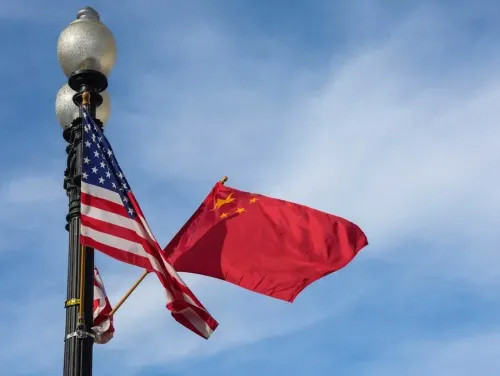
The bill arrives as Washington has sharply increased scrutiny of Chinese technology companies over concerns related to surveillance, data collection, and alleged ties to the Chinese government and People's Liberation Army (PLA). This is the latest in a series of legislative and executive actions targeting Chinese tech — following earlier restrictions on Huawei, ZTE, and most recently TikTok. Notably, the inclusion of AI firm DeepSeek signals that Washington's concerns have expanded beyond hardware and social media into frontier AI models.
The bill has yet to clear committee, and its prospects in the full Senate remain to be seen.
Point of View
A robotics firm (Unitree), and a neurotechnology company (BrainCo) under a single threat umbrella, which makes for a compelling headline but obscures meaningfully different risk profiles. The CloudSail and BrainCo allegations are the bill's real evidentiary core; without independent verification, they remain claims from a senator's press release. More broadly, this legislation reflects Washington's expanding definition of national security risk — from telecoms hardware to AI inference and brain-computer interfaces — a shift that will have significant consequences for US-China technology decoupling well beyond these six firms.
NationPress
5 Oct 2026
Frequently Asked Questions
What is the 'Blocking CCP Spy Tech Act of 2026'?
It is a US Senate bill introduced by Republican Senator Rick Scott that would require national security officials to investigate six Chinese technology firms — DeepSeek, Game Science, Unitree Robotics, DEEP Robotics, BrainCo, and Manycore Tech — to determine whether they pose threats to American national security or public safety. Firms found to be risks could be placed on the FCC's Covered List, effectively barring their products from the US market.
Who are the 'Six Little Dragons' targeted by the bill?
The 'Six Little Dragons' is the collective term used in the bill for six Chinese technology companies headquartered in Hangzhou, China: DeepSeek (AI), Game Science (gaming), Unitree Robotics, DEEP Robotics, BrainCo (neurotechnology), and Manycore Tech. They are described as central to Beijing's push into artificial intelligence, robotics, and digital technologies.
What are the specific allegations against Unitree Robotics and BrainCo?
Senator Scott's office alleged that Unitree Robotics embedded an undocumented remote-access tunnel called 'CloudSail' in its robotics systems, reportedly allowing connections to servers in China. BrainCo is alleged to have collected brainwave activity data from students at a Boston school in 2019 and to have worked with Chinese universities linked to China's defence industry.
What is the FCC Covered List?
The FCC Covered List is a register maintained by the US Federal Communications Commission that identifies communications equipment and services formally deemed a national security threat. Companies placed on it face severe restrictions on selling products in the United States. Huawei and ZTE are among the firms already on the list.
What happens next with the bill?
The bill has been introduced in the Senate but has yet to clear committee. If passed, US national security officials would have one year to complete their investigations into the six named firms. The legislation's prospects in the full Senate remain uncertain.