US Officials Raise Alarm Over China's Rapid AI and Robotics Advancements
Synopsis
US lawmakers express serious concerns over China's advancements in AI and robotics, highlighting significant national security risks. With allegations of data theft and aggressive competition, experts call for immediate action to protect American interests.
Key Takeaways
China's AI and robotics developments pose escalating national security risks.
DeepSeek's competitive advancements have raised concerns over data theft.
Experts urge for stronger US responses to safeguard technology integrity.
China controls a predominant share of the robotics AI data market.
Legislative measures are being considered to limit Chinese technology in sensitive areas.
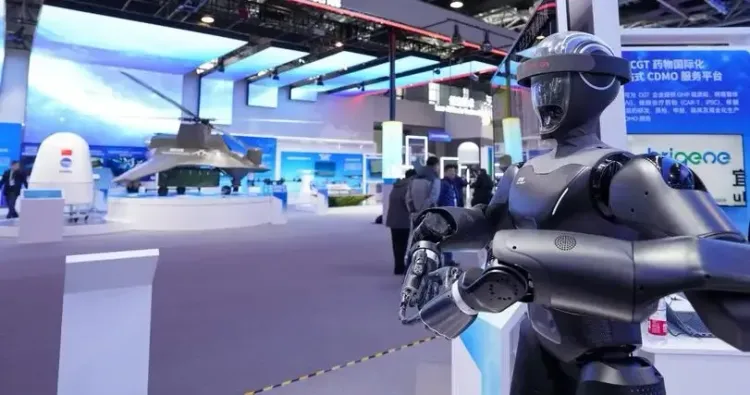
Washington, March 18 (NationPress) The rapid development of artificial intelligence, robotics, and autonomous systems in China presents an escalating threat to national security, according to US lawmakers and industry specialists. Their concerns span issues from data access and cyber vulnerabilities to military applications and supply-chain reliance.
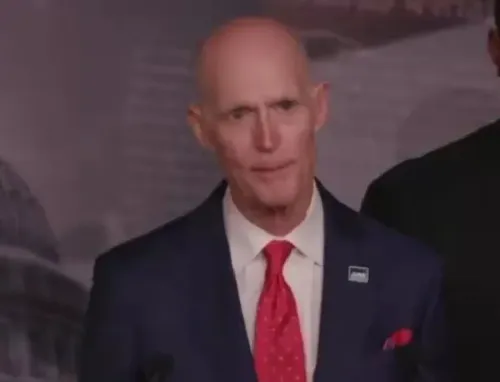
During a hearing held by the House Homeland Security subcommittee, Chairman Andrew Garbarino highlighted that the challenge is already manifesting “within the United States”.
He pointed out that the People’s Republic of China is aggressively pursuing dominance in technologies that are transforming global economies and security landscapes, particularly in artificial intelligence, robotics, and autonomous systems.
Garbarino specifically mentioned Chinese AI company DeepSeek and robotics firm Unitree. He noted that DeepSeek introduced a model in January 2025 that competes with leading American technologies “at a claimed cost significantly lower than the investments made by American firms”, which shocked the market and led some to label it “an AI Sputnik moment”.
However, Garbarino expressed a deeper concern regarding DeepSeek, indicating that the company “seemed to have incorporated outputs from leading American AI systems into its training process, effectively reverse engineering capabilities that those companies achieved through legitimate investments”. He stated: “DeepSeek did not merely outperform American firms; based on these revelations, it appropriated from them.”
He further cautioned that the company's application is available on the Apple App Store and that “every interaction is recorded on servers in the People’s Republic of China, where authorities can demand access to that data”.
Experts from industry and policy backgrounds called for a more robust US response.
Max Finkel from Scale AI emphasized that while the US is “leading in certain tracked areas like models and chips, we are losing ground in data and deployment, which will determine the future”. He noted that China currently controls “approximately 90 percent of the commercially available robotics AI data market” and is investing heavily in this sector.
Matthew Molchanov from Boston Dynamics stressed that robotics should be prioritized in policy discussions, as advanced robots represent “the physical embodiment of AI”. He warned that compromised robots could present threats beyond those posed by standard connected devices. “Malicious actors could disrupt these systems to interfere with production lines or stop security patrols,” he indicated.
Michael Robbins of the Association for Uncrewed Vehicle Systems International remarked that the US has witnessed similar trends in the drone sector. He accused China of “systematically executing a centrally orchestrated strategy to dismantle the US robotics industry and embed Trojan horses within our critical infrastructure”.
Rush Doshi from the Council on Foreign Relations noted that China has advanced more rapidly than many Americans realize. “In 2024, Chinese factories deployed approximately 300,000 new industrial robots, while American factories installed only 30,000,” he mentioned. He also cautioned that Chinese legislation poses espionage risks, as companies could be compelled to cooperate with state intelligence.
Ranking member Rep. Eric Swalwell highlighted the competitive technological landscape with China but directed some of his critique towards the Trump administration. He noted that budget cuts at agencies such as CISA, the National Science Foundation, and NIST have compromised America’s defenses “at a time when technological competition is escalating”.
Experts generally supported the idea of implementing procurement restrictions on Chinese technologies in sensitive federal environments. When Garbarino inquired whether Congress should consider imposing limits akin to those placed on Huawei or DJI, every panelist responded affirmatively.
In recent years, Congress and various administrations have increased scrutiny of Chinese telecom equipment, drones, semiconductor exports, and connected vehicles.
Point of View
It is imperative to acknowledge that while competition is essential, safeguarding national security must remain a top priority. The balance between innovation and security is delicate and demands immediate attention.
NationPress
5 Oct 2026
Frequently Asked Questions
What are the main concerns regarding China's AI advancements?
US lawmakers are worried about national security risks linked to data access, cyber vulnerabilities, and military applications arising from China's rapid development in AI and robotics.
How does China's AI data market compare to the US?
China currently controls approximately 90% of the commercially available robotics AI data market, significantly outpacing US investments in this sector.
What actions are US lawmakers proposing?
Experts are advocating for stricter procurement restrictions on Chinese technologies within sensitive federal environments to protect national interests.