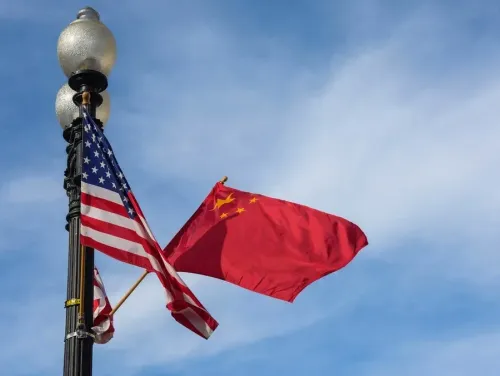
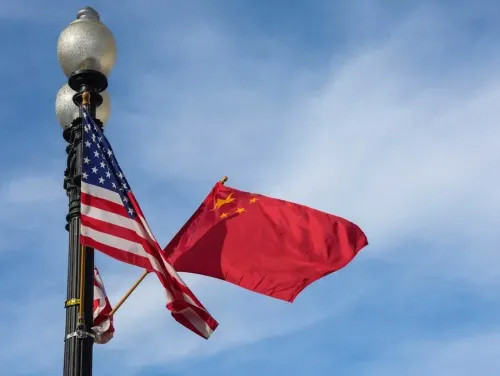
CCP Sanctions Shot Clock Act: US bill forces 1-year deadline on China

Synopsis
A new US bill would strip the Treasury Department of its open-ended timeline on China sanctions — forcing action within one year of any presidential threat identification. Introduced by Scott and Stefanik, the CCP Sanctions Shot Clock Act targets the procedural gap that has let Chinese military-linked entities operate in American markets long after being flagged by US agencies.
Key Takeaways
Senator Rick Scott and Representative Elise Stefanik introduced the CCP Sanctions Shot Clock Act on 22 May 2025 .
The bill would require the US Treasury Department to add qualifying Chinese entities to the NS-CMIC List within one year of a presidential report.
Under current law, Treasury faces no binding deadline to act after entities are identified as security risks.
The legislation targets entities already flagged on the Commerce Department's Entity List, FCC's Covered List, and State Department's Uyghur Forced Labor Act Entity List, among others.
The bill seeks to amend the National Defense Authorization Act for Fiscal Year 2026 and must pass both chambers of Congress to become law.
Two senior Republican lawmakers have introduced the CCP Sanctions Shot Clock Act, legislation designed to force the US Treasury Department to act within one year against Chinese individuals and entities identified as national security threats linked to Beijing's military-industrial complex. The bill was unveiled on Thursday, 22 May in Washington, marking one of the most direct legislative pushes yet to close a procedural gap in America's China sanctions architecture.
What the Legislation Proposes
Senator Rick Scott and Representative Elise Stefanik introduced the bill, which seeks to amend the National Defense Authorization Act for Fiscal Year 2026. Under the proposed law, once the President submits a report identifying People's Republic of China persons who may qualify for the Non-SDN Chinese Military-Industrial Complex Companies List (NS-CMIC List), the Secretary of the Treasury would be legally required to add qualifying entities and publish a revised list in the Federal Register within one year.
Under current law, the President must submit such a report every two years, but the Treasury Department faces no binding deadline to act on those findings — a gap the bill's sponsors argue has allowed identified threats to continue operating in US markets unchecked.
What the Sponsors Said
Scott framed the measure in unambiguous terms. 'No one working on behalf of the CCP's military interests should be doing business in this country, full stop. Communist China is our enemy and we need to wake up and start acting like it,' he said. He added: 'Once someone is identified as a threat to our security and our way of life, we shouldn't wait around to hit them with sanctions. That's what this legislation fixes.'
Stefanik described the bill as part of broader Republican efforts to reduce American economic exposure to Chinese companies linked to China's military expansion. 'This common-sense legislation ensures the Treasury Department can no longer delay action against entities tied to Communist China's malign influence and military buildup,' she said. She also noted that Congress had already asked the administration to report on qualifying Chinese companies, and that the bill would 'guarantee that these companies are sanctioned with the urgency America needs to respond.'
Which Lists Are Covered
The legislation would require reviews of persons and companies already appearing on several existing US government watchlists, including the Department of Commerce's Military End-User List and Entity List, the Federal Communications Commission's Covered List, and the State Department's Uyghur Forced Labor Act Entity List. The cross-referencing approach is designed to ensure that entities flagged by multiple agencies cannot fall through bureaucratic cracks.
Broader Context and What Comes Next
The bill arrives amid sustained bipartisan pressure in Washington to tighten economic and security guardrails against China, even as trade negotiations between the two countries remain active. Critics of the current framework have long argued that the gap between identification and sanctioning gives targeted entities time to restructure or shift assets. This legislation, if passed, would be the first statutory shot clock of its kind applied to the NS-CMIC list. The bill must clear both chambers of Congress before it can be signed into law — a path that will test whether Republican momentum on China policy translates into legislative action.
Point of View
A loophole that undermines the deterrent value of the NS-CMIC list entirely. What Scott and Stefanik are really legislating is urgency: the idea that identification without action is not a policy. The harder question is enforcement — if Treasury misses the one-year window, the bill does not specify consequences, which could render the shot clock symbolic rather than binding. Congress's broader China posture is hardening, but the gap between legislative intent and executive execution has historically been wide on sanctions policy.
NationPress
6 Oct 2026
Frequently Asked Questions
What is the CCP Sanctions Shot Clock Act?
The CCP Sanctions Shot Clock Act is a US bill introduced by Senator Rick Scott and Representative Elise Stefanik on 22 May 2025 that would require the Treasury Department to sanction qualifying Chinese military-linked entities within one year of their identification in a presidential report. It amends the National Defense Authorization Act for Fiscal Year 2026 to impose a binding deadline on a process that currently has none.
Why is a deadline needed for China sanctions?
Under current US law, the President must report every two years on Chinese entities that may qualify for the NS-CMIC sanctions list, but the Treasury Department is not legally bound to act on those findings within any set timeframe. Sponsors argue this gap allows identified threats to continue operating in American markets unchecked.
Which Chinese entities would be affected?
The bill covers persons and companies already appearing on multiple US government watchlists, including the Commerce Department's Military End-User List and Entity List, the FCC's Covered List, and the State Department's Uyghur Forced Labor Act Entity List. These are entities already flagged by US agencies as security or human-rights concerns.
Who introduced the bill and what is their stated rationale?
Senator Rick Scott and Representative Elise Stefanik, both Republicans, introduced the bill. Scott stated that no entity working on behalf of the Chinese Communist Party's military interests should operate in the United States, while Stefanik described it as part of Republican efforts to reduce American economic exposure to China's military expansion.
What happens next for the legislation?
The bill must pass both the US Senate and the House of Representatives before it can be signed into law. Its progress will depend on whether Republican leadership advances it through committee and whether it attracts bipartisan support in the current congressional session.