Kejriwal accuses rivals of insulting Hinduism, demands apology

Synopsis
AAP convenor Arvind Kejriwal on 6 July 2026 accused unnamed political opponents of causing unprecedented harm and dishonour to Hinduism, claiming they had 'looted Hindus' more than any foreign invader in 5,000 years, and demanded a public apology to the Hindu community.
Key Takeaways
Kejriwal posted on 6 July 2026 accusing unnamed rivals of dishonoring Hinduism more than foreign aggressors across 5,000 years of Indian history .
He alleged the targets had 'looted Hindus to an extent no one ever has before.' He called them a 'stain on Hinduism' and demanded they 'seek forgiveness from the entire Hindu society.' The post was accompanied by a video whose specific contents were not independently verified at publication.
The individuals or organisation targeted were not named in the post.
AAP , founded in 2012 , has increasingly engaged with Hindu identity issues alongside its governance-focused platform.
AAP convenor Arvind Kejriwal on Monday, 6 July 2026, launched a sharp attack on unnamed political opponents, accusing them of causing greater harm and dishonour to Hinduism than foreign invaders across 5,000 years of Indian history, and demanding a public apology to the entire Hindu community.
In a post on X accompanied by a video, Kejriwal wrote: 'जितना नुकसान और अपमान आप लोगों ने हिंदू धर्म का किया है, शायद भारत के 5000 वर्ष के इतिहास में बाहर से आने वाले आतताइयों ने भी नहीं किया।' ('The damage and insult you have done to Hinduism, perhaps even foreign aggressors who came from outside in 5,000 years of India's history did not do as much.')
He further alleged: 'जितना आप लोगों ने हिंदुओं को लूटा है, आज तक किसी ने नहीं लूटा।' ('You have looted Hindus to an extent that no one has ever done before.') Calling the unnamed targets a 'stain on Hinduism' (हिंदू धर्म पर आप लोग कलंक हैं), he asked them to 'seek forgiveness from the entire Hindu society.'
Context
Kejriwal shared the post alongside a video whose specific contents could not be independently verified at the time of publication. The post does not name the individuals or organisation being addressed, leaving the precise target of his criticism open to interpretation. His use of the second person plural 'aap log' ('you people') suggests the remarks are directed at a specific group or party.
The language deployed — invoking historical foreign invasions as a benchmark of religious harm — is among the most charged rhetoric in Indian political discourse. By framing the alleged wrongdoing as historically unprecedented, Kejriwal sought to underscore the severity of his accusation.
Policy Backdrop
Indian political parties have increasingly engaged with questions of Hindu religious identity, temple governance, and cultural protection in recent electoral cycles. AAP, founded in 2012, built its early identity around governance and anti-corruption issues, but the party has in recent years also made deliberate outreach to Hindu voters, particularly in Delhi and Punjab.
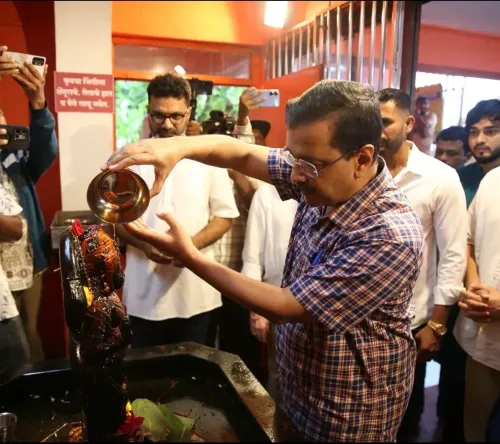
Kejriwal himself has in the past made public displays of religious faith — visiting temples, reciting the Hanuman Chalisa, and invoking Hindu symbols in campaign messaging. Critics have described this as electoral positioning; supporters frame it as a genuine cultural commitment. Monday's post continues that pattern of assertive engagement on Hindu identity.
Stakeholders and Impact
The post is directed at the Hindu community as both an audience and an aggrieved party, positioning Kejriwal as a defender of the faith. By demanding an apology 'from the entire Hindu society,' he frames the alleged offence as a collective injury rather than a political dispute.
The unnamed targets — widely expected to be from a rival political formation, though not specified in the post — face reputational pressure to respond or clarify. The accompanying video, if it gains traction on social media, could amplify the charge significantly. Other national parties are likely to respond, either to distance themselves from the alleged conduct or to counter Kejriwal's framing.
What's Next
Political observers will watch for an official clarification from AAP's communications team identifying the video and its subjects, which would sharpen the accountability dimension of the charge. Rival parties are expected to respond, and the episode may feed into broader debates over religious identity and political conduct ahead of upcoming electoral contests.
If the video circulates widely, it could become a flashpoint in the ongoing contest over which party best represents Hindu cultural interests — a battle that has come to define a significant strand of Indian electoral competition.
Point of View
000-year historical frame and comparing unnamed rivals unfavourably to foreign invaders, he deploys some of the most emotionally resonant language available in Indian political discourse. The demand for a public apology to 'the entire Hindu society' is a classic mobilisation device: it positions the speaker as protector, the target as aggressor, and the community as the ultimate arbiter. Whether the accompanying video substantiates the charge will determine how much political traction the post ultimately generates.
NationPress
6 Jul 2026
Frequently Asked Questions
What did Arvind Kejriwal say about Hinduism on 6 July 2026?
Kejriwal accused unnamed political opponents of causing more damage and dishonour to Hinduism than foreign invaders across 5,000 years of Indian history, and demanded they apologise to the entire Hindu community.
Who is Kejriwal targeting in his post about Hinduism?
The post does not name specific individuals or a party. Kejriwal used the phrase 'aap log' (you people), leaving the target unspecified, though the remarks are widely read as directed at a rival political formation.
What video did Kejriwal share with his post?
Kejriwal shared a video alongside the post, but its specific contents could not be independently verified at the time of publication. He asked viewers to watch it and expressed shame over what it depicted.
Has AAP spoken about Hindu identity issues before?
Yes. Kejriwal and AAP have made deliberate outreach to Hindu voters in recent years, including temple visits, religious recitations, and cultural messaging, particularly in Delhi and Punjab electoral campaigns.
What is the significance of comparing rivals to historical foreign invaders?
Invoking foreign invasions as a benchmark is among the most charged rhetorical moves in Indian political discourse, implying that the accused have caused civilisational-level harm to Hindu culture and identity.