Kejriwal slams Modi govt, says Hindu voters being betrayed

Synopsis
AAP convenor Arvind Kejriwal on 28 May 2026 accused PM Modi of betraying Hindu voters, invoking a proverb to argue that those who voted for the BJP are now watching their children's futures collapse — a pointed attempt to fracture the ruling party's core base.
Key Takeaways
Arvind Kejriwal posted a Hindi-language attack on the Modi government on 28 May 2026 .
He invoked the proverb 'Boya ped babool ka toh aam kahan se hoy' to frame the BJP's governance as a harvest of thorns for its own voters.
Kejriwal directly accused the government of 'destroying the children of Hindus' after taking their votes.
The post targets BJP's Hindu voter base, seeking to highlight a gap between religious mobilisation and material welfare delivery.
AAP has consistently contrasted its Delhi welfare model with central government outcomes on education and employment since 2014 .
The message is aimed at students, young job-seekers, and middle-class families — groups both parties actively court.
AAP convenor Arvind Kejriwal on Thursday, 28 May 2026, launched a sharp attack on the Narendra Modi-led central government, accusing it of betraying the very Hindu voters who brought it to power while ruining the futures of their children.
Context
Posting in Hindi on X, Kejriwal invoked the proverb 'Boya ped babool ka toh aam kahan se hoy' — 'If you sow a thorn tree, where will the mango come from?' — to argue that the consequences of voting for Prime Minister Modi were now being felt in every household. 'Today, fire is burning in the homes of all Modi supporters. The futures of everyone's children are being destroyed,' he wrote, urging voters to 'wake up in time.'
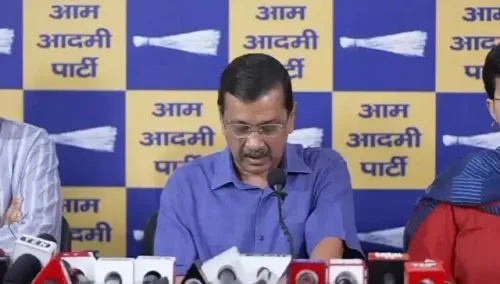
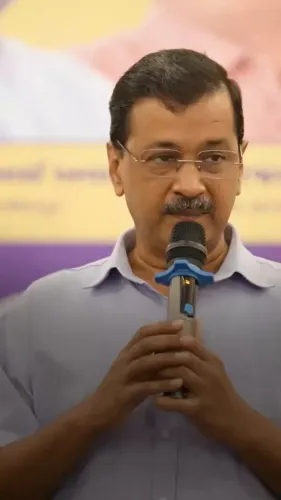
Kejriwal went further, directly framing the charge in communal terms: 'Having taken votes from Hindus, they are destroying the children of Hindus.' The post, accompanied by an image, was written entirely in Hindi and directed at the ruling Bharatiya Janata Party's core voter base.
Policy Backdrop
The attack is consistent with a line of argument AAP has pursued since 2014 — that the BJP mobilises voters along religious lines but fails to deliver on bread-and-butter issues such as education, employment, and social mobility. Kejriwal has repeatedly contrasted Delhi's government-funded school upgrades and mohalla clinics with what he characterises as the central government's neglect of public welfare.
The reference to children's futures being 'destroyed' appears aimed at anxieties around youth unemployment and educational opportunity — concerns that have animated opposition politics across party lines in recent years. AAP has long positioned itself as the party of the aspirational urban middle class and first-generation learners.
Stakeholders and Impact
The post targets BJP's Hindu voter base directly, seeking to drive a wedge between the ruling party and its core constituency by arguing that religious solidarity has come at a material cost to ordinary families. This is a calibrated message: it does not contest the religious identity of voters but instead turns the argument inward, suggesting betrayal from within the same community.
Students, young job-seekers, and middle-class parents — groups that both AAP and BJP actively court — are the implied audience. By framing the issue as one of broken promises to Hindu families specifically, Kejriwal attempts to neutralise the communal narrative that has historically benefited the BJP electorally.
What's Next
The post is likely to draw a sharp response from BJP spokespersons, who have routinely accused Kejriwal of 'appeasement politics' and questioned AAP's own governance record. Debates in state assemblies and at the parliamentary level on education policy and youth employment are expected to provide the next arena for this exchange. With AAP rebuilding after electoral setbacks, Kejriwal's direct outreach to disaffected BJP voters signals a deliberate strategy to expand the party's appeal beyond its traditional base ahead of future electoral contests.
Point of View
Arguing that Hindu solidarity was weaponised at the cost of Hindu welfare. This approach reflects a broader AAP pivot — after electoral setbacks, the party is testing whether economic grievance can erode the BJP's cultural hold on its base. The proverb choice is deliberate; it is widely understood across class and educational lines, giving the message viral accessibility. If youth unemployment and educational anxiety remain salient, this line of attack could gain traction in urban and semi-urban constituencies where AAP is attempting a comeback.
NationPress
13 Oct 2026
Frequently Asked Questions
What did Arvind Kejriwal post about Modi on 28 May 2026?
Kejriwal posted in Hindi accusing PM Modi of betraying Hindu voters, using the proverb 'If you sow a thorn tree, where will the mango come from?' He claimed the futures of children in BJP-supporting households are being destroyed.
What does 'Boya ped babool ka toh aam kahan se hoy' mean?
It is a Hindi proverb meaning 'If you plant a thorn tree, you cannot expect mangoes.' Kejriwal used it to argue that voting for the BJP has produced harmful outcomes for ordinary families.
Why did Kejriwal specifically mention Hindus in his post?
Kejriwal argued that the BJP solicits votes from Hindus on religious grounds but then pursues policies that damage the futures of Hindu children — an attempt to separate the BJP's electoral base from the party on welfare and economic grounds.
What is AAP's broader argument against the Modi government on youth issues?
AAP has since 2014 argued that the BJP prioritises religious mobilisation over education, employment, and social mobility, contrasting Delhi's school and health schemes with what it calls central government neglect.
How is the BJP likely to respond to Kejriwal's post?
BJP spokespersons have historically countered such attacks by accusing Kejriwal of appeasement politics and pointing to AAP's own governance controversies; a formal rebuttal along those lines is expected.