Kejriwal Slams Modi Over Trump Ties After Ships Incident
Synopsis
AAP convenor Arvind Kejriwal accused PM Modi of thanking Donald Trump even as US military actions allegedly killed Indian nationals in a ship attack, calling it a surrender of India's sovereignty, pride, and citizens' lives.
Key Takeaways
Arvind Kejriwal posted on June 11, 2026 accusing PM Modi of thanking Trump after US actions allegedly targeted ships carrying Indian nationals .
Kejriwal alleged that Indian nationals were killed in the incident, framing the government's response as a national embarrassment.
He accused Modi of surrendering India's sovereignty, pride, and citizens' lives to Trump .
AAP called for a 'strong Prime Minister' capable of standing up to US unilateral actions affecting India .
The Ministry of External Affairs had not publicly responded to Kejriwal's allegations at the time of posting.
Parliamentary debate on India-US coordination and maritime security is expected to follow.
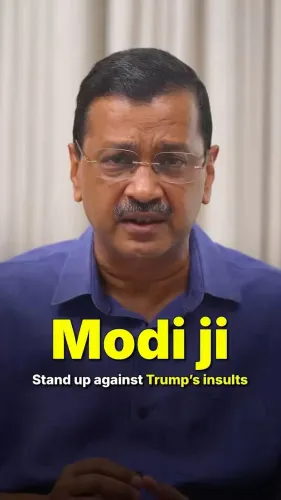
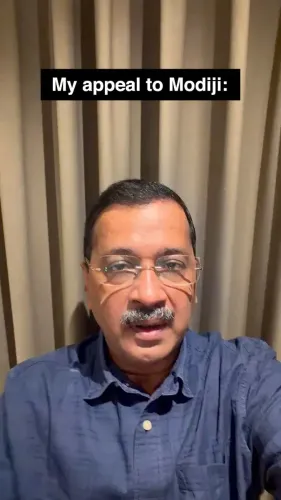
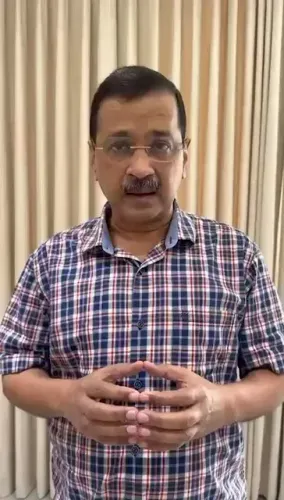
AAP convenor Arvind Kejriwal launched a sharp attack on Prime Minister Narendra Modi on Thursday, June 11, 2026, accusing him of surrendering India's sovereignty and failing to protect Indian nationals after reports of US military actions targeting ships with Indians on board.
Context
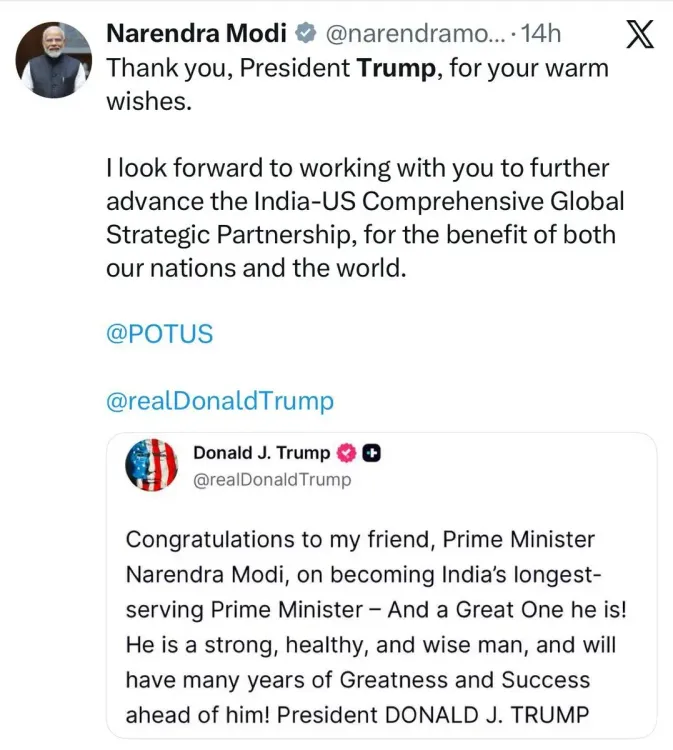
Kejriwal's post was a direct response to what he described as PM Modi thanking US President Donald Trump in the wake of attacks on ships carrying Indian nationals, some of whom were reportedly killed. 'Thank you for exactly what? For attacking ships with Indians on board and killing Indian nationals?' Kejriwal wrote, framing the government's posture as deeply compromising.
He added that the situation had become 'hopelessly embarrassing' for the country, and accused Modi of having 'completely surrendered India's sovereignty, pride and the lives of its citizens to Trump.' The post drew immediate attention given the gravity of the allegations involving Indian casualties in a maritime incident.
Policy Backdrop
The India-US relationship has deepened considerably since 2014, with successive 2+2 Ministerial Dialogues expanding defence logistics agreements and intelligence sharing. Modi and Trump cultivated a visible personal rapport, most publicly at the 'Namaste Trump' event in Ahmedabad in February 2020, which underscored the bilateral warmth but also drew scrutiny over whether India was ceding strategic ground.
Opposition leaders have periodically challenged the government over what they characterise as an insufficiently assertive response to US actions that affect Indian interests — including earlier episodes involving trade tariffs and sanctions pressure. Kejriwal's post follows that established pattern of opposition criticism, though the specific allegation of Indian nationals being killed in a US-linked maritime incident marks a sharper escalation in tone.
Stakeholders and Impact
Indian seafarers and overseas Indian nationals are the most directly affected constituency cited in Kejriwal's statement. India has a large diaspora and a significant merchant maritime workforce, making the safety of Indians in international waters a politically resonant issue.
The Ministry of External Affairs has not publicly responded to Kejriwal's specific characterisation as of the time of posting. Any parliamentary debate on maritime security or a formal government statement on India-US coordination in the incident is expected to be closely watched. Kejriwal's call for a 'strong Prime Minister' signals that AAP intends to press this issue in the political arena.
What's Next
Pressure is likely to mount on the government to clarify the circumstances of the maritime incident and the nature of any communication between New Delhi and Washington. A formal statement from the Ministry of External Affairs, or a parliamentary question during the next session, could become the next flashpoint.
If opposition parties coalesce around the sovereignty narrative, the episode could shape the broader political debate on India's strategic autonomy and its willingness to publicly push back against US unilateral actions — a theme that resonates across the political spectrum in India.
Point of View
If substantiated, would mark a qualitative shift from earlier trade-and-tariff critiques to a far more politically combustible sovereignty-and-lives framing. AAP is clearly positioning itself as the voice of muscular nationalism against what it characterises as diplomatic capitulation — a lane that cuts across traditional left-right lines in India. How the government responds, and whether other opposition parties amplify the charge, will determine whether this becomes a sustained political liability for Modi on foreign policy.
NationPress
25 Oct 2026
Frequently Asked Questions
Why is Kejriwal criticising Modi over Trump?
Kejriwal accused PM Modi of thanking Donald Trump even after US military actions allegedly attacked ships carrying Indian nationals and killed some of them, which he called a surrender of India's sovereignty.
What did Kejriwal say about India's sovereignty?
Kejriwal wrote that Modi had 'completely surrendered India's sovereignty, pride and the lives of its citizens to Trump,' and called for a stronger Prime Minister to stand up to Washington .
Were Indian nationals killed in a ship attack involving the US?
Kejriwal's post alleges that Indian nationals were on board ships that were attacked and that some were killed, but the specific incident post-dates available verified reporting and the government has not publicly confirmed these details.
What is AAP's position on India-US relations?
AAP has been critical of what it sees as the Modi government's overly accommodating stance toward Washington , arguing that India must assert its strategic autonomy rather than defer to US interests.
What could happen next after Kejriwal's post?
Pressure is expected to build on the Ministry of External Affairs to clarify the maritime incident, and opposition parties may raise the issue in Parliament , potentially triggering a formal debate on India-US maritime security coordination.