Kejriwal calls Trump 'murderer' over Indian lives lost
Synopsis
AAP convenor Arvind Kejriwal on 15 June 2026 publicly called US President Donald Trump a 'cowardly, cold-blooded murderer' over Indian lives lost, while accusing Prime Minister Modi of silence. The unusually sharp attack signals AAP's intent to make foreign policy accountability a national political issue.
Key Takeaways
AAP convenor Arvind Kejriwal posted a direct personal attack on US President Donald Trump on 15 June 2026 , calling him a 'cowardly, cold-blooded murderer.' Kejriwal held Trump 'accountable for the Indian lives lost,' though the specific incident has not been officially confirmed at the time of publication.
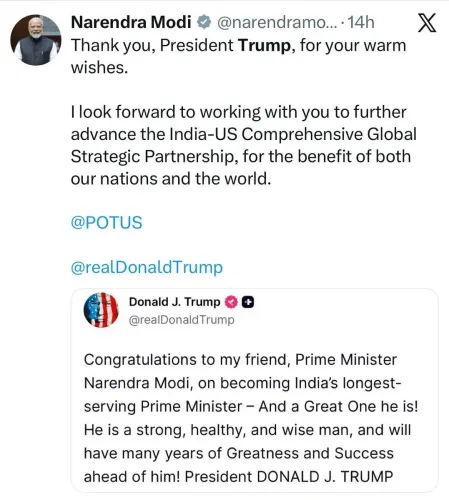
He accused Prime Minister Narendra Modi of remaining silent on the matter, framing that silence as a political and moral failure.
Kejriwal warned that India would 'soon have a strong Prime Minister' who would hold Trump accountable — a clear electoral signal from AAP .
The Ministry of External Affairs and US officials had not publicly responded as of the time of publication.
AAP governs Delhi and Punjab and has been positioning itself as a national alternative on issues including foreign policy.
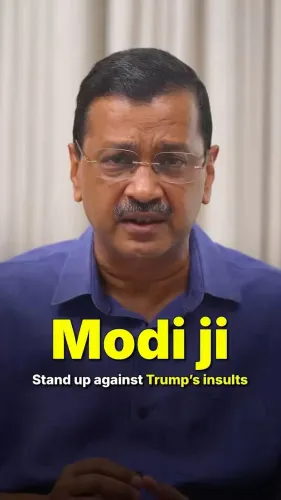
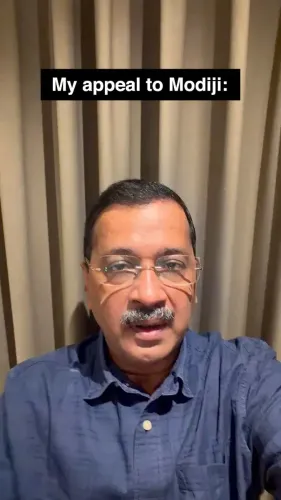
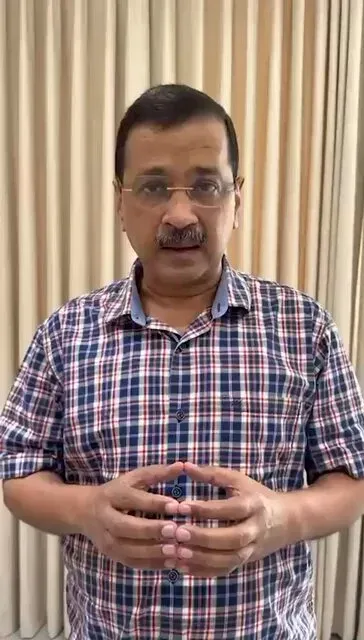
AAP convenor Arvind Kejriwal launched a scathing personal attack on United States President Donald Trump on Monday, 15 June 2026, holding him directly accountable for the loss of Indian lives and calling him a 'cowardly, cold-blooded murderer' in a post on X. Kejriwal also accused Prime Minister Narendra Modi of remaining silent on the matter, warning that India would soon have a prime minister who would 'make Trump pay for his misdeeds.'
Context
In his post, Kejriwal wrote: 'Donald Trump, you will be held accountable for the Indian lives lost. You are a cowardly, cold-blooded murderer.' He went on to say it was 'unfortunate that PM Modi remains silent,' adding that 'soon, India will have a strong Prime Minister who will make you pay for your misdeeds.' The post, which included a video, drew immediate attention for its unusually direct and personal language directed at a sitting head of state.
The specific incident involving Indian lives that prompted the post has not been officially confirmed or detailed by Kejriwal's office at the time of publication. NationPress is seeking further clarification from AAP and the Ministry of External Affairs.
Policy Backdrop
India-US relations have been characterised by high-level strategic engagement in recent years, with both governments emphasising trade, defence, and diaspora ties. Indian opposition parties have periodically raised concerns about the treatment of Indian nationals and diaspora communities abroad, particularly under US immigration and border enforcement policies.
Kejriwal and the Aam Aadmi Party, founded in 2012 and currently governing Delhi and Punjab, have increasingly sought to position themselves as a credible national alternative, including by commenting on foreign policy — a domain traditionally dominated by the ruling Bharatiya Janata Party-led central government.
Stakeholders and Impact
The statement is likely to reverberate among AAP's supporter base, the broader Indian opposition, and the Indian diaspora in the United States, many of whom closely watch how New Delhi responds to incidents affecting Indian nationals abroad. Kejriwal's framing — that Modi's silence is itself a political failure — is a pointed challenge to the government ahead of any forthcoming electoral cycle.
The post also places the Ministry of External Affairs in a difficult position, as any official response risks either validating the opposition's criticism or appearing to minimise the gravity of the alleged incident. US officials have not publicly responded to Kejriwal's remarks as of the time of publication.
What's Next
Attention will now turn to whether the Modi government issues a formal statement on the underlying incident, and whether the Ministry of External Affairs raises the matter through diplomatic channels with Washington. AAP is expected to escalate its campaign on the issue, potentially through press conferences and parliamentary proceedings. If the government continues to remain publicly silent, Kejriwal's framing of that silence as complicity is likely to gain further political traction in the weeks ahead.
Point of View
Deliberately crossing a line that mainstream Indian politics has traditionally avoided. By coupling the attack on Trump with a charge of Modi's silence, AAP is constructing a dual narrative: that the ruling government is both diplomatically passive and morally indifferent to Indian lives abroad. The move also signals AAP's ambition to occupy foreign policy terrain — long considered the BJP's stronghold — as a differentiator in national politics. Whether the gambit builds electoral credibility or invites a backlash for perceived recklessness will depend heavily on how the underlying incident is officially established and communicated.
NationPress
14 Sept 2026
Frequently Asked Questions
Why did Arvind Kejriwal call Donald Trump a murderer?
Kejriwal called Trump a 'cowardly, cold-blooded murderer' in a post on 15 June 2026, holding him accountable for the loss of Indian lives. The specific incident he referenced had not been officially confirmed by the time of publication.
What did Kejriwal say about PM Modi in his post?
Kejriwal said it was 'unfortunate that PM Modi remains silent' on the deaths of Indian nationals, and warned that India would soon have a prime minister who would hold Trump accountable for his 'misdeeds.'
Has the Indian government responded to Kejriwal's statement?
As of the time of publication, neither the Ministry of External Affairs nor any spokesperson for Prime Minister Modi had publicly responded to Kejriwal's remarks.
What is AAP's position on India-US relations?
The Aam Aadmi Party has increasingly sought to comment on foreign policy matters, positioning itself as a national alternative to the BJP. Kejriwal's post represents one of the party's sharpest interventions on India-US ties to date.
What could happen next after Kejriwal's attack on Trump?
Observers expect AAP to escalate the issue through press conferences and parliamentary proceedings. The key question is whether the Modi government will issue a formal statement on the incident or raise it through diplomatic channels with Washington.