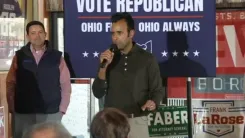
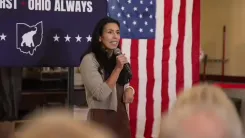
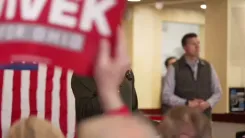
Ramaswamy pushes crime, taxes, Medicaid fraud as vote drivers
Synopsis
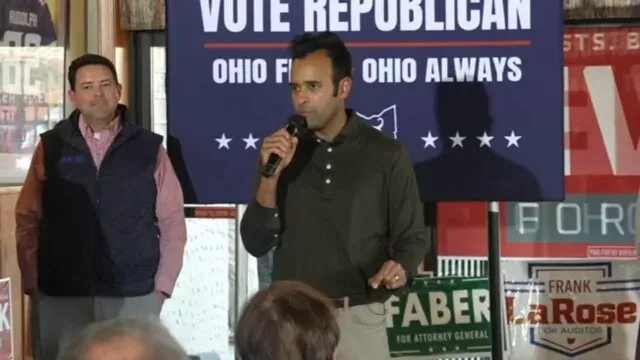
Entrepreneur Vivek Ramaswamy posted a four-point voter directive on October 25, 2026, urging Americans to choose candidates who will crush crime, prosecute Medicaid fraud, cut property taxes, and lower electric bills — compressing his signature DOGE-era fiscal and law-and-order platform into a single election-season call to action.
Key Takeaways
Vivek Ramaswamy posted a voter-directed message on October 25, 2026 listing four criteria for choosing candidates.
The four pillars are: crushing crime, prosecuting Medicaid fraud , slashing property taxes, and cutting electric bills.
Medicaid , established in 1965 , is a major federal-state programme and a longstanding Republican target for fraud reform.
The message echoes themes from the 2024 DOGE initiative co-led by Ramaswamy and Elon Musk under President-elect Trump .
No specific candidate, race, or jurisdiction is named, giving the message broad applicability across 2026 competitive districts.
Property tax caps and utility deregulation are active state-level policy debates heading into the 2026 election cycle.
With an eye firmly on the ballot box, entrepreneur Vivek Ramaswamy issued a sharp, voter-directed call to action on Sunday, October 25, 2026, urging Americans to choose candidates on four concrete kitchen-table tests: crime, Medicaid fraud, property taxes, and electric bills.
Four demands, one message
Ramaswamy's post dispensed with pleasantries and went straight for the pocketbook. 'Vote for the candidate who'll crush crime. Vote for the candidate who'll prosecute Medicaid fraud. Vote for who'll slash your property taxes and your electric bills. Vote for who'll actually make your life safer and more affordable,' he wrote — a tight, anaphoric sequence designed to sound like a checklist voters carry into the booth.
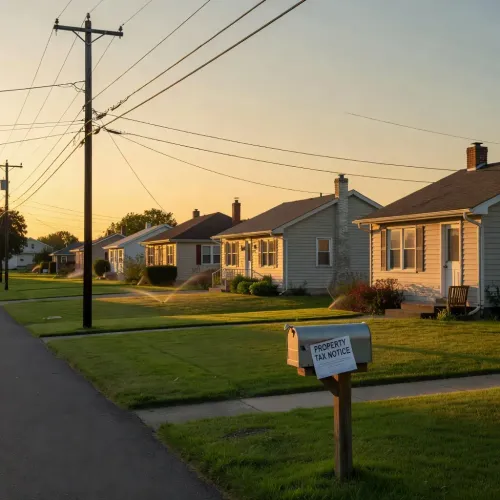
The framing is deliberate. By anchoring each demand in a daily-life cost or fear — street safety, healthcare fraud, the monthly utility bill, the annual tax notice — Ramaswamy sidesteps abstract ideology and speaks directly to the voter standing at the kitchen counter opening bills.
Medicaid fraud as a Republican rallying point
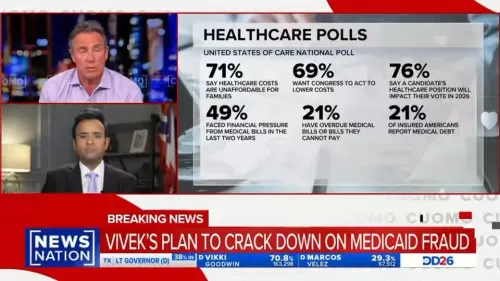
Medicaid, the federal-state health programme established in 1965, covers low-income individuals, children, the elderly, and people with disabilities. It is also one of the largest line items in combined federal and state budgets — and a perennial target for Republican reformers who argue that inadequate fraud controls drain resources meant for genuine beneficiaries.
Ramaswamy's emphasis on prosecuting fraud rather than eliminating the programme is a calibrated move: it allows him to attack government waste without appearing to threaten coverage for vulnerable populations. It is the same needle his DOGE work tried to thread — cutting inefficiency, not services.
DOGE themes, now on the campaign trail
In 2024, then-President-elect Donald Trump announced the Department of Government Efficiency (DOGE) advisory initiative, co-led by Elon Musk and Ramaswamy, to identify federal waste and bloated spending. Ramaswamy subsequently stepped back from that role, but the rhetorical DNA of DOGE — slash, prosecute, deregulate — runs unmistakably through Sunday's post.
Property tax relief and utility deregulation are now emerging as live battlegrounds at the state level heading into the 2026 election cycle, with several states weighing property-tax caps and energy-market reforms. Ramaswamy's message lands squarely in that debate, even without naming a specific race or candidate.
A playbook built on affordability and order
Throughout his 2024 presidential run and his DOGE tenure, Ramaswamy has consistently paired law-and-order rhetoric with cost-of-living arguments — a pairing that Republican strategists view as potent because it speaks simultaneously to suburban homeowners anxious about safety and to working-class voters squeezed by inflation. Sunday's post compresses that entire platform into four sentences.
The post does not endorse a specific candidate or name a jurisdiction, leaving it broad enough to serve as a national template for Republican messaging in any competitive district. That flexibility is the point: it is a voter education frame as much as a campaign statement.
If the 2026 midterm cycle turns on affordability — and early indicators suggest it will — Ramaswamy just handed down a four-point test that any challenger can pick up and run with. Whether Republican candidates can actually deliver on all four promises is the question voters will be grading on election night.
Point of View
He signals that the GOP's 2026 pitch will lean heavily on affordability, not just culture-war terrain. The DOGE legacy gives him credibility with the government-efficiency wing of the party, while the crime plank keeps the law-and-order base energised. The open-ended framing — no candidate named, no state specified — suggests this is as much a national messaging template as a personal endorsement.
NationPress
25 Oct 2026
Frequently Asked Questions
What did Vivek Ramaswamy post about the 2026 election?
On October 25, 2026, Ramaswamy posted a voter directive urging Americans to support candidates who will crush crime, prosecute Medicaid fraud, cut property taxes, and lower electric bills.
What is Medicaid and why is fraud in it a political issue?
Medicaid is a US federal-state health programme established in 1965 that covers low-income and vulnerable populations. Republicans have long argued that weak fraud controls waste billions of dollars that should reach genuine beneficiaries, making it a recurring reform target.
What was Vivek Ramaswamy's role in DOGE?
Ramaswamy was co-lead of the Department of Government Efficiency advisory initiative announced by President-elect Donald Trump in 2024, alongside Elon Musk, to identify federal waste and reduce government spending.
Is Ramaswamy endorsing a specific candidate in this post?
No. The post does not name any specific candidate, party, or jurisdiction, functioning instead as a broad voter-education framework applicable to multiple 2026 races.
How do property taxes and electric bills connect to Republican policy in 2026?
Several US states are debating property-tax caps and energy-market deregulation ahead of the 2026 elections. Ramaswamy's post frames these as litmus-test issues for voters choosing between candidates.