Kejriwal to Modi: 'Youth has woken up, fear is gone'

Synopsis
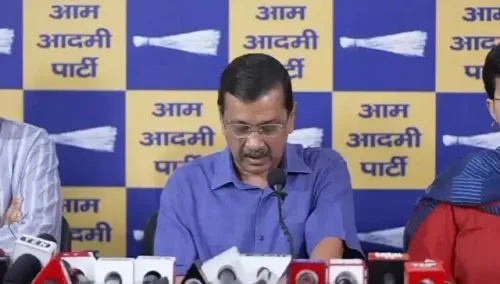
AAP convenor Arvind Kejriwal on October 11 took a sharp dig at PM Modi, using the folk idiom 'geedadbhabhaki' to call his statements hollow threats, and asserting that India's youth has shed its fear of the ruling establishment.
Key Takeaways
AAP convenor Arvind Kejriwal posted a combative message targeting PM Narendra Modi on October 11, 2026 .
He used the Hindi idiom geedadbhabhaki — meaning 'jackal's bluster' or hollow threats — to characterise Modi's statements.
Kejriwal claimed India's youth has 'woken up' and is no longer afraid of the ruling establishment.
He added an ironic twist: that Modi himself has driven the fear out of young people's hearts.
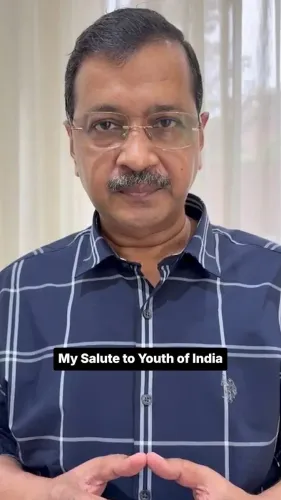
The post included a video, indicating this is part of a structured political communication effort.
A direct challenge landed on Sunday, October 11, 2026 — and it came without diplomatic cushion. AAP convenor Arvind Kejriwal fired a pointed salvo at Prime Minister Narendra Modi, declaring that India's youth no longer fears the ruling establishment's threats.
Posting on X, Kejriwal wrote in Hindi: 'Modi ji ab aapki in geedadbhabhakiyon se koi darne wala nahi hai. Desh ka yuva jaag chuka hai. Aur aapne unke mann se dar bhi nikaal diya.' — translated: 'Modi ji, nobody is going to be scared by your hollow threats anymore. The country's youth has woken up. And you yourself have driven the fear out of their hearts.'
The sting in the rhetoric: 'Geedadbhabhaki'
The word geedadbhabhaki — literally 'a jackal's bluster,' meaning empty, cowardly threats — is a deliberately sharp folk idiom. Kejriwal's choice of the phrase is calculated: it frames the Prime Minister not as a powerful adversary but as one making noise without substance. The inversion in the final line is equally pointed — arguing that Modi's own actions have done the opposition's job of emboldening youth for them.Youth as the political battleground
The framing of India's youth as the decisive political actor is not new to Kejriwal's messaging, but the sharpness here is notable. AAP has consistently positioned itself as a party of young, aspirational, urban voters — a constituency both major national parties aggressively court. By invoking 'the country's youth' as already awakened and already fearless, Kejriwal is making a claim about political momentum: that the psychological tide has turned, even before votes are counted. The post carries a video, the contents of which are not available in this report, but its presence suggests the attack is part of a broader campaign communication rather than a spontaneous reaction. With no specific event named in the post, the remark reads as a sustained political offensive — the kind of rhetorical pressure opposition leaders maintain between electoral cycles to keep their base energised and the ruling party on the defensive. Whether today's sharpened language signals a fresh provocation from the ruling side or a campaign escalation from AAP's own playbook, the intent is unmistakable: Kejriwal is telling his audience that the fear equation in Indian politics has flipped.Point of View
Attributing the opposition's own gains to the PM's actions, is rhetorically sophisticated and typical of Kejriwal's style of turning establishment strength into a liability. With no specific triggering event cited, this reads as sustained base-mobilisation ahead of what AAP expects to be a charged political period. The choice of the folk idiom signals a deliberate appeal to vernacular, non-elite voters — a demographic AAP has been working to expand beyond its traditional urban base.
NationPress
11 Oct 2026
Frequently Asked Questions
What did Arvind Kejriwal say about PM Modi on October 11 2026?
Kejriwal posted on X saying that nobody is scared of Modi's hollow threats anymore, that India's youth has awakened, and that Modi himself has driven the fear out of young people's hearts.
What does 'geedadbhabhaki' mean in Kejriwal's post?
'Geedadbhabhaki' is a Hindi folk idiom meaning 'jackal's bluster' — empty, cowardly threats that carry no real weight. Kejriwal used it to characterise the Prime Minister's statements as hollow.
What is the political context of Kejriwal attacking Modi over youth and fear?
AAP has consistently courted India's young, aspirational voters and framed itself as their political voice. Invoking a fearless youth is part of the party's broader narrative of shifting political momentum away from the ruling BJP.
Did Kejriwal mention a specific event that triggered this post?
No specific event was named in the post. The remark appears to be part of sustained opposition rhetoric aimed at keeping pressure on the ruling establishment between electoral cycles.
What is AAP's general political stance toward the BJP and PM Modi?
AAP positions itself as the primary challenger to BJP in Delhi and increasingly at the national level, frequently criticising government policy and the Prime Minister's leadership style in direct, populist language.