Ashwin backs Puducherry pitches as ideal ODI surfaces after India A series
Synopsis
Ravichandran Ashwin has called Puducherry's surfaces the gold standard for ODI pitches — and the numbers back him up. With scores staying well under 300 across three unofficial games and Australia A winning the series 2-0 comfortably, the Puducherry track stands in sharp contrast to the recent India-West Indies run feasts where Shubman Gill struck 223 and 406-run chases were knocked off with overs to spare.
Key Takeaways
Ravichandran Ashwin praised Puducherry pitches on 11 October 2026 , calling them the kind of surfaces ODIs should be played on.
Australia A won the unofficial ODI series 2-0 , winning by 125 runs and 69 runs respectively, with scores staying under 300 in all three matches.
Only one century — Nathan McSweeney's hundred in match one — was recorded across five completed innings in the series.
The series contrasts sharply with India's recent ODIs against West Indies , where Shubman Gill hit an unbeaten 223 and India chased 406 with ease.
Ashwin wrote on X that such pitches “demand more from the batters” and “tickle their tactical thinking.”
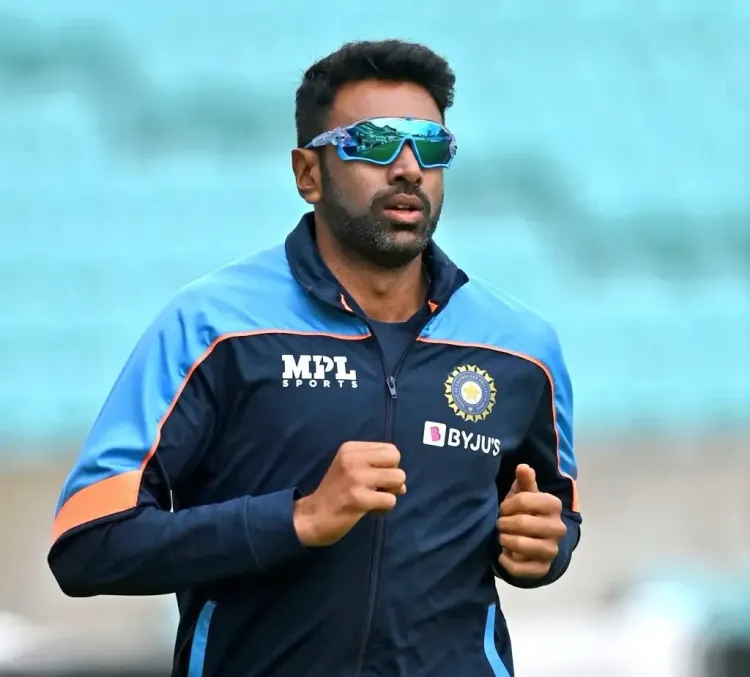
Former India spinner Ravichandran Ashwin has praised the surfaces prepared at the Cricket Association Puducherry Siechem Ground for the ongoing unofficial ODI series between India A and Australia A, calling them the kind of pitches on which one-day cricket should ideally be played. His remarks, posted on X on 11 October 2026, come at a time when the debate over pitch quality in ODI cricket has sharpened following a succession of high-scoring, batter-friendly encounters.
What Ashwin Said
Responding to the low-scoring yet competitive nature of the India A-Australia A clashes, Ashwin wrote on X: “Right now! Pondicherry seems to be producing the kind of pitches ODIs should be played on. 250 chases look stiff! Producing pitches like these will demand more from the batters, tickle their tactical thinking and game awareness.” The off-spinner argued that surfaces offering genuine assistance to bowlers sharpen batter decision-making and raise the tactical stakes of the game.
How the Series Has Played Out
The Puducherry pitches have kept scores well under the 300-run mark across all three unofficial ODIs — a notable contrast to recent international games. In the first unofficial ODI, Australia A posted 274 and won by a commanding 125 runs, dismissing India A for just 149. The visitors again put up 275 in the second match and secured a 69-run victory, bowling the hosts out for 206. That result gave Australia A an unassailable 2-0 lead with one game remaining.
In the third match, India A managed 275 in their first innings. Notably, only one century was recorded across the five completed innings in the series — Nathan McSweeney's hundred for Australia A in the opener — while five fifty-plus scores were the other standout contributions across both sides.
The Backdrop: India's Run Feasts Against West Indies
Ashwin's praise for Puducherry's balanced surfaces carries added resonance given the run-frenzy that preceded this series. India recently chased down 406 against the West Indies in the second ODI of a three-match series — with eight wickets in hand and 39 balls to spare — on a flat surface tailor-made for batting. Captain Shubman Gill struck an unbeaten 223, while Rohit Sharma contributed 101 as India completed the second-highest successful run chase in ODI history, behind only South Africa's epic 435 against Australia in 2006.
The third ODI of that series was equally batter-dominated. India posted 351/7, with Rohit Sharma making 92, Ruturaj Gaikwad contributing 57, and KL Rahul top-scoring with 129. West Indies captain Shai Hope then anchored a successful chase with a stellar 162, guiding his side home with five wickets in hand and 10 balls to spare.
Why the Pitch Debate Matters
The contrast between the India-West Indies run feasts and the more competitive India A-Australia A exchanges has reignited a broader conversation around pitch preparation in white-ball cricket. Critics argue that excessively flat tracks reduce ODIs to batting exhibitions, diminishing the role of bowlers and fielding strategy. Ashwin's remarks reflect a view shared by many former players and analysts: that pitch variety, not uniformity, is what makes the format compelling. This is not the first time the former off-spinner has weighed in on conditions-related debates, often bringing a technically nuanced perspective shaped by his long international career.
With the final unofficial ODI still to be played in Puducherry, the series outcome is settled, but the pitch quality debate it has sparked is likely to carry well beyond the ground.
Point of View
But they compress tactical differentiation and devalue bowling as a discipline. The India-West Indies series was the clearest recent example — a 406-run chase should be an aberration, not a Saturday afternoon outcome. Puducherry's surfaces, by keeping sub-300 totals genuinely competitive, restored some of that balance. The real question is whether the Board of Control for Cricket in India and groundsmen at marquee venues take note, or whether crowd-pleasing flatness remains the default setting for Indian pitches.
NationPress
11 Oct 2026
Frequently Asked Questions
What did Ravichandran Ashwin say about Puducherry pitches?
Ashwin posted on X that Puducherry is “producing the kind of pitches ODIs should be played on,” adding that ‘250 chases look stiff’ and that such surfaces demand more from batters and sharpen tactical thinking. He was reacting to the ongoing India A vs Australia A unofficial ODI series at the Cricket Association Puducherry Siechem Ground.
What is the result of the India A vs Australia A unofficial ODI series?
Australia A have taken an unassailable 2-0 lead in the three-match unofficial ODI series. They won the first game by 125 runs (India A bowled out for 149 chasing 275) and the second by 69 runs (India A bowled out for 206 chasing 275), with one match still to be played.
Why is the Puducherry pitch being praised?
The pitches at the Cricket Association Puducherry Siechem Ground have kept scores well under 300 across all three games and produced competitive contests where bowlers remained in the game throughout. This is seen as a counter-point to recent flat, batter-dominated ODI surfaces that have yielded extremely high scores.
How did the India vs West Indies ODI series compare to these pitches?
The India-West Indies series was played on flat, high-scoring surfaces. India chased 406 in the second ODI with eight wickets and 39 balls to spare, with Shubman Gill making an unbeaten 223 and Rohit Sharma contributing 101. The third ODI saw India post 351/7 before West Indies chased it down with five wickets to spare.
Who is Nathan McSweeney and what was his contribution in the series?
Nathan McSweeney is an Australian batter who scored the only century across the five completed innings of the India A vs Australia A unofficial ODI series, registering his hundred in the first match. His knock helped Australia A post 274 en route to a 125-run victory.