CM Fadnavis launches Samruddha Panchayatraj Abhiyan 2026-27 in Nashik
Synopsis
Maharashtra CM Devendra Fadnavis distributed the Mukhyamantri Samruddha Panchayatraj Abhiyan 2025-26 awards in Nashik on 11 October 2026 and simultaneously launched the campaign's 2026-27 edition, signalling uninterrupted state focus on grassroots governance.
Key Takeaways
Maharashtra CM Devendra Fadnavis chaired the event in Nashik on 11 October 2026 .
The Mukhyamantri Samruddha Panchayatraj Abhiyan 2025-26 awards were distributed, recognising high-performing gram panchayats.
The 2026-27 edition of the same campaign was launched at the same ceremony, eliminating any gap between cycles.
The event was livestreamed, beginning at 2:59 PM IST .
The scheme aims to incentivise gram panchayats through competitive recognition for better service delivery and financial discipline.
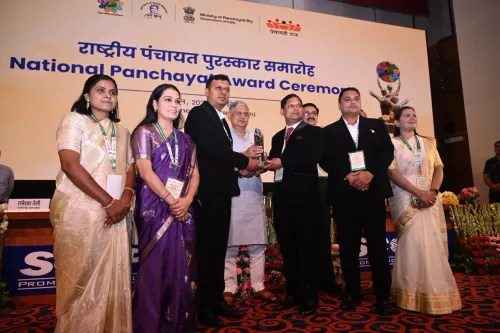
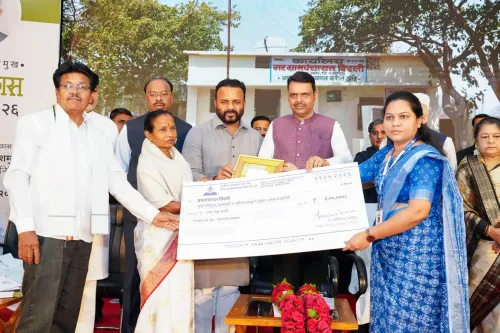
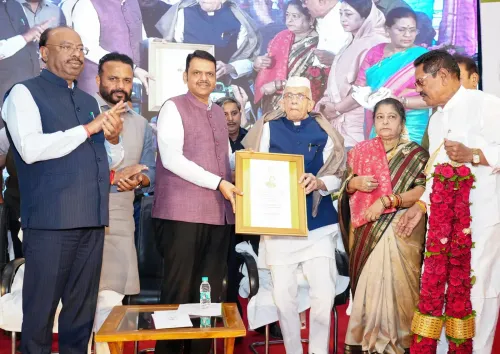
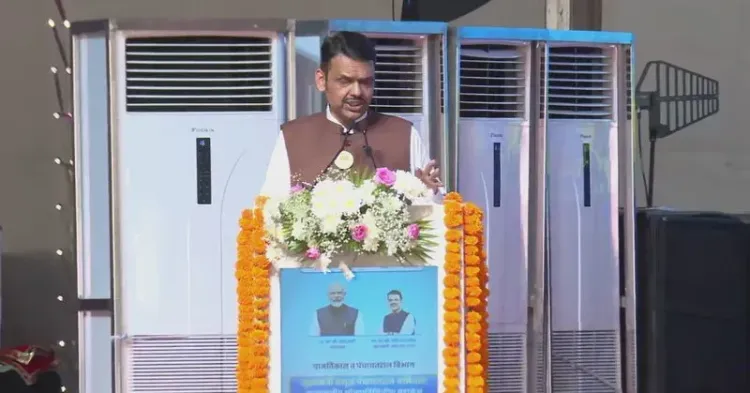
From the heart of Maharashtra's hinterland, Maharashtra Chief Minister Devendra Fadnavis convened a landmark event in Nashik on Sunday, 11 October 2026 — distributing the Mukhyamantri Samruddha Panchayatraj Abhiyan 2025-26 awards and simultaneously flagging off the campaign's next edition for 2026-27. The twin gesture — rewarding achievement and immediately renewing ambition — signals that grassroots governance is squarely in the state government's spotlight.
Awards handed out, next cycle begins the same afternoon
The event, streamed live at 2:59 PM IST, combined the felicitation of panchayats that excelled under the 2025-26 campaign with the formal shubharambh (launch) of the 2026-27 cycle. Holding both ceremonies on the same stage sends a deliberate message: the state is not pausing between cycles. Outstanding village bodies received recognition, and the very next cohort of gram panchayats was handed its mandate before the afternoon was out.
Why Nashik, and why Panchayatraj
Nashik, a divisional headquarters with a wide rural belt, is a fitting stage for a programme built around local self-governance. The Mukhyamantri Samruddha Panchayatraj Abhiyan — translated as the 'Chief Minister's Prosperous Panchayati Raj Campaign' — is designed to incentivise gram panchayats across Maharashtra to improve delivery of basic services, financial discipline, and infrastructure at the village level. Competitive award structures are a common tool in such schemes, pushing panchayats to benchmark against each other rather than wait for top-down directives.
What the back-to-back launch means for village governance
Running the award distribution and the fresh launch as a single event compresses the feedback loop between performance and renewed commitment. Villages that won know what worked; villages that did not now have a clear renewed target. For Fadnavis, the optics are equally important — Nashik provides a visible, large-format audience well beyond Maharashtra's urban centres, reinforcing the administration's pitch that rural development is not an afterthought.
The campaign's continuity into 2026-27 keeps gram panchayats engaged and accountable through another annual cycle, with the state government retaining the carrot of public recognition for the best performers. Whether the scheme translates into durable infrastructure and service improvements at the village level will be the real test — one that the next round of awards, a year from now, will begin to answer.
Point of View
A large divisional hub with deep rural connectivity, extends the political reach of the Mahayuti government beyond Mumbai. Continuity in competitive panchayat schemes is consistent with the BJP's broader national emphasis on decentralised delivery, mirroring Union-level programmes such as the Panchayat Development Index rankings. The real test is whether the award incentive structure produces measurable improvements in village infrastructure and services by the time the 2026-27 cycle concludes.
NationPress
11 Oct 2026
Frequently Asked Questions
What is the Mukhyamantri Samruddha Panchayatraj Abhiyan?
It is a Maharashtra government campaign that incentivises gram panchayats to improve service delivery, financial management, and local infrastructure through a competitive award structure overseen by the Chief Minister's office.
When were the 2025-26 Panchayatraj Abhiyan awards distributed?
The awards were distributed on 11 October 2026 at an event in Nashik , presided over by Chief Minister Devendra Fadnavis .
Has the 2026-27 Panchayatraj Abhiyan been launched?
Yes. The 2026-27 edition of the Mukhyamantri Samruddha Panchayatraj Abhiyan was formally launched at the same Nashik ceremony on 11 October 2026 .
Why was the event held in Nashik?
Nashik is a major divisional headquarters in Maharashtra with a large rural hinterland, making it a strategically visible venue for a programme focused on gram panchayat governance.
Who presided over the Panchayatraj awards event in Nashik?
Maharashtra Chief Minister Devendra Fadnavis presided over the event, which was also livestreamed to a wider audience.