CM Sukhu: HP paid Rs 5 lakh to hold I-Day event on court terms
Synopsis
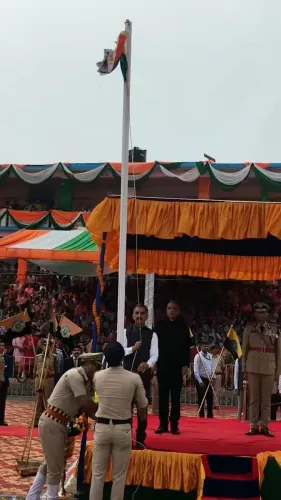
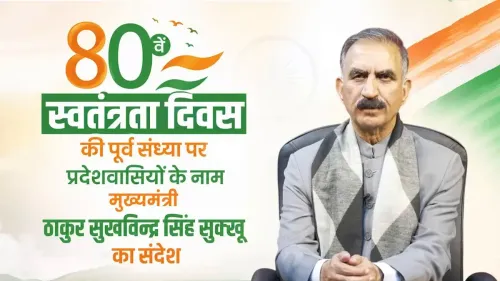
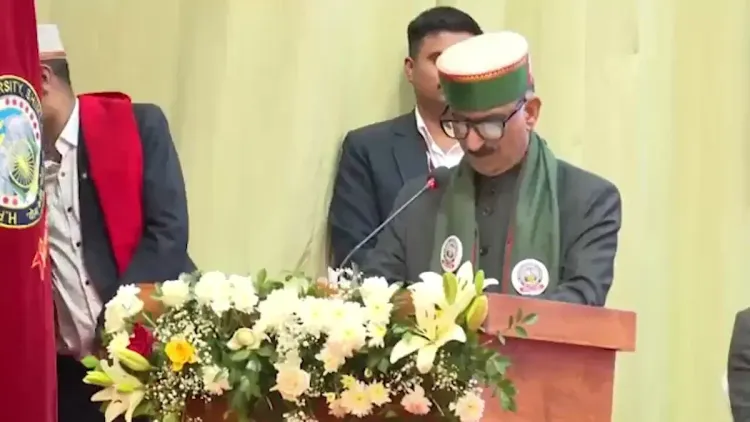
Himachal Pradesh CM Sukhvinder Singh Sukhu has revealed that the state paid Rs 5 lakh under a High Court-imposed condition to celebrate Independence Day on a public ground — calling it unjust nearly 80 years after independence.
Key Takeaways
Rs 5 lakh was paid by the Himachal Pradesh government to use a ground for the Independence Day ceremony, as directed by the High Court.
CM Sukhvinder Singh Sukhu says this is the first time in nearly 80 years since Independence that such a condition was imposed for a state-level national celebration.
Flat grounds are scarce in Himachal Pradesh's hilly terrain; schools and community grounds are routinely shared for public functions.
Sukhu described the situation as 'not justified,' pointing to a structural infrastructure deficit facing mountain states.
The Chief Minister stopped short of criticising the judiciary directly, framing his concern as a systemic governance and land-availability issue.
Nearly 80 years after Independence, Himachal Pradesh had to pay Rs 5 lakh and seek a High Court order just to celebrate Independence Day on a public ground — and Chief Minister Sukhvinder Singh Sukhu is calling it out as a glaring injustice. The disclosure, made by the Chief Minister on Sunday, October 11, 2026, has put the spotlight on a rarely-discussed infrastructure crisis in India's mountain states.
What the High Court condition actually meant
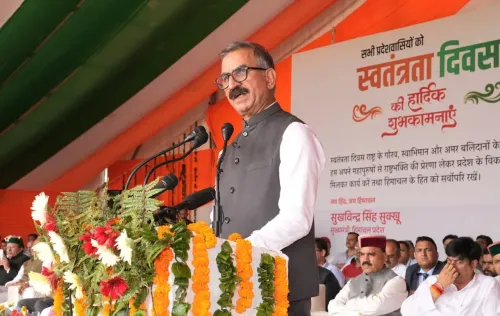
In his post, CM Sukhu explained the peculiar bind hill states face: flat, open grounds are scarce in a terrain like Himachal Pradesh's, so schools and community grounds are routinely shared for public functions. This year, however, the state government could use a ground for the Independence Day ceremony only after the Himachal Pradesh High Court granted conditional permission — with a fee of five lakh rupees attached. The Chief Minister described the situation plainly: 'आज़ादी के इतने वर्षों बाद भी हमें स्वतंत्रता दिवस मनाने के लिए हाई कोर्ट के फैसले का सहारा लेना पड़े, तो यह न्यायोचित नहीं है' — 'Even after so many years of Independence, having to rely on a High Court order to celebrate Independence Day is not justified.'
The geography problem that politics ignored for decades
The Chief Minister's statement points to something structural. Unlike plains states, Himachal Pradesh has never had the luxury of large, dedicated parade grounds in most districts. Flat land is at a premium, and state and district administrations have historically depended on school playgrounds, maidans attached to courts, or shared civic spaces — all subject to competing institutional claims. The result, Sukhu argues, is that sovereign celebrations end up hostage to litigation schedules and conditional orders, an outcome he calls 'not just'.
A pointed political signal from Shimla
CM Sukhu stopped short of naming the court in adversarial terms — his criticism is directed at the systemic gap, not the judiciary. The framing, nonetheless, is unmistakably political: by highlighting that the state had to pay Rs 5 lakh and secure judicial clearance to host a constitutional celebration, he is building a public case for dedicated government land for civic and state functions in the hills. It is a quiet but sharp demand — and one that resonates in every mountain constituency where infrastructure promises have lagged for generations.
If a state government cannot unfurl the national flag on its own terms without a court fee, the question Sukhu is really asking is this: what exactly did the state inherit at Independence?
Point of View
He maximises public resonance. The broader subtext is a long-standing demand by hill-state governments for greater central support in civic infrastructure. Whether this translates into a formal legislative or judicial move to earmark dedicated state land for government functions will determine if this is a signal or merely a statement.
NationPress
11 Oct 2026
Frequently Asked Questions
Why did Himachal Pradesh pay Rs 5 lakh for Independence Day celebrations?
The Himachal Pradesh High Court gave conditional permission to use a public ground for the state's Independence Day ceremony, with a fee of Rs 5 lakh as part of that condition. CM Sukhu disclosed this publicly, calling it unjust.
What did CM Sukhu say about Independence Day ground issue?
CM Sukhvinder Singh Sukhu said that nearly 80 years after Independence, having to rely on a High Court order and pay Rs 5 lakh to celebrate Independence Day on a ground is 'not justified,' pointing to the acute shortage of flat public land in Himachal Pradesh.
Why is it hard to find grounds for events in Himachal Pradesh?
Himachal Pradesh is a mountainous state where flat land is scarce. Schools and community grounds are typically shared for public events, which often creates competing institutional claims and, in this case, required judicial intervention.
Has Himachal Pradesh faced this problem with Independence Day before?
According to CM Sukhu, this is the first time in nearly 80 years of Independence that the state government had to pay a fee under a court order to use a ground for the Independence Day function.
Is CM Sukhu criticising the Himachal Pradesh High Court?
CM Sukhu did not criticise the judiciary directly. His statement targets the systemic gap — the absence of dedicated state-owned public grounds — rather than the court's order itself.