Kejriwal questions Modi's resolve on contested policy
Synopsis
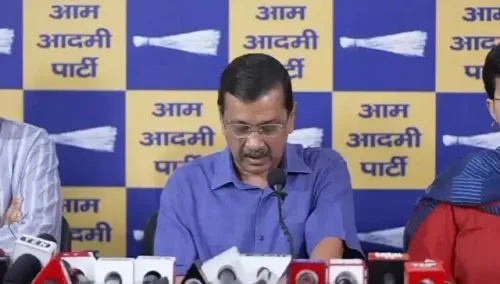
AAP convenor Arvind Kejriwal publicly challenged PM Narendra Modi on 13 August 2026, questioning why the central government is pressing ahead with a policy he says experts have rejected and the country is opposing — echoing AAP's long-running critique of unilateral BJP governance.
Key Takeaways
AAP convenor Arvind Kejriwal posted a direct challenge to PM Narendra Modi on 13 August 2026 .
Kejriwal claims expert opinion is uniformly against the unnamed policy and that the 'whole country' is opposing it.
The post does not name the specific policy, making the charge broadly applicable to multiple contested decisions.
AAP has used the same 'unilateral imposition' framing against the central government on demonetisation (2016) and the farm laws (2020) .
The immediate political watch-point is whether parliamentary debate or state-level pushback follows.
A sharp political challenge landed on Thursday, 13 August 2026, when AAP convenor Arvind Kejriwal publicly demanded to know why Prime Minister Narendra Modi is pressing ahead with a policy that, he claims, experts have uniformly rejected and the country at large is opposing.
Kejriwal's post is blunt and direct: 'All experts opinions to the contrary. Whole country opposing it. Then why is Modi ji hell bent upon imposing it on the country.' The framing is a well-worn but potent one in Indian opposition politics — casting a government decision not as a policy choice but as an act of wilful imposition against democratic consensus.
A familiar opposition playbook — and why it still lands
AAP and other opposition parties have deployed this exact argument at pivotal moments in recent political history. The 2016 demonetisation was met with near-unanimous economist scepticism and mass public hardship; the government pushed through regardless. The 2020 farm laws drew months of protest from farming communities across the country before eventually being repealed. Both episodes entrenched a narrative — that the BJP-led central government treats expert consensus and popular dissent as obstacles to be managed, not signals to be heeded.
Kejriwal's post plugs directly into that lineage, even without naming the specific policy in question. The rhetorical move is deliberate: the 'it' is left unnamed, letting the charge breathe across any number of contested decisions currently before the government.
The weight of 'whole country opposing it'
In Indian political discourse, the claim of near-universal opposition is both a mobilising device and a pressure point. When opposition leaders invoke it, they are simultaneously speaking to disaffected citizens, signalling to fence-sitting allies, and daring the government to defend its position in public. The question Kejriwal poses — 'toh kyun?' (then why?) — is the kind that forces a response or invites the silence to do the arguing.
Whether parliamentary debates or state government pushback will follow is the immediate thing to watch. For now, Kejriwal has put the burden of explanation squarely on the Prime Minister's Office.
Point of View
Pointed enough to force a government response. It fits a pattern AAP has refined over a decade: framing BJP governance as contemptuous of expertise and democratic sentiment, a charge that has historically gained traction when the government stays silent. The unnamed policy is the article's central ambiguity; if and when it is identified, the political stakes will sharpen considerably. For now, the post functions as a standing indictment, not a targeted strike.
NationPress
27 Sept 2026
Frequently Asked Questions
What policy is Kejriwal referring to in his post against Modi?
Kejriwal's post does not name the specific policy. It refers to an unspecified government decision that he says experts and the public are opposing, leaving the charge open to multiple interpretations.
Why is Kejriwal criticising PM Modi on 13 August 2026?
Kejriwal posted that PM Modi is 'hell bent upon imposing' a policy despite expert opinion being against it and widespread public opposition, demanding the Prime Minister justify his position.
Has AAP made similar arguments against the central government before?
Yes. AAP has repeatedly framed major BJP-led central government decisions — including the 2016 demonetisation and the 2020 farm laws — as unilateral impositions that ignored expert advice and public protest.
What is Arvind Kejriwal's current political position?
Arvind Kejriwal is the national convenor of the Aam Aadmi Party and a former Chief Minister of Delhi.
What happens next after Kejriwal's challenge to Modi?
Political watchers will look for a government response, parliamentary debate on the contested policy, or coordinated pushback from opposition-governed states.