Manipur hill districts tense as clashes kill 9, CM urges peace
Synopsis
Nine people — six Nagas, two Kukis, and a Gorkha farmer — are dead after two days of armed clashes in Manipur's hill districts, triggered by the killing of a mother of five in a Kuki-majority village. With a beheading reported and assailants allegedly fleeing into Myanmar, the Naga-Kuki front has opened a second, distinct front in Manipur's spiralling ethnic crisis.
Key Takeaways
At least 9 people — 6 Nagas , 2 Kukis , and 1 Gorkha farmer — were killed in clashes across Kamjong , Kangpokpi , and Ukhrul districts on Friday–Saturday, 10–11 October 2026 .
Violence was triggered by the killing of Domkhonei Touthang , a 42-year-old mother of five, in Chassad village , Kamjong, on Friday night.
A Naga civil society body claimed a 52-year-old villager, Ajinbou R. , was beheaded by suspected militants in Kangpokpi district.
Chief Minister Yumnam Khemchand Singh condemned the killings and called for peace, dialogue, and restraint from community leaders.
The Kamjong District Magistrate invoked Section 163 BNSS , imposing prohibitory orders banning gatherings of five or more people and the carrying of firearms.
More than 40 people have been killed in Kuki-Naga clashes in Manipur's hill districts since February 2026 , according to local accounts.
Three hill districts of Manipur — Kamjong, Ukhrul, and Kangpokpi — remained on edge on Sunday, 11 October, after fresh clashes between Naga and Kuki communities pushed the death toll to nine, including a woman, according to officials. The latest outbreak has emerged as one of the deadliest episodes of inter-community violence in the state this year.
Who Was Killed and Where
The deaths, reported across Friday and Saturday, included six Nagas, two Kukis, and a Gorkha farmer. No fresh incidents were reported in the three districts on Sunday.
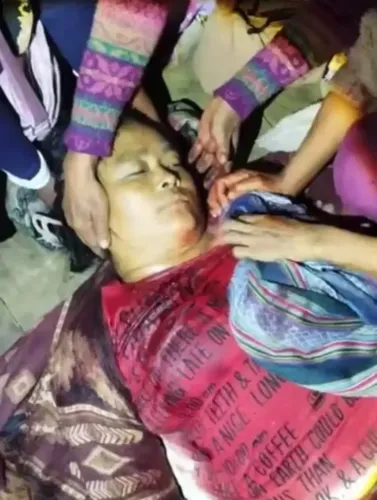
The violence was triggered on Friday night when Domkhonei Touthang, a 42-year-old mother of five, was shot near her neck in Chassad village in Kamjong district and died within minutes, according to a police official. Chassad is a Kuki-majority village situated within a predominantly Naga district — a demographic tension that has historically made it a flashpoint. Her killing set off an exchange of fire between armed groups from both communities that continued through Saturday, during which a 23-year-old man was also killed and 10 houses were set ablaze. Kuki-Zo organisations held security forces and a Naga armed group responsible for the woman's death.
In a separate attack in Kangpokpi district on Saturday, suspected militants stormed Tapon and Makui villages, killing two Naga village guards identified as M. Daimai and R. Gangmei, and a third individual identified as Ringkangmai. The Working Committee JTC Manipur, a Naga civil society organisation, also claimed that a 52-year-old villager, Ajinbou R., had been beheaded by militants, and demanded the return of his severed head so that his family could perform last rites with dignity.
In Ningchou village, a Tangkhul Naga settlement near the India-Myanmar border in Kamjong district, suspected militants opened fire, killing 35-year-old Ngachanso Ningshen and 48-year-old Leishishan Leishadang. Local residents claimed the assailants fled towards Myanmar after the attack.
In Ukhrul district, Sandeep Rai, a 40-year-old man from the Nepali community, was shot dead near Chepu Yaolen when suspected militants allegedly opened fire on the vehicle he was driving. Rai died inside the car.
Chief Minister Appeals for Restraint
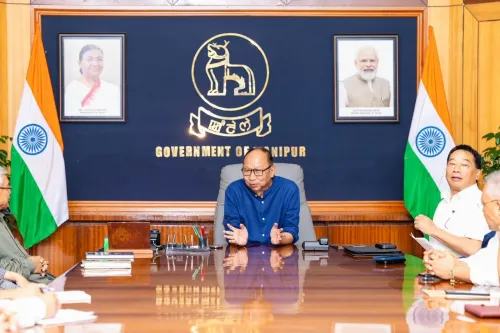
Chief Minister Yumnam Khemchand Singh condemned the killings and appealed for calm. 'I condemn the killing of innocent civilians and the violence that occurred today in Kamjong and Kangpokpi districts,' Singh said in posts on X and Facebook, adding that he had instructed authorities to take 'immediate and effective measures to control the situation, restore peace and order, and ensure the safety and security of all citizens.'
'I appeal to public leaders and civil society organisations of different communities to come forward, exercise restraint, and cooperate in defusing the situation. I urge all sections of society to prioritise peace, dialogue and harmony,' Khemchand Singh said.
Security Forces on the Ground
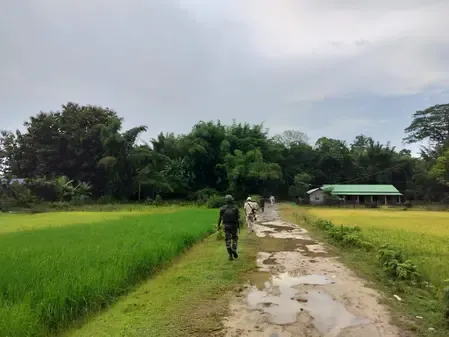
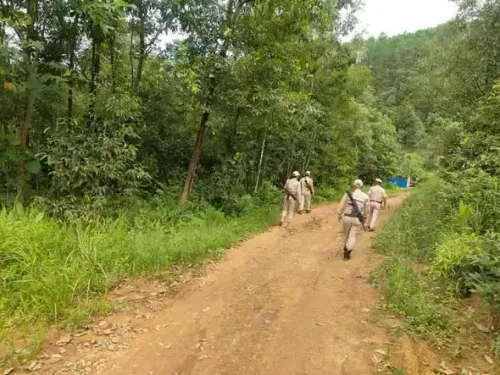
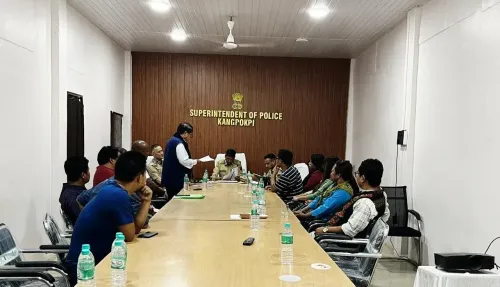
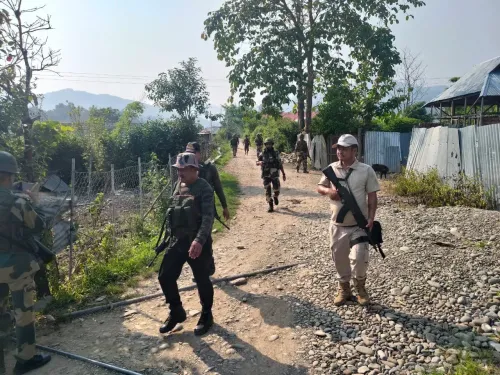
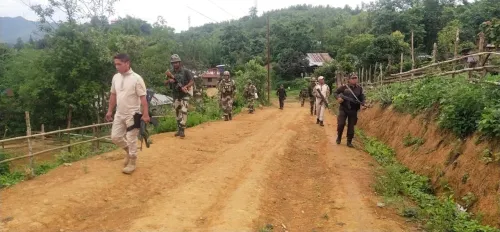
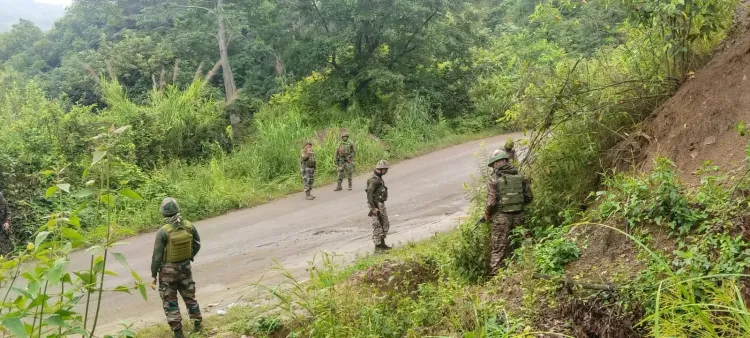
Personnel from the Central Armed Police Forces (CAPF) and Manipur Police have intensified patrolling and search operations across the three affected districts to prevent further escalation, officials said. The Kamjong district's District Magistrate issued an order under Section 163 of the Bharatiya Nagarik Suraksha Sanhita (BNSS), prohibiting the assembly of five or more people, the carrying of firearms and other potentially dangerous objects, and movement within the restricted area.
The Wider Pattern of Violence
This comes amid a broader deterioration of security in Manipur's hill districts. According to local accounts, more than 40 people have been killed and numerous houses burnt in Kuki-Naga clashes in the affected districts since February 2026. The violence has been concentrated primarily in Ukhrul, Kamjong, Kangpokpi, Tamenglong, Noney, and parts of Senapati districts. Notably, this Naga-Kuki dimension is distinct from the longer-running Meitei-Kuki conflict that has gripped the state's valley districts since May 2023, making Manipur's ethnic crisis a multi-front challenge for both the state government and security planners.
With security forces deployed and a prohibitory order in place, authorities are now focused on preventing a further spiral as community tensions in the hill districts remain far from resolved.
Point of View
Yet it is producing comparable casualties and a comparable breakdown in civilian security — including a reported beheading and cross-border flight of assailants into Myanmar. The state government's response — a CM statement on social media and intensified patrolling — mirrors the pattern seen in the valley conflict, where reactive security measures have consistently failed to address the underlying ethnic territorial disputes. With more than 40 dead in the hill districts since February and prohibitory orders now normalised across multiple districts, the question is whether New Delhi treats this as an extension of the same crisis or allows it to calcify into a separate, unmanaged front.
NationPress
11 Oct 2026
Frequently Asked Questions
What triggered the latest violence in Manipur's hill districts?
The immediate trigger was the killing of Domkhonei Touthang , a 42-year-old Kuki woman and mother of five, who was shot dead in Chassad village in Kamjong district on Friday night, 10 October 2026. Her death sparked retaliatory exchanges of fire between Kuki and Naga armed groups that continued through Saturday.
Which districts are affected and how many people have died?
The violence has centred on Kamjong , Kangpokpi , and Ukhrul districts, with nine people killed — six Nagas, two Kukis, and a Gorkha farmer — in clashes on Friday and Saturday. No fresh incidents were reported on Sunday. More than 40 people have been killed in Kuki-Naga clashes across Manipur's hill districts since February 2026, according to local accounts.
What action has the Manipur government taken?
Chief Minister Yumnam Khemchand Singh condemned the killings and directed authorities to restore order and ensure civilian safety. The Kamjong District Magistrate imposed prohibitory orders under Section 163 BNSS, banning gatherings of five or more and the carrying of firearms. Central Armed Police Forces and Manipur Police have intensified patrolling across the three districts.
How is this violence different from the ongoing Meitei-Kuki conflict?
The current clashes involve Naga and Kuki communities in Manipur's hill districts and are geographically and ethnically distinct from the Meitei-Kuki conflict that has been centred in the valley since May 2023. The Naga-Kuki violence represents a separate front of ethnic tensions, adding to the complexity of Manipur's security crisis.
What is the claim about a beheading in Kangpokpi?
The Working Committee JTC Manipur , a Naga civil society organisation, claimed that a 52-year-old villager identified as Ajinbou R. was beheaded by suspected militants in Kangpokpi district. The organisation demanded the return of his severed head to allow his family to perform last rites. Authorities have not independently confirmed this specific claim in available official statements.