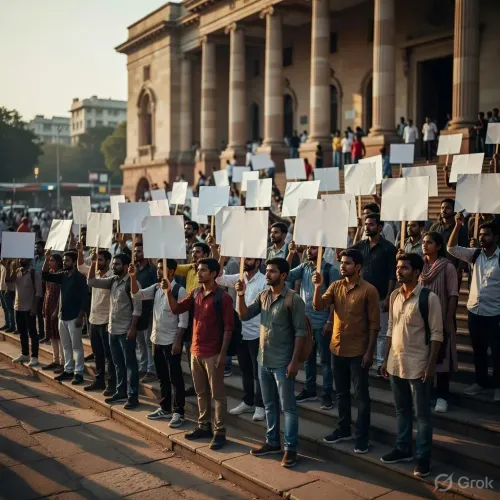
Kejriwal Salutes India's Youth for Courage Against Oppression
Synopsis
AAP convenor Arvind Kejriwal on 23 July 2026 posted a salute to India's youth on X, praising their courage in facing what he called 'atrocities' and crediting them with awakening the nation's conscience. The post, backed by a video, continues AAP's pattern of aligning with youth-led resistance movements.
Key Takeaways
Arvind Kejriwal posted on X on 23 July 2026 saluting India's youth for their courage.
He used the word atyacharon (atrocities) to describe what the youth had faced, without naming a specific event or institution.
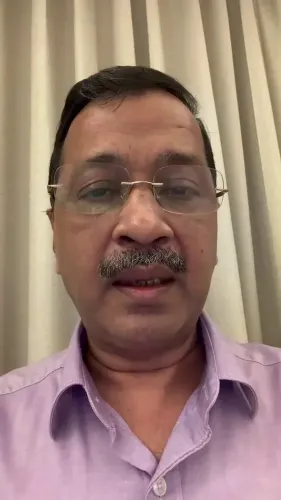
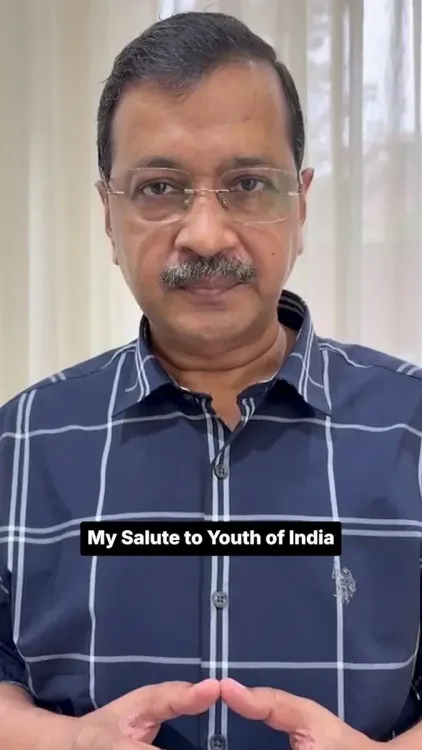
The post was accompanied by a video , likely aimed at amplifying reach among younger audiences.
AAP has a documented history of publicly backing student and youth movements, including during the 2019–2020 CAA protests .
No specific incident, date, or location was named in the post, leaving the reference open to interpretation.
Opposition parties and the central government had not issued formal responses at the time of publication.
AAP convenor Arvind Kejriwal on Thursday, 23 July 2026, paid tribute to the youth of India, saying their courage in the face of what he described as 'atrocities' had awakened the entire nation. The post, shared on X, was accompanied by a video and drew immediate attention amid a broader climate of youth-led activism across the country.
Context
In the post, Kejriwal wrote: 'हमारे देश के युवाओं को मेरा सलाम' ('My salute to the youth of our country'). He added that with the spirit and resolve with which they had faced 'these atrocities', they had 'awakened the entire country.' The message, though brief, was pointed — framing young people as the conscience of the nation in the face of perceived state excess.
The post did not name a specific event, location, or institution. However, the language — invoking 'haulsa' (courage) and 'bulandī' (elevation of spirit) — is consistent with the register Kejriwal and AAP have used during earlier episodes of youth-led protest, including agitations in 2019–2020 against the Citizenship Amendment Act.
Policy Backdrop
Aam Aadmi Party, founded in 2012, has consistently positioned itself alongside student and youth movements, framing such mobilisations as organic expressions of public discontent against central government overreach. Kejriwal's record includes public solidarity with campus protesters and, later, with the farmer protest movement — each time using social media to amplify grassroots voices.
This pattern of messaging typically intensifies during periods of law-and-order tension, when opposition leaders seek to frame state responses as disproportionate. The use of the word 'atyacharon' (atrocities) is particularly charged, signalling that Kejriwal views the treatment of protesters as crossing a threshold of acceptable governance.
Stakeholders and Impact
Indian youth and student communities are the primary addressees of the post. By saluting them directly, Kejriwal is performing a dual function: validating the protesters' sense of grievance and positioning AAP as the political home for those disenchanted with the ruling establishment.
The accompanying video — the nature of which was not independently verifiable at the time of publication — is likely to amplify the post's reach among younger, digitally active audiences. Opposition parties may be expected to echo similar sentiments, while the central government has not, as of publication, issued a direct response to the post.
What's Next
Political observers will watch for follow-up statements from Kejriwal or senior AAP leaders that clarify the specific incident or movement being referenced. Any escalation in youth protests, or a parliamentary debate on campus safety and civil liberties, could give this message a longer political tail.
The broader implication is clear: as India's opposition continues to court younger voters ahead of future electoral cycles, solidarity with youth activism is becoming a defining plank — and Kejriwal's post is an early signal of how that narrative will be shaped.
Point of View
He maximises the message's applicability across multiple grievances simultaneously, a technique AAP has refined over successive protest cycles. The salute framing also elevates youth from protesters to patriots, a rhetorical move that complicates any government pushback. In a longer arc, this signals that AAP intends to make youth welfare and civil liberties central to its national opposition identity ahead of future elections.
NationPress
21 Oct 2026
Frequently Asked Questions
Why did Kejriwal salute India's youth on 23 July 2026?
Kejriwal posted on X to honour what he described as the courage of India's youth in facing 'atrocities', saying they had awakened the entire nation. He did not specify the exact event or movement he was referring to.
What does Kejriwal mean by 'atrocities' against youth?
In his post, Kejriwal used the Hindi word atyacharon , meaning atrocities or oppression. He did not name a specific incident, agency, or location, leaving the reference contextually broad.
Has Kejriwal supported youth protests before?
Yes. Kejriwal and AAP have publicly backed youth-led movements on multiple occasions, including the 2019–2020 protests against the Citizenship Amendment Act, consistently framing such agitations as expressions of public conscience.
What is AAP's position on youth activism in India?
AAP, founded in 2012 , has positioned youth and student movements as legitimate expressions of democratic dissent. The party frequently uses social media to amplify such voices and frame state responses as overreach.
What might happen next after Kejriwal's post?
Political observers expect follow-up statements from AAP clarifying the referenced incident. Parliamentary debate on youth rights or campus safety is also possible if the underlying protest gains further momentum.