Nadda: Health is a key pillar of Viksit Bharat 2047
Synopsis
Union Health Minister J. P. Nadda declared health a critical pillar of PM Modi's Viksit Bharat 2047 vision, highlighting how the National Health Policy 2017 shifted India's approach from curative treatment to prevention and wellness — arguing only healthy citizens can drive national productivity and development.
Key Takeaways
Union Health Minister J.
Nadda linked national health policy directly to the Viksit Bharat 2047 developed-nation goal on 21 October 2026 .
He described health as a 'critically important pillar' of PM Narendra Modi 's long-term development vision.
The National Health Policy 2017 marked a deliberate shift from a curative, hospital-centric model to disease prevention and healthy-lifestyle promotion.
Its predecessor, the National Health Policy 2002 , focused on primary healthcare access but remained largely reactive in approach.
Programmes such as Ayushman Bharat Health and Wellness Centres are direct expressions of the NHP 2017 preventive philosophy.
Nadda argued that only healthy citizens can actively contribute to the country's productivity and economic development.
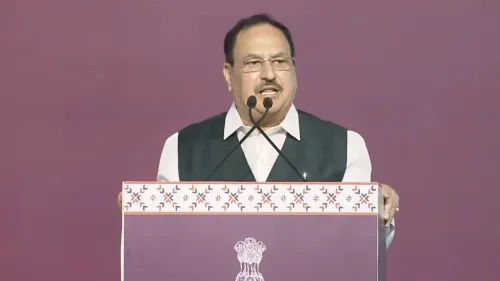
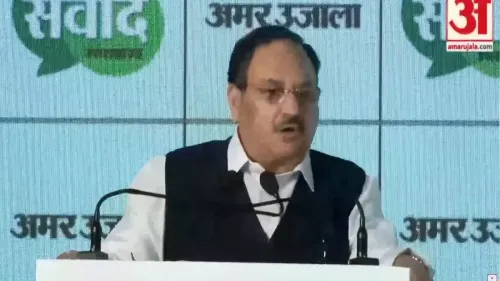
A developed India by 2047 needs healthy citizens first — that is the argument Union Health Minister J. P. Nadda laid out on Wednesday, 21 October 2026, tying the nation's long-term economic ambition directly to the quality of its public health. Without a well population, productivity stalls, and the Viksit Bharat dream stays exactly that — a dream.
Posting in Hindi on X, Nadda framed health as what he called a 'bahut bada important pillar' — a critically important pillar — of Prime Minister Narendra Modi's vision for India to attain developed-nation status by the centenary of independence. 'स्वस्थ नागरिक ही देश की उत्पादकता और विकास में सक्रिय योगदान दे सकते हैं' ('Only healthy citizens can actively contribute to the productivity and development of the nation'), he wrote, anchoring a policy argument in a simple, human truth.
How NHP 2017 rewrote the health playbook
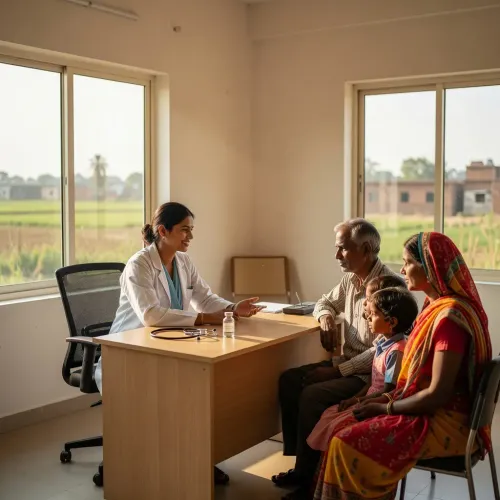
Nadda pointed specifically to the National Health Policy 2017 as the blueprint that operationalises this vision. The policy marked a deliberate pivot: away from a hospital-centric, treatment-first model and toward disease prevention, wellness promotion, and healthy-lifestyle interventions at the community level. Its predecessor, the National Health Policy 2002, had centred on primary healthcare access and equity — important gains, but largely reactive ones.
The 2017 revision formalised what health economists had long argued: that keeping people well is cheaper, more equitable, and more productive than treating them after they fall sick. For a country of 1.4 billion people, even marginal improvements in preventive care translate into enormous gains in workforce output — precisely the kind of demographic dividend that underpins the Viksit Bharat calculus.
Viksit Bharat and the health-economy link
The Viksit Bharat goal — India as a fully developed economy by 2047, the hundredth anniversary of independence — spans sectors from infrastructure to education, but successive Union budgets and policy documents have placed health near the top of the enabling stack. Nadda's framing reinforces that architecture: economic transformation without a healthy, productive population base is structurally incomplete.
Components of the Ayushman Bharat programme — including Health and Wellness Centres designed to push primary care into villages and underserved urban pockets — are among the visible expressions of the NHP 2017 philosophy. Periodic health ministry reviews will test how far the shift from curative to preventive care has actually travelled beyond policy documents into lived outcomes.
The minister's message is clear: the clock to 2047 is ticking, and India's health system is either a launchpad or a bottleneck. The bet, for now, is firmly on the former.
Point of View
He signals that health metrics will increasingly be benchmarked against development targets, not just epidemiological ones. This positions the health ministry as a co-owner of India's 2047 story, raising the political stakes for delivery on preventive-care infrastructure. Whether that translates into accelerated funding and grassroots implementation, or remains aspirational rhetoric, is the central question the next round of health-ministry reviews will have to answer.
NationPress
21 Oct 2026
Frequently Asked Questions
What is Viksit Bharat 2047?
Viksit Bharat 2047 is PM Narendra Modi's vision for India to achieve developed-nation status by 2047, the centenary of Indian independence, spanning sectors including health, infrastructure, education, and the economy.
What did JP Nadda say about health and Viksit Bharat?
Union Health Minister J. P. Nadda said on 21 October 2026 that health is a critically important pillar of the Viksit Bharat goal, arguing that only healthy citizens can actively contribute to national productivity and development.
What is the National Health Policy 2017?
The National Health Policy 2017 is a landmark Indian policy document that shifted the country's health approach from curative, hospital-centric care to disease prevention, wellness promotion, and healthy-lifestyle interventions at the community level.
How does National Health Policy 2017 differ from National Health Policy 2002?
While the 2002 policy focused primarily on equitable access to primary healthcare, the 2017 revision expanded the agenda to include preventive care and wellness, moving beyond reactive treatment models.
What is Ayushman Bharat and how does it relate to NHP 2017?
Ayushman Bharat is a flagship health programme that includes Health and Wellness Centres designed to deliver primary and preventive care at the grassroots level, directly reflecting the community-focused preventive philosophy of the National Health Policy 2017.