Nvidia Expands AI Supply Chain With Six Global Partners
Synopsis
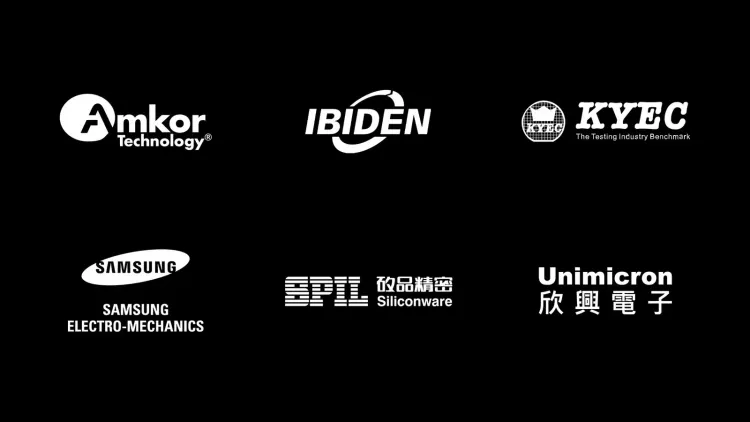
Nvidia has named Amkor, IBIDEN, KYEC, Samsung Electro-Mechanics, SPIL, and Unimicron as partners in a global capacity expansion covering components, advanced packaging, and testing — a direct response to what it calls 'extraordinary' demand for AI compute infrastructure.
Key Takeaways
Nvidia announced a multi-partner supply-chain expansion on 21 October 2026 to address 'extraordinary' AI compute demand.
Six partners named: Amkor, IBIDEN, KYEC, Samsung Electro-Mechanics, SPIL, and Unimicron — covering components, advanced packaging, and testing.
Advanced packaging and IC substrates — supplied by IBIDEN and Unimicron — represent one of the most persistent bottlenecks in high-end GPU production.
The partner geography spans Japan, South Korea, and Taiwan , reflecting deliberate supply-chain diversification.
The stated goal is to get 'more Nvidia infrastructure in the hands of businesses and developers' globally.
Industry-wide advanced packaging capacity expansion has been under way since the AI demand surge of 2023 .
The world cannot get enough compute — and Nvidia is now pulling six of its biggest supply-chain partners into a coordinated push to close that gap. On Wednesday, 21 October 2026, the chip giant announced an expanded capacity-building effort spanning essential components, advanced packaging, and semiconductor testing, framing the move as a direct response to 'extraordinary' demand for AI infrastructure.
Six Partners, One Supply-Chain Offensive
Nvidia named Amkor, IBIDEN, KYEC, Samsung Electro-Mechanics, SPIL, and Unimicron as partners in the expansion. The list reads like a who's who of the global semiconductor supply chain: Amkor is among the world's largest outsourced semiconductor assembly and test (OSAT) providers; IBIDEN is a Japanese specialist in advanced packaging substrates; SPIL is a Taiwanese OSAT firm; and Unimicron manufactures the printed circuit boards and IC substrates that sit beneath every high-end GPU package. Together, they plug into nearly every layer of what it takes to ship an Nvidia accelerator.
The company said the partners are working to 'put more Nvidia infrastructure in the hands of businesses and developers' — language that signals the bottleneck is not chip design but the physical capacity to assemble, package, and test silicon at scale.
Why Advanced Packaging Is the Real Chokepoint
For years, the story of AI acceleration was written in transistor counts and architectural leaps. The newer, more inconvenient story is about substrate layers, copper pillars, and thermal-compression bonding — the unglamorous art of advanced packaging. Nvidia's accelerators, particularly the multi-die designs that stack high-bandwidth memory alongside compute dies, demand packaging complexity that only a handful of facilities worldwide can handle. The inclusion of IBIDEN and Unimicron on this list signals that substrate supply — historically the quietest but most stubborn chokepoint — is being addressed head-on.
Industry-wide efforts to expand advanced packaging capacity accelerated sharply after 2023, when demand for AI accelerators first overwhelmed the supply of CoWoS and related packaging capacity. The new announcement suggests those efforts are now reaching a multi-partner, multi-geography scale.
Geographic Diversification Built Into the Strategy
The six-partner roster spans Japan (IBIDEN), South Korea (Samsung Electro-Mechanics), Taiwan (SPIL, Unimicron, KYEC), and globally distributed Amkor facilities. That spread is not accidental. Semiconductor supply chains have faced sustained pressure to diversify away from single-country concentration, and Nvidia's explicit framing of 'expand our supply around the world' positions this as both a capacity play and a resilience play. For AI businesses and developers waiting on accelerator availability, the practical promise is shorter queues and wider geographic access to Nvidia infrastructure.
Point of View
And investors and enterprise buyers should watch substrate utilisation rates as closely as they watch GPU specs. This move also mirrors a broader industry pattern of geographic supply-chain diversification, reducing dependence on any single manufacturing hub and improving resilience against geopolitical disruption. For the global AI ecosystem, this is less a product announcement than an infrastructure warranty.
NationPress
22 Oct 2026
Frequently Asked Questions
Which companies is Nvidia partnering with to expand AI supply chain capacity?
Nvidia is working with Amkor, IBIDEN, KYEC, Samsung Electro-Mechanics, SPIL, and Unimicron to expand capacity across components, advanced packaging, and semiconductor testing.
Why is Nvidia expanding its supply chain with these partners?
Nvidia says demand for compute is 'extraordinary' and the expansion is designed to put more Nvidia AI infrastructure in the hands of businesses and developers worldwide by removing manufacturing and packaging bottlenecks.
What is advanced packaging and why does it matter for AI chips?
Advanced packaging stacks multiple dies — such as GPU compute dies and high-bandwidth memory — into a single module. It is one of the most complex and capacity-constrained steps in producing high-end AI accelerators, making it a key bottleneck in the supply chain.
What does IBIDEN and Unimicron do for Nvidia?
IBIDEN is a Japanese firm that makes advanced packaging substrates, while Unimicron is a Taiwanese manufacturer of printed circuit boards and IC substrates — both critical materials that sit beneath every packaged Nvidia GPU.
How does this Nvidia supply chain expansion affect Indian AI businesses?
By increasing global manufacturing and packaging capacity, Nvidia aims to reduce wait times and improve availability of AI accelerators, which could benefit Indian cloud providers, AI startups, and enterprises seeking to build or expand GPU-based infrastructure.