Nvidia Calls South Korea a Full-Stack AI Partner
Synopsis
Nvidia on June 9, 2026, declared South Korea a full-stack AI partner spanning sovereign deployments, AI factories, gaming, and student developers — covering all five layers from energy to application. The announcement underscores South Korea's ambition to build, not merely adopt, the AI era.
Key Takeaways
Nvidia publicly called South Korea a 'full-stack partner' in the AI buildout on June 9, 2026 .
The partnership spans all five layers of Nvidia's AI stack: from energy and data-centre infrastructure to consumer applications.
Tagged partners include Riot Games (gaming) and the Doosan Bears (professional baseball), illustrating the breadth of AI adoption.
Nvidia has promoted sovereign AI infrastructure programmes with governments globally since 2023 , with South Korea a key node given its Samsung and SK Hynix manufacturing base.
Student developer programmes were highlighted, signalling investment in South Korea's long-term AI talent pipeline.
The Korea model — government strategy, semiconductor capacity, and consumer tech culture combined — is being watched by other Indo-Pacific nations including India .
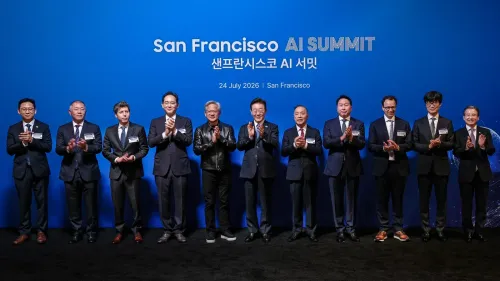
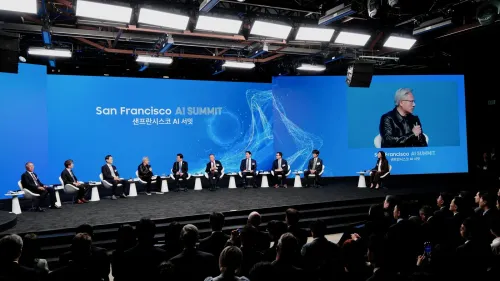
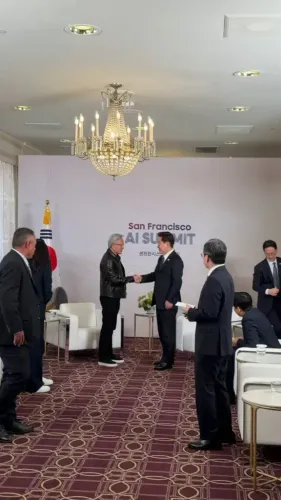
Chip giant Nvidia on Tuesday, June 9, 2026, publicly recognised South Korea as a 'full-stack partner' in the global AI buildout, citing sovereign AI deployments, AI factories, gaming partnerships, and student developer programmes as evidence of the country's end-to-end commitment to the technology era.
Context
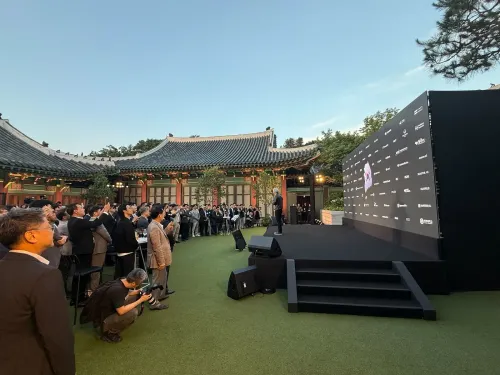
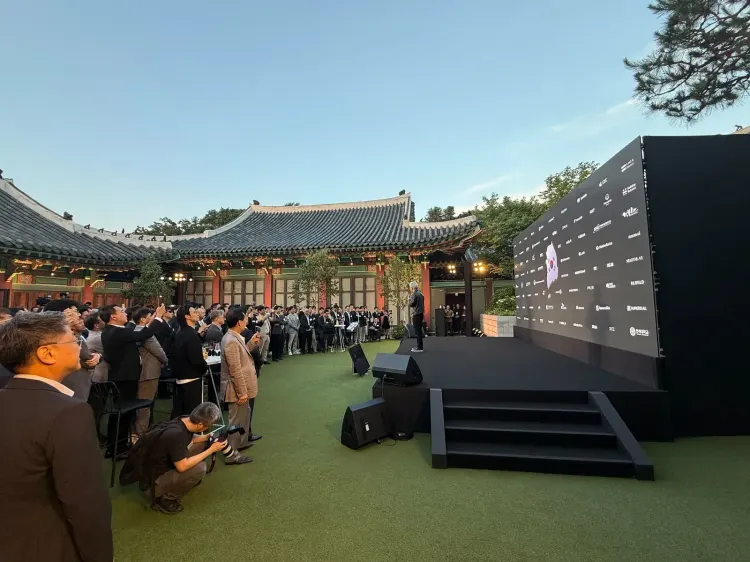
In a post tagging Riot Games and the Doosan Bears — a gaming giant and a KBO League baseball franchise respectively — Nvidia described a week in Korea that spanned every layer of the AI stack, from energy infrastructure at the base to consumer and entertainment applications at the top. The company's message was pointed: 'Korea isn't watching the AI era arrive. It's building it.'
The reference to 'all five layers' maps onto Nvidia's own framework for national AI infrastructure, which runs from power and data-centre hardware through networking, software, and finally end-user applications. Sovereign AI and AI factories occupy the lower layers; gaming and developer ecosystems occupy the upper ones.
Policy Backdrop
South Korea released its National Strategy for Artificial Intelligence in 2019, committing to build domestic AI talent, data pipelines, and semiconductor capacity. The country is home to Samsung Electronics and SK Hynix, two of the world's dominant memory-chip makers, giving it a manufacturing base that few nations can match.
From 2023 onward, Nvidia began actively promoting sovereign AI infrastructure programmes with multiple governments, supplying national-scale GPU clusters that allow countries to process sensitive data domestically rather than routing it through foreign cloud providers. South Korea, with its existing semiconductor ecosystem, was a natural candidate for deep integration.
The broader geopolitical backdrop matters: US export controls on advanced chips have accelerated the race among allied nations to lock in supply agreements and build self-sufficient compute capacity before restrictions tighten further.
Stakeholders and Impact
The partnerships Nvidia highlighted cut across sectors. Riot Games, developer of League of Legends — a title with an outsized following in South Korea — represents the gaming and entertainment layer where AI is being used for content generation, anti-cheat systems, and player experience personalisation. The Doosan Bears tie-up signals AI's entry into professional sports analytics and fan engagement in the country.
At the infrastructure end, Korean chipmakers stand to benefit from tighter co-engineering relationships with Nvidia as AI factory deployments scale. Student developer programmes, also mentioned in the post, target the talent pipeline, seeding the next generation of Korean engineers with Nvidia's software tools and frameworks.
For Indian observers, the Korea model is instructive: a government-backed AI strategy, a world-class semiconductor base, and a consumer tech culture have combined to make the country a test bed for the full Nvidia stack — a template that India, with its own sovereign AI ambitions and growing chip policy, is watching closely.
What's Next
Attention will now turn to the rollout timelines for AI factories announced in or around Korea during this period, and whether joint research or education agreements between Nvidia and Korean universities or government bodies are formalised. Any expansion of the sovereign AI programme to additional Korean institutions would deepen the country's position as a node in Nvidia's global infrastructure network.
For the wider Indo-Pacific technology landscape, South Korea's full-stack embrace of Nvidia's AI ecosystem raises the competitive bar and may accelerate similar commitments from governments in the region, including India, Japan, and Southeast Asia.
Point of View
Nvidia is demonstrating that its Korea story runs from the data centre to popular culture — a narrative designed to encourage other governments to pursue similarly deep integrations. For India, which is in active dialogue with Nvidia over its own AI infrastructure ambitions, the Korea showcase raises the benchmark: a credible sovereign AI programme now requires not just GPU clusters but a visible ecosystem of applications and talent. The post also quietly signals that Nvidia is cementing alliances in US-allied semiconductor nations ahead of any further tightening of export-control regimes, making South Korea a strategic buffer as well as a commercial market.
NationPress
23 Oct 2026
Frequently Asked Questions
What did Nvidia say about South Korea in June 2026?
Nvidia called South Korea a 'full-stack AI partner' on June 9, 2026, citing sovereign AI deployments, AI factories, gaming partnerships with Riot Games, and student developer programmes as proof of the country's end-to-end AI commitment.
What is a sovereign AI deployment?
A sovereign AI deployment refers to a national-scale GPU cluster operated within a country's own borders, allowing governments to process sensitive data domestically rather than relying on foreign cloud infrastructure. Nvidia has been promoting such programmes with multiple governments since 2023.
What is Nvidia's AI factory programme?
Nvidia's AI factory concept describes large-scale data centres purpose-built to train and run AI models, positioned as national infrastructure similar to power plants or highways. South Korea is among the countries building such facilities using Nvidia hardware.
Why does South Korea matter to Nvidia's AI strategy?
South Korea is home to Samsung Electronics and SK Hynix, two dominant global memory-chip makers, giving it a semiconductor manufacturing base that complements Nvidia's GPU-centred AI stack. Its 2019 National AI Strategy also created policy conditions for deep government-level partnerships.
What does Nvidia's Korea partnership mean for India?
India, which has its own sovereign AI ambitions and an evolving chip policy, is likely watching the South Korea model closely. A full-stack Nvidia partnership — spanning infrastructure, applications, and talent — sets a benchmark that Indian policymakers and industry may seek to match in the Indo-Pacific technology race.