Nvidia Hails South Korea as Full-Stack AI Partner
Synopsis
Chip giant Nvidia on June 9, 2026, declared South Korea a full-stack AI partner, citing engagement across sovereign AI deployments, AI factories, gaming and student developers. The move aligns with South Korea's 2019 national AI strategy and mirrors similar sovereign AI initiatives by Singapore, the UAE and Saudi Arabia.
Key Takeaways
Nvidia publicly described South Korea as a 'full-stack partner' in AI on June 9, 2026 .
Engagement spans all five layers of the AI stack: energy, data centres, chips, software and applications.
Areas highlighted include sovereign AI deployments , AI factories, gaming partnerships and student developer outreach.
South Korea's 2019 National AI Strategy set the policy foundation for this depth of engagement.
South Korea joins Singapore , the UAE and Saudi Arabia in pursuing sovereign, full-stack AI infrastructure partnerships.
South Korea's forthcoming AI framework legislation and US-Korea tech dialogues will shape the next phase of the partnership.
Chip giant Nvidia on Tuesday, June 9, 2026, publicly recognised South Korea as a comprehensive partner in artificial intelligence, declaring the country is actively building the AI era rather than waiting for it to arrive. The post, shared on X, highlighted South Korea's engagement across sovereign AI deployments, AI factories, gaming partnerships and student developer programmes.
Context
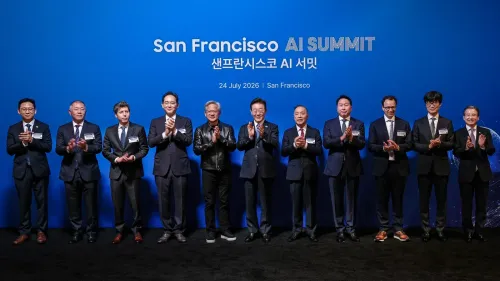
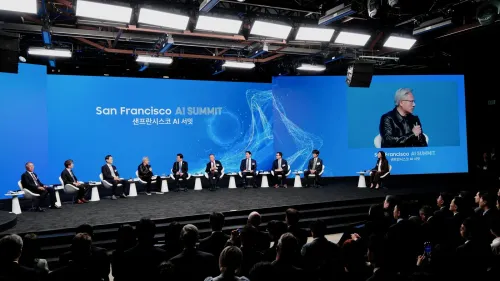
Nvidia's post described South Korea as a 'full-stack partner,' citing activity spanning 'energy to application' across 'all five layers' of the AI infrastructure stack. The company referenced a week of engagements that covered sovereign AI deployments, AI factories, gaming partnerships and outreach to student developers — pointing to a breadth of collaboration that goes well beyond chip supply alone.
The post linked to a longer account of the week's activity, though the specific commercial agreements and event details from that period remain unconfirmed from independent sources. What the post makes clear is Nvidia's framing of South Korea not as a customer but as a co-builder of AI infrastructure.
Policy Backdrop
South Korea has been pursuing an assertive national AI agenda since its 2019 National AI Strategy, which set targets for AI talent development, data infrastructure and semiconductor research and development, with the stated ambition of becoming a top-four AI economy globally. The country is home to memory-chip leaders Samsung Electronics and SK Hynix, giving it a foundational role in the global semiconductor supply chain.
South Korea is also advancing AI framework legislation that would govern data use, compute infrastructure and liability — a regulatory backdrop that makes stable, long-term partnerships with platform providers like Nvidia strategically significant for both sides.
Stakeholders and Impact
The 'full-stack' framing matters because it signals value capture at every layer: energy and data-centre infrastructure at the bottom, chips and networking in the middle, and software, applications and developer ecosystems at the top. For South Korean semiconductor manufacturers, deeper integration with Nvidia's AI platform reinforces their position in the global AI supply chain beyond memory chips.
For student developers and universities in South Korea, Nvidia's explicit mention of developer outreach suggests an effort to cultivate the next generation of AI engineers within the country's own talent ecosystem. This mirrors similar full-stack sovereign AI initiatives undertaken by Singapore, the UAE and Saudi Arabia, all of which have sought to reduce dependence on any single foreign technology supplier while capturing economic value across the AI value chain.
The broader pattern has accelerated since 2022, driven by export controls on advanced semiconductors and intensifying strategic competition in AI between the United States and China. Countries with strong industrial bases are racing to lock in platform partnerships before the AI infrastructure landscape consolidates further.
What's Next
Attention will now turn to whether South Korea's forthcoming AI framework legislation includes provisions that formally anchor partnerships with foreign chip and infrastructure providers, and whether any new GPU allocation or data-centre investment announcements emerge from US-Korea technology dialogues. Nvidia's public endorsement of South Korea as a 'full-stack partner' raises the diplomatic and commercial stakes for both governments ahead of those discussions.
If South Korea consolidates its position across all five layers of the AI stack, it could become a model for mid-sized advanced economies seeking to participate in — rather than merely consume — the global AI build-out.
Point of View
Not routine corporate praise — it positions the relationship as a platform alliance rather than a hardware transaction. This matters in the context of accelerating great-power competition over AI infrastructure, where the United States has a strong interest in anchoring allied industrial economies firmly within its technology ecosystem. For South Korea, the endorsement reinforces its bid to be a top-tier AI economy, but it also raises questions about the terms of dependency embedded in deep platform lock-in. The real test will come when South Korea's AI framework legislation defines the rules of the road for foreign technology providers on its soil.
NationPress
23 Oct 2026
Frequently Asked Questions
What did Nvidia say about South Korea in June 2026?
Nvidia called South Korea a 'full-stack partner' in AI on June 9, 2026, citing the country's engagement across sovereign AI deployments, AI factories, gaming partnerships and student developer programmes spanning all five layers of the AI infrastructure stack.
What is a sovereign AI deployment?
A sovereign AI deployment refers to a country building and operating its own AI infrastructure — including data centres, chips and software — under national control, reducing dependence on foreign providers for critical AI capabilities.
What is South Korea's national AI strategy?
South Korea launched its National AI Strategy in 2019, targeting top-four global AI economy status through investments in AI talent, data infrastructure and semiconductor research and development.
How does South Korea's AI partnership with Nvidia compare to other countries?
South Korea joins Singapore, the UAE and Saudi Arabia in pursuing full-stack sovereign AI partnerships with Nvidia, each seeking to capture value across the entire AI value chain rather than simply importing chips or cloud services.
What should India watch in the South Korea-Nvidia partnership?
India, which is also building out its own AI compute infrastructure and sovereign AI ambitions, can watch South Korea's model closely — particularly how its forthcoming AI framework legislation governs foreign technology partnerships and GPU allocation deals.