CM Sai shares President Murmu's word on Bastar's Naxal fight
Synopsis
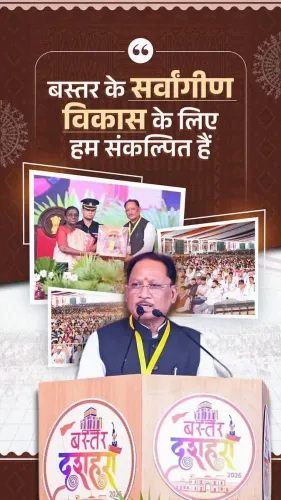
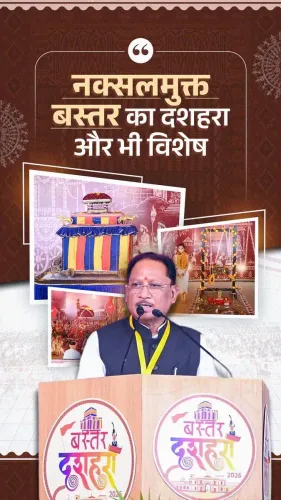
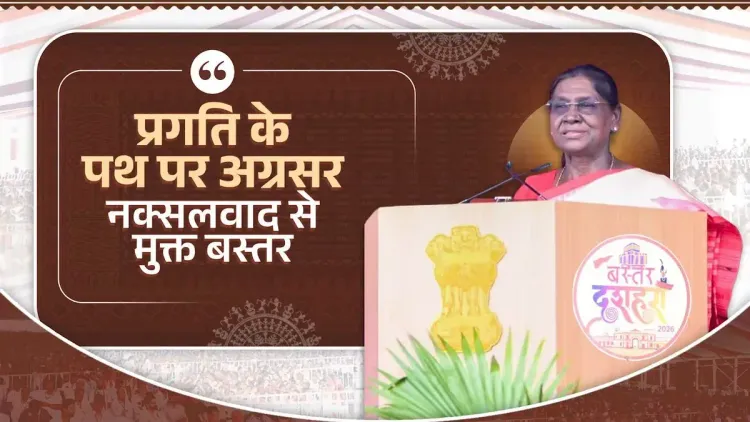
At Bastar Dussehra 2026, CM Vishnu Deo Sai quoted President Draupadi Murmu saying Chhattisgarh, long plagued by Naxalism, is now moving on the path of progress through coordinated central-state efforts.
Key Takeaways
CM Vishnu Deo Sai shared President Draupadi Murmu's statement on October 23, 2026 at the Bastar Dussehra festival.
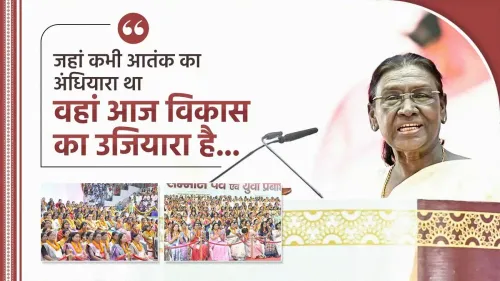
President Murmu stated that Chhattisgarh is freeing itself from Naxal terror through coordinated central and state government efforts.
The statement was shared during the Muriya Darbar , a traditional tribal assembly held as part of Bastar Dussehra 2026 .
Central and state governments have run coordinated anti-Naxal operations in Chhattisgarh since the mid-2000s , combining security and development initiatives.
The Aspirational Districts Programme (2018) targeted Bastar and other left-wing extremism-affected districts for infrastructure and welfare upgrades.
President Murmu , India's first tribal head of state, lends particular significance to statements on tribal welfare and security in Bastar.
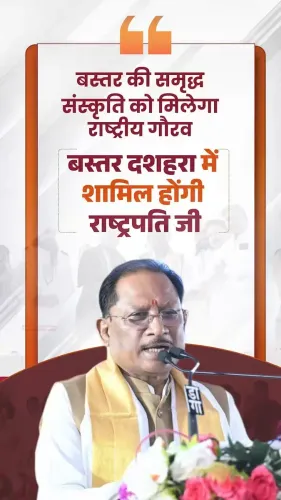
At the Bastar Dussehra 2026 celebrations, one of India's most culturally resonant tribal festivals, Chhattisgarh Chief Minister Vishnu Deo Sai on Friday, October 23 shared a striking statement from President Draupadi Murmu — that a state long defined by the shadow of Naxal violence is finally turning the corner toward progress.
Quoting President Murmu directly, CM Sai posted on X: 'Chhattisgarh rajya lambe samay se Naxalwad ki samasya se jujh raha tha' — 'Chhattisgarh has long been grappling with the problem of Naxalism. Through the coordinated efforts of the central and state governments, this region is now freeing itself from Naxal terror and moving rapidly on the path of progress.' The post was tagged to the Muriya Darbar, a key event within the Bastar Dussehra festival.
Bastar Dussehra: Where culture meets a security narrative
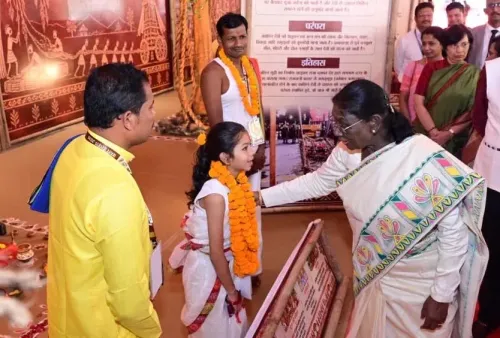
Bastar Dussehra is no ordinary festival. Stretching across weeks, it is one of the longest-running tribal celebrations in India, rooted in the traditions of the Muria and Gond communities of southern Chhattisgarh. The Muriya Darbar — a traditional assembly of tribal communities — has historically served as a platform where the state's political leadership listens directly to local voices.
That the President of India chose this forum to speak about Naxal-era wounds and post-conflict development is deliberate. President Murmu, herself the country's first tribal head of state since taking office in July 2022, carries particular moral weight in this conversation. Her words at a tribal gathering in one of India's most insurgency-scarred regions land differently than a policy briefing in Delhi.
Two decades of pressure, and where it has led
The fight against left-wing extremism in Chhattisgarh has been grinding and costly. Central and state governments have run coordinated anti-Naxal operations since the mid-2000s, combining unified security commands with area-domination exercises across the dense forests of Bastar, Dantewada, and surrounding districts.
Alongside the security push, the Aspirational Districts Programme, launched in 2018, specifically targeted Bastar and other left-wing extremism-affected districts for accelerated infrastructure, healthcare, and education investment. The broader Indian policy framework has consistently paired operations with development — the logic being that a cleared area must immediately feel the state's constructive presence or the vacuum refills.
Chhattisgarh has recorded a progressive reduction in violence incidents and affected districts over this period, a trajectory CM Sai's government has sought to accelerate since he took office in December 2023.
Why the President's voice matters here
CM Sai's choice to amplify President Murmu's words — rather than his own — is a studied political signal. It frames Bastar's transformation as a constitutional and national achievement, not merely a BJP governance win. And with the #बस्तर_दशहरा_2026 and #मुरिया_दरबार hashtags, the message is rooted firmly in cultural identity, not just security metrics.
For tribal communities in Bastar, who bore the heaviest cost of decades of insurgency — caught between security forces and Maoist cadres — the acknowledgement from India's highest constitutional office carries real resonance. The road ahead involves translating security gains into visible economic opportunity. That is the unfinished sentence in President Murmu's statement — and the benchmark Chhattisgarh's government will be judged against.
Frequently Asked Questions
What did President Draupadi Murmu say about Chhattisgarh at Bastar Dussehra 2026?
President Murmu stated that Chhattisgarh, which long struggled with the problem of Naxalism, is now freeing itself from Naxal terror through the coordinated efforts of the central and state governments and moving rapidly on the path of progress.
What is Muriya Darbar in Bastar Dussehra?
Muriya Darbar is a traditional assembly of tribal communities held as part of the Bastar Dussehra festival in southern Chhattisgarh, where local voices are heard and state leadership engages directly with tribal communities.
How long have central and state governments been fighting Naxalism in Chhattisgarh?
Coordinated anti-Naxal operations in Chhattisgarh have been running since the mid-2000s, combining unified security commands with development programmes like the Aspirational Districts Programme launched in 2018.
Why is President Draupadi Murmu significant to tribal communities in Bastar?
President Murmu, who took office in July 2022, is India's first tribal head of state, giving her statements on tribal welfare and post-conflict development in regions like Bastar particular resonance and credibility.
When did Vishnu Deo Sai become Chief Minister of Chhattisgarh?
Vishnu Deo Sai became Chief Minister of Chhattisgarh in December 2023, following the BJP's victory in the state assembly elections.