CM Sai Shares President Murmu's Call to Protect Forests at Bastar Dussehra
Synopsis
Chhattisgarh CM Vishnu Deo Sai amplified President Draupadi Murmu's address at Bastar Dussehra's Muria Darbar, where she called trees 'living gods' and urged all Indians to plant and protect forests, connecting tribal reverence for nature to conservation responsibility.
Key Takeaways
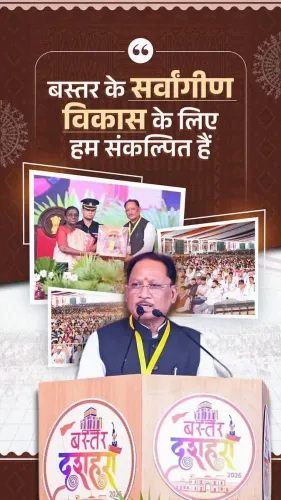
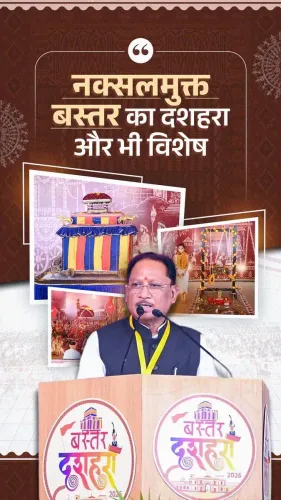
CM Vishnu Deo Sai shared President Draupadi Murmu's remarks on October 23, 2026 , during Bastar Dussehra 2026 celebrations.
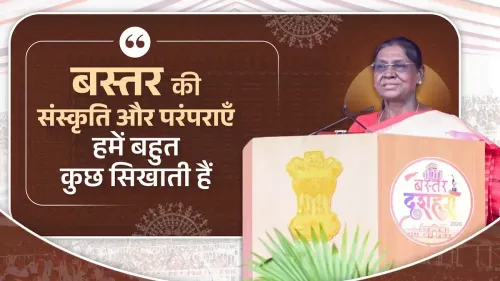
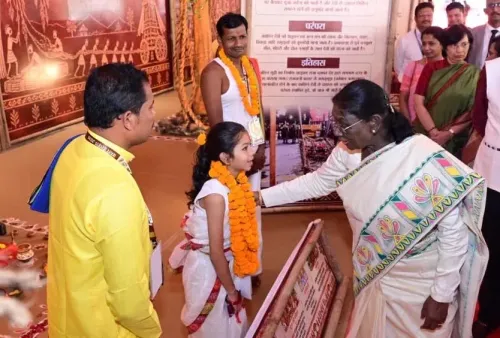
The President spoke at the Muria Darbar , a traditional tribal assembly in Bastar , southern Chhattisgarh.
Murmu described trees and plants as 'living gods' and called on all citizens to plant and protect forests.
She linked forest worship to the age-old practices of tribal communities , affirming indigenous ecological wisdom.
The message echoes the spirit of the Forest Rights Act, 2006 , which recognises tribal custodianship of forest lands.
Bastar Dussehra is one of the world's longest-running festivals, rooted in Gondi and allied tribal traditions rather than mainstream narratives.
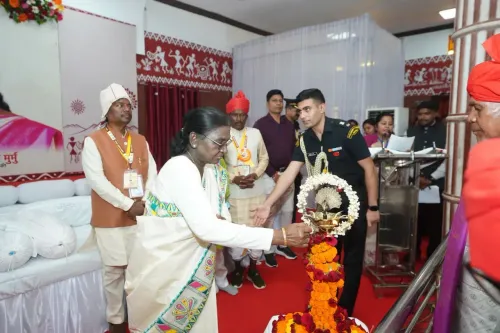
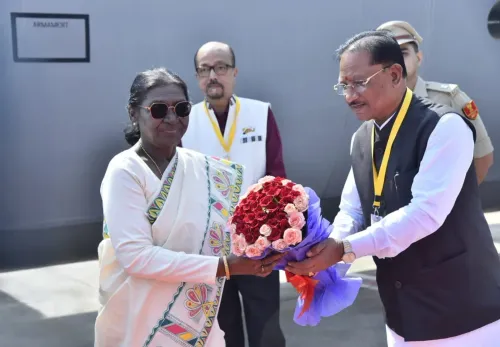
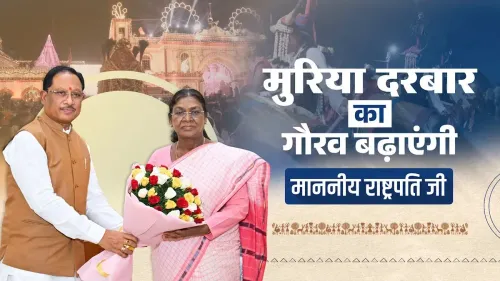
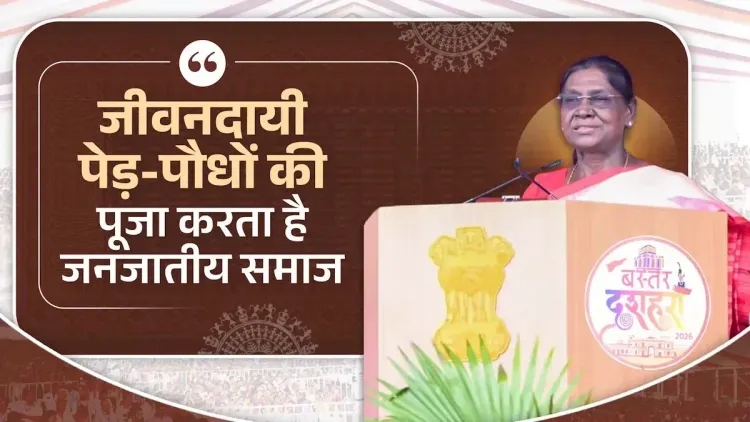
At the heart of one of India's oldest tribal festivals, a message about trees, reverence, and responsibility rang out — and Chhattisgarh Chief Minister Vishnu Deo Sai made sure it reached every corner of the state. On Friday, October 23, 2026, CM Sai shared a powerful quote from President Draupadi Murmu delivered at the Muria Darbar, a traditional assembly held as part of the legendary Bastar Dussehra festivities.
President Murmu's words, shared under the hashtag #बस्तर_दशहरा_2026, cut straight to the heart of tribal philosophy: 'पेड़-पौधे हमें भोजन और हवा देते हैं' — 'Trees and plants give us food and air, fruits, flowers, and medicines. They are our living gods, nature's gift. That is why tribal society worships trees and plants. All of us must plant and protect these trees and forests.'
Why Murmu's Words Land Harder at Muria Darbar
President Draupadi Murmu is the first tribal woman to hold India's highest constitutional office, making her the embodiment of the very communities that have long treated forests as sacred. Her remarks at the Muria Darbar — a traditional convening tied to the Muria tribal community — were not a speech about policy. They were a cultural affirmation: that indigenous forest stewardship is not folklore, it is living wisdom.
Bastar, the region in southern Chhattisgarh that hosts this annual festival, is home to some of central India's densest tribal populations and most ecologically significant forests. The message here, delivered in this setting, carries a weight that a ministry circular never could.
Bastar Dussehra — A Festival That Outlasts Empires
The Bastar Dussehra is no ordinary celebration. Running for over 75 days, it is widely regarded as one of the longest festivals in the world, rooted in the traditions of the Gondi and allied tribal communities rather than the mainstream Ramayana narrative. The Muria Darbar is one of its signature assemblies, a space where tribal voices, deities, and traditions converge.
CM Sai's decision to amplify the President's words through his own platform signals a deliberate state-level endorsement — that conservation and tribal culture are not competing priorities but the same conversation.
Forest Rights, Forest Responsibility
India's Scheduled Tribes and Other Traditional Forest Dwellers (Recognition of Forest Rights) Act, 2006, legally recognised what tribal communities had known for generations: that their relationship with forests is one of custodianship, not exploitation. President Murmu's message at Bastar Dussehra brings that legal architecture back to its moral foundation.
Successive governments in Chhattisgarh have used the Bastar platform to promote afforestation and community-led forest protection. The current state government, under CM Sai, appears to be continuing — and amplifying — that tradition at scale.
When India's tribal President tells a tribal assembly that trees are living gods, the political calendar fades away. What remains is a civilisational argument for conservation — one that no data set could make more compelling.
Point of View
CM Sai positions the Chhattisgarh government as the natural custodian of that philosophy, embedding environmental messaging within the emotional architecture of tribal identity rather than the dry language of afforestation targets. The broader arc here is unmistakable: successive governments have struggled to translate forest conservation into grassroots behaviour; anchoring that message in sacred tradition — especially through a voice as symbolically potent as India's first tribal President — may accomplish what legislation alone cannot. The Bastar platform, watched closely across central India's tribal belt, gives this moment a reach far beyond the festival ground.
NationPress
23 Oct 2026
Frequently Asked Questions
What did President Draupadi Murmu say at Bastar Dussehra 2026?
President Murmu said that trees and plants give us food, air, fruits, flowers, and medicines, describing them as 'living gods' and nature's gift. She called on all citizens to plant and protect trees and forests, linking this to the tradition of tribal communities who worship nature.
What is the Muria Darbar at Bastar Dussehra?
The Muria Darbar is a traditional assembly associated with the Muria tribal community, held as a key part of the Bastar Dussehra festival in southern Chhattisgarh. It serves as a platform where tribal voices, customs, and governance traditions are formally convened.
Why is Bastar Dussehra significant?
Bastar Dussehra is one of the world's longest festivals, running for over 75 days, and is rooted in the traditions of the Gondi and allied tribal communities of southern Chhattisgarh. Unlike mainstream Dussehra celebrations, it centres on tribal deities and cultural practices rather than the Ramayana narrative.
What is the Forest Rights Act and how does it relate to tribal communities?
The Scheduled Tribes and Other Traditional Forest Dwellers (Recognition of Forest Rights) Act, 2006, legally recognises the rights of tribal and forest-dwelling communities over forest land and resources they have traditionally depended on. It formalises the custodial relationship between tribal communities and India's forests.
Why did CM Vishnu Deo Sai share President Murmu's message?
CM Sai shared the President's remarks to amplify a conservation message delivered at one of Chhattisgarh's most important tribal festivals, signalling state government support for forest protection rooted in tribal cultural values.