Kishan Reddy Unveils KPMG's 'Agrasar Bharat' Report, Pitches 'Avsar Bharat' Vision
Synopsis
Union Minister G. Kishan Reddy unveiled KPMG India's 'Agrasar Bharat: From Aspirations to Action' report on October 23, 2026, introducing the concept of 'Avsar Bharat' — a framework to convert opportunity into enterprise, jobs and prosperity as India pursues its Viksit Bharat 2047 goal.
Key Takeaways
Kishan Reddy introduced the concept of 'Avsar Bharat' — a vision where opportunity translates into enterprise, jobs and prosperity — at the KPMG India report launch on October 23, 2026 .
KPMG India 's report, titled 'Agrasar Bharat: From Aspirations to Action' , is positioned as a private-sector roadmap for India's development goals.
The initiative sits within the broader Viksit Bharat 2047 framework, the government's vision for India to achieve developed-nation status by its centenary of independence.
It echoes the Atmanirbhar Bharat initiative launched in 2020 , which similarly sought to channel private enterprise toward national self-reliance.
Primary beneficiaries targeted by the framework are Indian youth, the workforce, and emerging entrepreneurs .
Whether the report's recommendations are incorporated into future economic surveys or union budgets will determine its real-world impact.
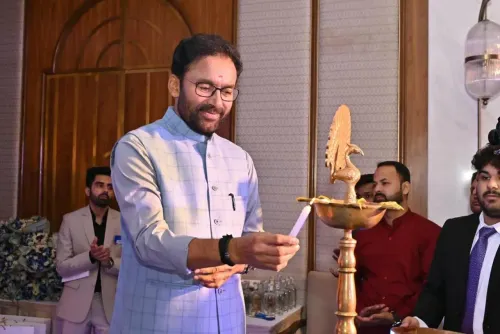
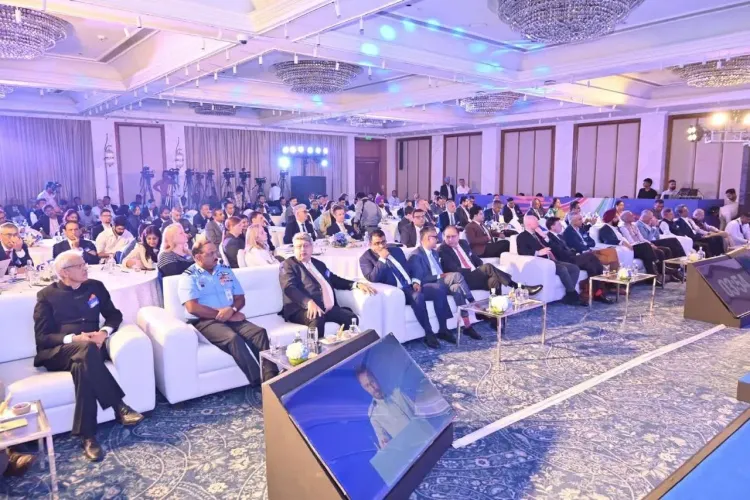
Opportunity must do more than inspire — it must convert into enterprise, jobs, and lasting prosperity. That was the core argument Union Coal and Mines Minister G. Kishan Reddy carried to the podium on Friday, October 23, 2026, where he unveiled KPMG India's new thought leadership report, 'Agrasar Bharat: From Aspirations to Action', and introduced a new framing for India's development ambition: 'Avsar Bharat' — a nation where opportunities translate into tangible outcomes for ordinary people.
'Avsar Bharat': From Slogan to Economic Architecture
Reddy's coinage of 'Avsar Bharat' — avsar meaning opportunity in Hindi — signals a deliberate shift in how the government wants to articulate its economic pitch. Where Viksit Bharat 2047, the flagship vision to achieve developed-nation status by India's centenary of independence, sets the destination, 'Avsar Bharat' is meant to name the road: a framework in which policy, private enterprise, and workforce participation work together to make opportunity accessible rather than aspirational. 'As we work towards a developed India, we must also build an Avsar Bharat — where opportunities translate into enterprise, jobs and prosperity for our people,' Reddy stated at the event.
What the KPMG 'Agrasar Bharat' Report Argues
KPMG India's report, titled 'Agrasar Bharat: From Aspirations to Action', is framed as a private-sector contribution to the Viksit Bharat conversation — translating broad national goals into actionable economic outcomes. The report's very title echoes the government's own language: agrasar means 'moving forward' or 'progressive', and the 'Aspirations to Action' subtitle underlines the same urgency Reddy voiced from the stage. While the full contents of the report extend beyond what has been made public, its unveiling by a Union Cabinet minister gives it unusual political weight for a consultancy document.
The government's willingness to platform private-sector analysis of this kind fits a pattern that stretches back to the Atmanirbhar Bharat initiative launched in 2020, which sought to boost domestic enterprise and self-reliance by explicitly inviting industry to co-design the policy environment. KPMG India's report appears to continue that tradition — a professional services firm handing a minister a roadmap, and the minister handing it back to the public as a call to action.
Why This Moment, and Who Is Watching
The audience that stands to gain or lose the most from this conversation is India's youth workforce and its emerging entrepreneur class — the two groups who would feel 'Avsar Bharat' either as lived reality or as unfulfilled promise. India's demographic dividend remains a recurring argument in every developed-India document; translating it requires not just vision statements but credit access, skilling infrastructure, and market linkages. Whether the Agrasar Bharat report's recommendations find their way into future economic surveys or union budgets is the test that will matter most.
For Reddy personally, the platform is also notable. As BJP Telangana state president, his presence at a national economic thought-leadership event keeps him visible in a policy register that transcends his mining portfolio — a reminder that his political ambitions and his ministerial brief are rarely far apart.
A developed India by 2047 is a deadline that is now just over two decades away. The real question is whether 'Avsar Bharat' becomes the connective tissue between vision and delivery — or joins a long shelf of eloquent reports waiting to be acted upon.
Point of View
Not just aspirational ambition. Platforming a KPMG India report gives the narrative private-sector credibility while keeping the political messaging firmly under ministerial control. For a BJP leader who doubles as Telangana state president, visibility on national economic themes also serves a clear regional political purpose. The critical test will come in the next budget cycle: if 'Avsar Bharat' appears in policy documents with funded schemes attached, it graduates from slogan to strategy.
NationPress
23 Oct 2026
Frequently Asked Questions
What is 'Avsar Bharat' announced by G. Kishan Reddy?
'Avsar Bharat' is a vision articulated by Union Minister G. Kishan Reddy at the KPMG India report launch on October 23, 2026, describing a framework where opportunities translate into enterprise, jobs and prosperity for Indian citizens, complementing the Viksit Bharat 2047 development goal.
What is the KPMG 'Agrasar Bharat' report?
The 'Agrasar Bharat: From Aspirations to Action' report is a thought leadership document published by KPMG India, focused on translating India's national development aspirations into concrete economic outcomes. It was formally unveiled by Minister G. Kishan Reddy on October 23, 2026.
What is Viksit Bharat 2047?
Viksit Bharat 2047 is the Indian government's vision to achieve developed-nation status by 2047, the centenary of India's independence, through sustained economic growth, enterprise creation and opportunity expansion.
Who is G. Kishan Reddy?
G. Kishan Reddy is India's Union Minister of Coal and Mines and the BJP's Telangana state president. He is a senior BJP leader and has held multiple cabinet positions in the central government.
How does 'Avsar Bharat' relate to 'Atmanirbhar Bharat'?
'Atmanirbhar Bharat', launched in 2020, aimed to build domestic self-reliance through enterprise and reduced import dependence. 'Avsar Bharat' builds on that tradition by framing opportunity creation — enterprise, jobs, prosperity — as the next layer of India's development architecture under the Viksit Bharat 2047 umbrella.