Kishan Reddy Highlights Farm Credit, PM-KUSUM, AI Push
Synopsis
Union Minister G. Kishan Reddy on June 11, 2026 highlighted collateral-free Kisan Credit Cards, PM-KUSUM solar benefits for over 21 lakh farmers, and AI-enabled advisory tools as central to India's 'Beej se Bazar tak' agricultural transformation vision.
Key Takeaways
Kishan Reddy posted on June 11, 2026 about central government agricultural welfare initiatives.
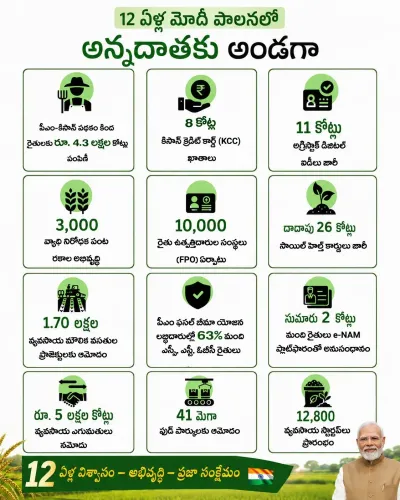
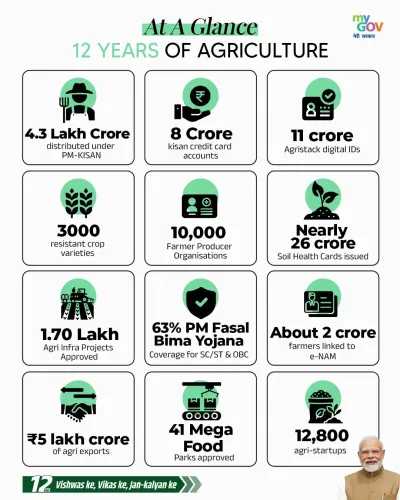
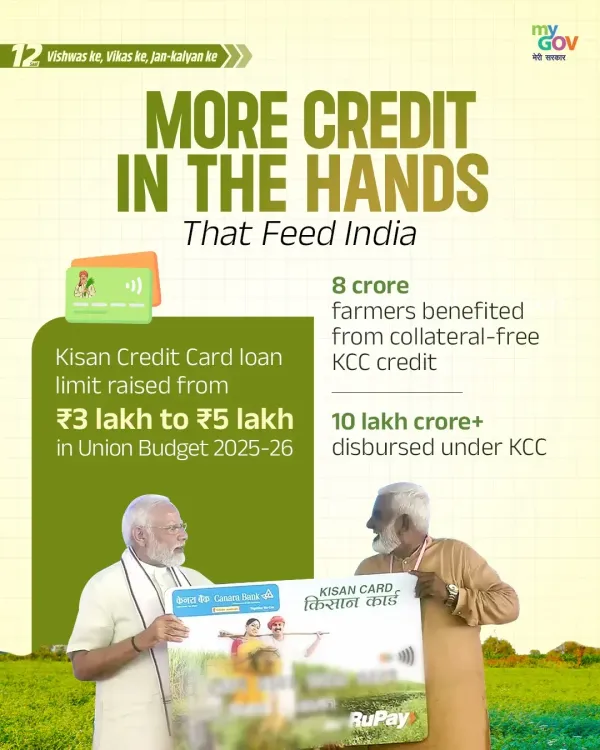
The Kisan Credit Card scheme provides collateral-free agricultural credit, cited as benefiting over 8 crore farmers .
Over 21 lakh farmers are stated to be receiving benefits under the PM-KUSUM solar energy scheme, transforming them from food providers to energy providers.
The Bharat-VISTAAR multilingual farm advisory platform and AI-enabled services are cited as new tools reshaping agricultural decision-making.
The minister invoked the 'Beej se Bazar tak' (seed to market) vision as the government's framework for a comprehensive farming ecosystem.
PM-KUSUM was launched in 2019 and the Kisan Credit Card scheme has been operational since 1998 .
Union Coal and Mines Minister G. Kishan Reddy on Thursday, June 11, 2026, highlighted a range of central government initiatives aimed at transforming Indian agriculture, citing collateral-free credit access, multilingual digital advisory services, and clean energy adoption as pillars of rural development. The minister's post on X underscored the government's 'Beej se Bazar tak' (seed to market) vision for building a stronger farming ecosystem across the country.
Context
Kishan Reddy pointed to the Kisan Credit Card (KCC) scheme as a cornerstone of agricultural finance, stating that collateral-free credit is benefiting over 8 crore farmers. He also referenced the Bharat-VISTAAR multilingual farm advisory platform and AI-enabled services as tools reshaping how farmers access information and make cultivation decisions. The minister framed these as part of a broader push to modernise Indian agriculture through technology and innovation.
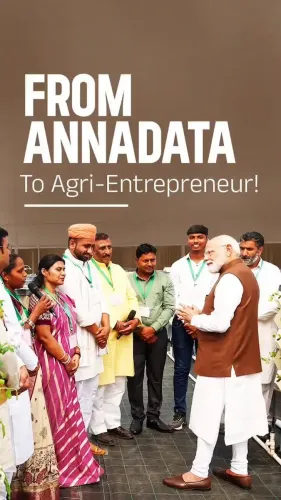
On the clean energy front, Kishan Reddy noted that over 21 lakh farmers are receiving benefits under PM-KUSUM, describing a dual transformation from 'Annadata to Urjadata' — food provider to energy provider — as farmers generate solar power alongside their agricultural output.
Policy Backdrop
The Kisan Credit Card scheme has been a fixture of agricultural credit policy since its introduction in 1998, designed to ensure timely and adequate credit flow to the farming sector. Over successive years, its scope has been expanded to cover allied activities and collateral-free lending for small and marginal farmers, making it one of the most widely used rural finance instruments in the country.
PM-KUSUM — Pradhan Mantri Kisan Urja Suraksha evam Utthaan Mahabhiyan — was launched in 2019 with the objective of solarising agricultural pump sets and enabling farmers to set up small solar power plants. The scheme is designed to reduce dependence on grid electricity for irrigation while creating an additional income stream for rural households through surplus power sale to distribution companies.
Digital extension services, including AI-based crop advisory tools, represent a newer layer of the government's agricultural modernisation agenda, intended to bridge information gaps in remote farming communities and improve decision-making on inputs, weather, and markets.
Stakeholders and Impact
The initiatives cited by Kishan Reddy span multiple dimensions of farm welfare — credit, information, and energy — touching the lives of small and marginal farmers who form the bulk of India's agricultural workforce. Collateral-free KCC access is particularly significant for farmers without formal land titles or assets, who have historically been excluded from institutional credit channels.
Clean energy adoption under PM-KUSUM carries dual benefits: reducing input costs linked to diesel-powered irrigation and creating a new revenue source in rural areas. The convergence of these programmes with digital advisory platforms signals a policy direction that seeks to address farm-gate challenges across the entire production and marketing chain.
What's Next
Progress on PM-KUSUM installation targets and fresh budget allocations for agricultural technology schemes are expected to draw attention in the next parliamentary session. The government's stated 'Beej se Bazar tak' vision — encompassing seed quality, credit, technology, and market linkage — will be tested by ground-level implementation metrics, particularly in states where solar infrastructure rollout and digital connectivity remain uneven. Expansion of multilingual advisory platforms such as Bharat-VISTAAR to more regional languages could further determine how effectively these benefits reach India's diverse farming communities.
Point of View
Digital technology, and clean energy under a single agricultural welfare narrative at a time when rural distress and farm income stagnation remain politically sensitive issues. By invoking the 'Annadata to Urjadata' framing, the BJP is attempting to position PM-KUSUM not merely as an energy scheme but as an income diversification story for farmers, which carries clear electoral resonance in agrarian states. The simultaneous mention of AI advisory tools and multilingual platforms signals that the party is also keen to be seen as modernising agriculture beyond physical infrastructure. Whether these narratives translate to measurable on-ground outcomes — particularly in states with lagging solar rollout — will shape how credible this positioning remains heading into future electoral cycles.
NationPress
26 Oct 2026
Frequently Asked Questions
What is PM-KUSUM and how does it benefit farmers?
PM-KUSUM, or Pradhan Mantri Kisan Urja Suraksha evam Utthaan Mahabhiyan, is a central government scheme launched in 2019 that helps farmers install solar pumps and small solar power plants, reducing irrigation costs and enabling them to earn income by selling surplus power to the grid.
What is the Kisan Credit Card scheme?
The Kisan Credit Card scheme, introduced in 1998, provides farmers with timely and flexible credit for agricultural and allied activities. It includes provisions for collateral-free loans, making institutional credit accessible to small and marginal farmers.
What is Bharat-VISTAAR?
Bharat-VISTAAR is a multilingual farm advisory platform referenced by the government as part of its digital agriculture push, designed to deliver crop and market guidance to farmers in multiple regional languages.
What does 'Beej se Bazar tak' mean?
'Beej se Bazar tak' is a Hindi phrase meaning 'from seed to market,' used by the government to describe its vision of supporting farmers across the entire agricultural value chain — from inputs and cultivation to processing and market linkage.
What did Kishan Reddy say about Indian agriculture?
Union Minister G. Kishan Reddy on June 11, 2026 highlighted collateral-free Kisan Credit Cards, PM-KUSUM solar benefits, AI-enabled advisory services, and the Bharat-VISTAAR platform as key measures transforming Indian agriculture and rural incomes.