Kishan Reddy Highlights a Decade of Farm Growth Under Modi
Synopsis
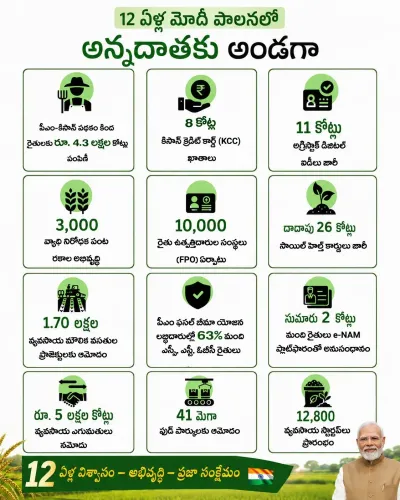
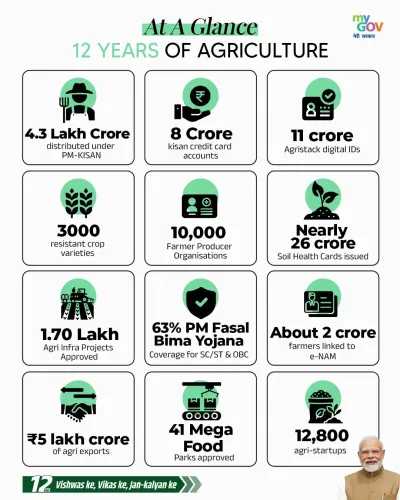
Union Minister G. Kishan Reddy has highlighted twelve years of agricultural transformation under PM Modi, pointing to PM-KISAN, expanded Kisan Credit Card access, over 12,800 agri startups, and India's status as the world's largest milk producer as evidence of sustained farmer empowerment.
Key Takeaways
Kishan Reddy posted on June 11, 2026 marking #12YearsOfKisanSamriddhi under PM Modi's leadership.
The PM-KISAN scheme provides Rs 6,000 per year in direct income support to eligible farmer families, launched in February 2019 .
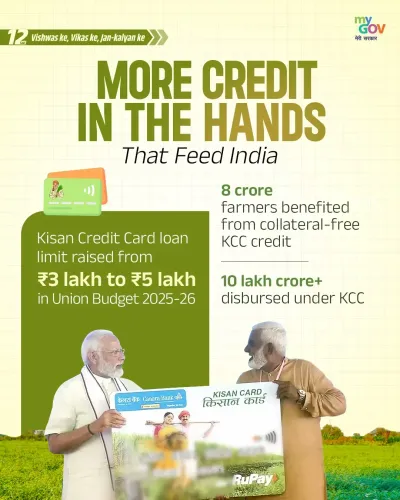
The Kisan Credit Card scheme has seen significantly expanded coverage since 2018-19 to bring more farmers into formal credit.
More than 12,800 agri startups have emerged, according to the post, reflecting growth in farm-sector entrepreneurship.
India is the world's largest producer of milk , a position built on cooperative infrastructure dating to Operation Flood (1970) .
The government has positioned higher budgetary support, direct transfers, and agri-innovation as the three pillars of its farmer-welfare decade.
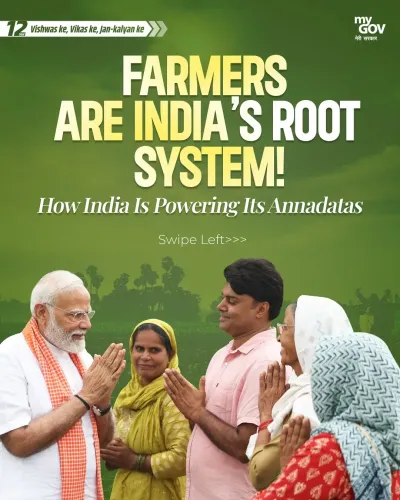
Union Coal and Mines Minister G. Kishan Reddy on Thursday, June 11, 2026, took to X to mark what he described as twelve years of farmer prosperity under Prime Minister Narendra Modi, citing higher budgetary allocations, the PM-KISAN income-support scheme, expanded Kisan Credit Card coverage, and the emergence of more than 12,800 agri startups as evidence of transformative agricultural growth.
Context
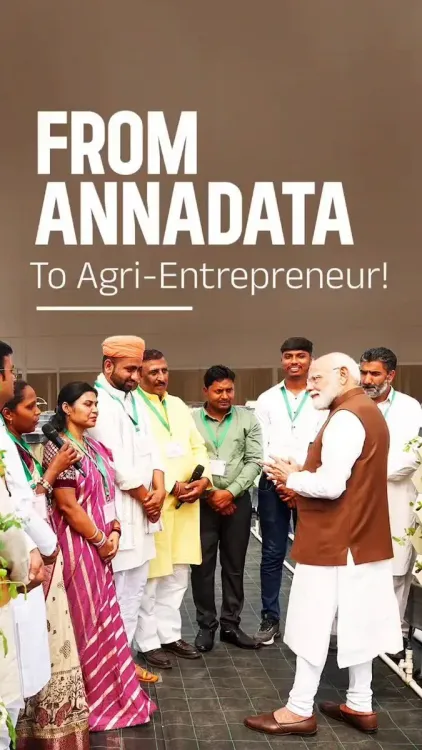
Reddy's post, tagged #12YearsOfKisanSamriddhi, frames the last decade as a period of structural change for Indian farmers — referred to as Annadatas (providers of food) — pointing to India's position as the world's largest producer of milk and one of its leading agricultural exporters as markers of that transformation. The post does not specify a particular policy announcement but serves as a milestone communication on agricultural governance.
The minister highlighted that under PM Modi's leadership, the country has moved from incremental support to a model combining direct cash transfers, formal credit access, and startup-driven innovation in the farm sector.
Policy Backdrop
The Pradhan Mantri Kisan Samman Nidhi (PM-KISAN), launched in February 2019, provides eligible landholding farmer families with an annual direct income support of Rs 6,000, disbursed in three equal instalments. The scheme is among the largest direct benefit transfer programmes in the world by beneficiary count.
The Kisan Credit Card (KCC) scheme, originally introduced in 1998, was significantly broadened in coverage and credit limits from 2018-19 onward through saturation drives aimed at bringing all eligible farmers into the formal credit system. Together, PM-KISAN and the KCC expansion represent the twin pillars of the government's farmer-income strategy since 2014.
India's dairy dominance has deeper roots: Operation Flood, initiated in 1970, laid the cooperative infrastructure that eventually made India the world's largest milk producer by the 1990s. Successive governments, including the current one, have built on that base through producer-company models and processing investments.
Stakeholders and Impact
The primary beneficiaries of the policies cited are India's smallholder and marginal farmers, who form the bulk of PM-KISAN and KCC beneficiaries. The reference to 12,800-plus agri startups points to a newer cohort of stakeholders — agri-tech entrepreneurs and rural youth — who have entered the sector through government incubation programmes and startup-linked credit facilities.
Dairy producers and farmer-producer organisations are also central to the narrative, given the milk-production milestone. Agricultural exporters, whose shipments span commodities such as rice, spices, and processed foods, represent a third constituency that the government's messaging seeks to acknowledge.
What's Next
Attention will now turn to the next Union Budget's agricultural allocation and any fresh targets for agri-startup funding or export promotion. Parliamentary committee reviews of PM-KISAN disbursement efficiency and KCC saturation data are also expected to surface in the coming months, providing independent benchmarks against the milestones cited in ministerial communications such as this one.
With state elections on the horizon in several agrarian states, messaging around farmer welfare is likely to intensify, making the government's ability to back its claims with verifiable disbursement and income data increasingly consequential.
Point of View
Kisan Credit Card, agri startups, and export credentials into a single message, the BJP is reinforcing its 'farmer-first' positioning at a moment when rural income data and scheme implementation records are under scrutiny. The invocation of the Annadata framing is deliberate, connecting technocratic policy outputs to an emotive cultural identity for farmers. Whether the milestone messaging translates into electoral traction will depend on how ground-level beneficiaries assess actual income changes over the decade.
NationPress
22 Sept 2026
Frequently Asked Questions
What is PM-KISAN and who benefits from it?
PM-KISAN, or Pradhan Mantri Kisan Samman Nidhi, is a central government scheme launched in February 2019 that provides eligible landholding farmer families with Rs 6,000 per year in direct income support, paid in three instalments of Rs 2,000 each.
What is the Kisan Credit Card scheme?
The Kisan Credit Card is a formal credit delivery mechanism for farmers, originally introduced in 1998 and significantly expanded in coverage and credit limits from 2018-19 onward, aimed at giving farmers access to affordable short-term loans for agricultural needs.
Is India really the world's largest milk producer?
Yes, India has been the world's largest milk producer since the 1990s, a position built on the cooperative dairy infrastructure established through Operation Flood, which began in 1970.
What did G. Kishan Reddy say about agri startups?
In his June 11, 2026 post, Reddy stated that more than 12,800 agri startups have emerged under PM Modi's government, citing this as evidence of innovation and entrepreneurship growth in India's farm sector.
Why is a Coal and Mines Minister commenting on agriculture?
G. Kishan Reddy is also the BJP's Telangana state president, and senior party leaders routinely amplify government welfare messaging — especially on themes like farmer welfare — as part of coordinated political communication, regardless of their specific ministerial portfolio.