Gadkari Hails 12 Years of Kisan-First Farm Reforms
Synopsis
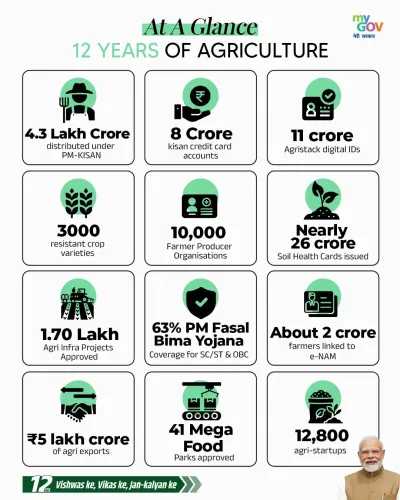
Union Minister Nitin Gadkari on June 11, 2026, hailed twelve years of Modi government farm policy, citing e-NAM, PMFBY, Soil Health Cards, and over ₹3 lakh crore in direct transfers as proof of a 'Kisan-first' revolution underpinning Viksit Bharat 2047.
Key Takeaways
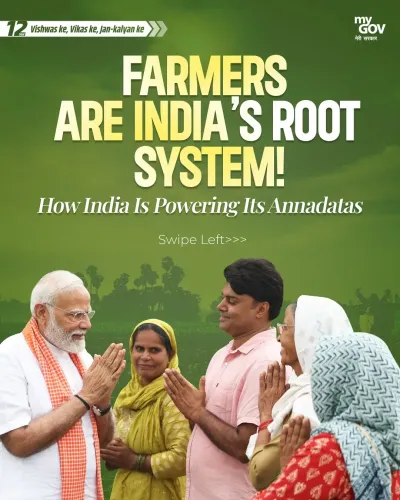
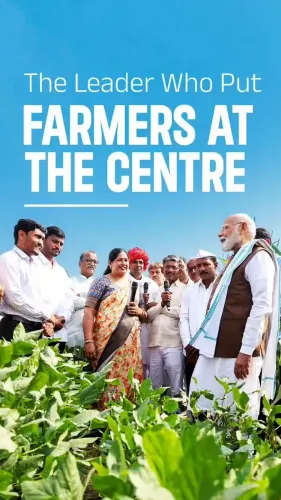
Union Minister Nitin Gadkari marked the #12YearsOfKisanSamriddhi milestone on June 11, 2026 , crediting PM Modi's government with transforming Indian agriculture.
Key schemes cited include e-NAM (launched April 2016), PMFBY (January 2016), and the Soil Health Card Scheme (February 2015).
PM-KISAN provides ₹6,000 per year in direct cash transfers to landholding farm families since the 2019-20 budget.
Gadkari stated over ₹3 lakh crore in direct income support has been channelled to India's farmers — reported as the minister's claim.
The reforms are framed as foundational to the government's Viksit Bharat 2047 development vision.
Upcoming state-level e-NAM adoption data and climate-resilient seed guidelines are key policy markers to watch.
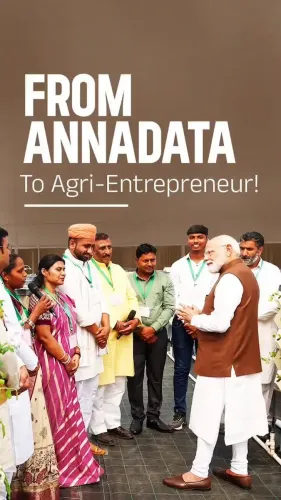
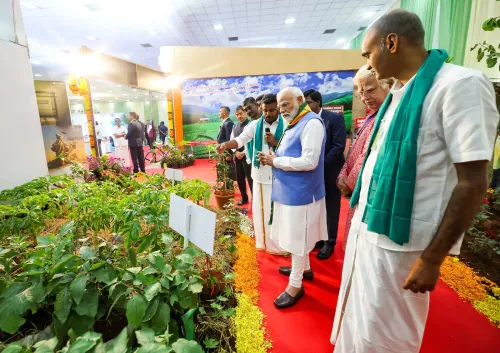
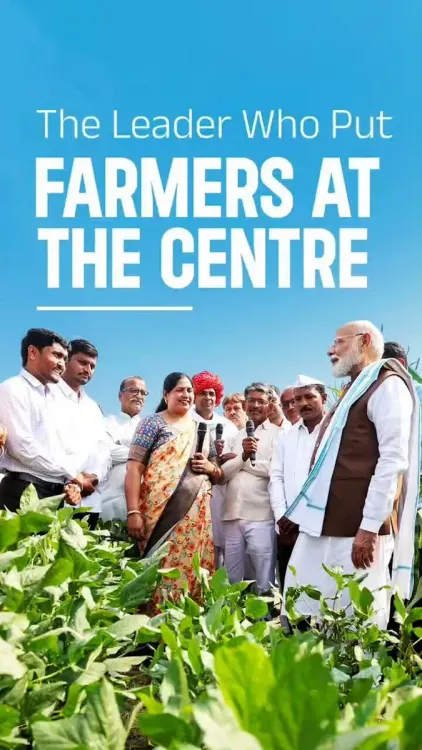
Union Road Transport and Highways Minister Nitin Gadkari on Thursday, June 11, 2026, marked the #12YearsOfKisanSamriddhi milestone by crediting Prime Minister Narendra Modi's government with engineering a 'silent revolution' in Indian agriculture — from seed to market — through a sustained package of digital tools, crop insurance, and direct income transfers.
Context
Gadkari's post frames the last twelve years of central agricultural policy as a cohesive 'Kisan-first approach' that has moved India's farmers toward self-reliance and global competitiveness. He specifically cited e-NAM (Electronic National Agriculture Market), Soil Health Cards, climate-resilient crops, and the Pradhan Mantri Fasal Bima Yojana (PMFBY) as pillars of this transformation. In his words, the effort amounts to 'not just reform — it is the foundation of Viksit Bharat 2047.'
The minister also referenced over ₹3 lakh crore in direct income support channelled to what he called India's AnnaData — the nation's food providers — a figure the government attributes largely to the PM-KISAN scheme and allied transfers. The research note flags this cumulative figure as unverified from independent data; NationPress reports it as stated by the minister.
Policy Backdrop
The cluster of schemes Gadkari invoked has a clear legislative and budgetary timeline. The Soil Health Card Scheme was rolled out in February 2015 to guide balanced fertiliser use. The e-NAM portal was inaugurated in April 2016 to link mandis across states into a single price-discovery platform. PMFBY was introduced in January 2016, replacing two older insurance programmes with broader actuarial risk coverage.
PM-KISAN, announced in the 2019-20 Union Budget, added a direct cash transfer of ₹6,000 per year to landholding farm families, forming the income-security plank of the package. Together, these measures reflect a deliberate policy design that treats agriculture as both a welfare obligation and a growth engine tied to broader national infrastructure and export ambitions.
Stakeholders and Impact
India's farm sector, which employs roughly half the workforce, sits at the centre of this policy conversation. Mandi traders and agri-logistics operators have been directly affected by e-NAM's push for transparent, platform-based price discovery, while smallholder farmers — the primary beneficiaries of PM-KISAN and PMFBY — have gained partial insulation from weather shocks and income volatility.
The government's framing of farmers as 'globally competitive contributors' signals an ambition that goes beyond subsistence support, pointing toward export-linked agricultural value chains as a strategic priority within the Viksit Bharat 2047 vision.
What's Next
Analysts and farm-sector observers will watch for state-level adoption data on e-NAM linkages and any new central guidelines on climate-resilient seed varieties expected in forthcoming agricultural research budgets. The #12YearsOfKisanSamriddhi messaging also signals that the ruling party intends to consolidate its agrarian policy record ahead of the political calendar. Whether the next phase of reform deepens digital market integration or pivots to supply-chain infrastructure will shape the trajectory of India's farm economy on the road to 2047.
Point of View
Using the #12YearsOfKisanSamriddhi hashtag to consolidate the BJP's agrarian policy narrative into a single, election-ready arc. By linking disparate schemes — insurance, digital markets, soil science, income transfers — under one 'silent revolution' frame, the party is pre-emptively countering persistent criticism that its farm reforms have bypassed smallholders. The invocation of Viksit Bharat 2047 elevates the messaging beyond welfare optics, positioning agriculture as a structural pillar of long-term national development. This pattern of senior ministers amplifying the PM's agrarian record suggests a coordinated communications push rather than a standalone post.
NationPress
19 Sept 2026
Frequently Asked Questions
What is the #12YearsOfKisanSamriddhi hashtag about?
The hashtag marks twelve years of the Modi government's farm welfare programmes, including e-NAM, PMFBY, PM-KISAN, and Soil Health Cards, as highlighted by Minister Nitin Gadkari on June 11, 2026.
What is PM-KISAN and how much does it give farmers?
PM-KISAN is a central direct income support scheme announced in the 2019-20 Union Budget that provides ₹6,000 per year in three instalments to landholding farm families across India.
What is e-NAM and how does it help Indian farmers?
e-NAM, or the Electronic National Agriculture Market, is a pan-India e-trading portal launched in April 2016 that links mandis digitally, giving farmers access to wider price discovery and reducing dependence on local intermediaries.
What is Viksit Bharat 2047?
Viksit Bharat 2047 is the central government's vision for a fully developed India by the centenary of Independence, with agriculture identified as a key growth and self-reliance pillar within that framework.