Mandaviya hails 12 years of Modi govt farmer welfare schemes
Synopsis
Union Minister Mansukh Mandaviya marked 12 years of the Modi government's farmer welfare push on June 11, 2026, spotlighting PM-KISAN's direct income support, the Kisan Credit Card's concessional credit, and Pradhan Mantri Fasal Bima Yojana's crop insurance as the three pillars of rural economic security.
Key Takeaways
Mansukh Mandaviya posted on June 11, 2026 under #12YearsOfKisanSamriddhi , celebrating the Modi government's agrarian welfare record.
PM-KISAN , launched in February 2019 , provides ₹6,000 annually in direct income support to eligible farmer families.
The Kisan Credit Card scheme offers short-term concessional credit with interest subvention, revamped from 2014 onwards.
Pradhan Mantri Fasal Bima Yojana , introduced in 2016 , replaced earlier crop insurance programmes with a comprehensive risk-mitigation framework.
The three schemes together form the government's layered strategy of income support, credit access, and insurance for agricultural households .
Scheme performance data is expected to be detailed in the next Union Budget or Economic Survey .
Union Labour and Sports Minister Mansukh Mandaviya on Thursday, June 11, 2026, highlighted the Narendra Modi government's agricultural welfare record, marking what he called 12 years of delivering on a commitment to farmer prosperity through three flagship programmes — PM-KISAN, the Kisan Credit Card, and Pradhan Mantri Fasal Bima Yojana.
Context
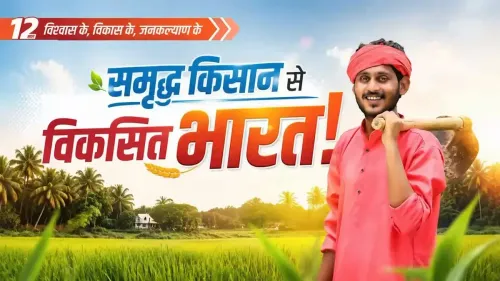
Posting under the hashtag #12YearsOfKisanSamriddhi (12 Years of Farmer Prosperity), Mandaviya wrote: 'PM Kisan se aarthik bal, KCC se sashaktikaran aur fasal bima se surakshit kal' — translated as 'Economic strength from PM-KISAN, empowerment through the Kisan Credit Card, and a secure tomorrow through crop insurance.' He added that over the past 12 years, the Modi government has brought the resolve of 'farmer welfare to farmer prosperity' down to the ground level.
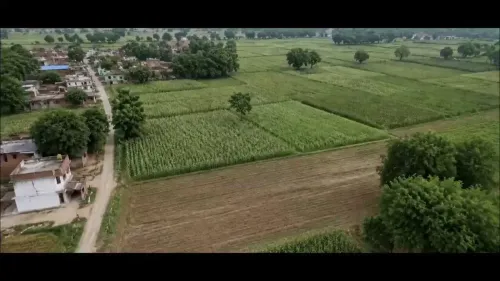
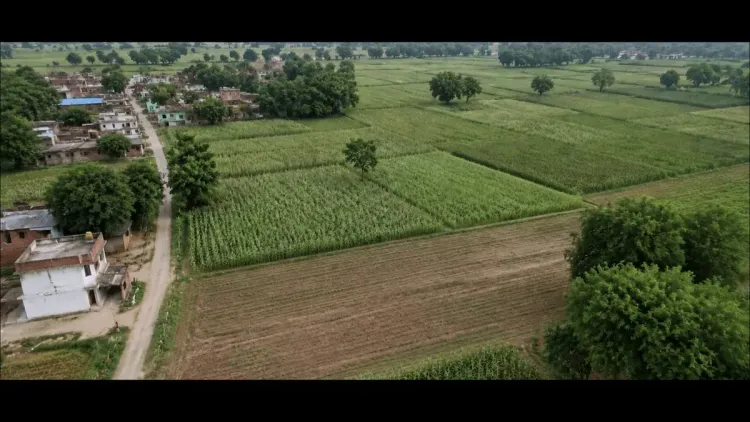
The post, accompanied by a video, is part of a broader communication drive by BJP leaders marking the current administration's anniversary milestone in mid-2026.
Policy Backdrop
PM-KISAN, launched in February 2019, provides direct income support of ₹6,000 annually to eligible landholding farmer families in three equal instalments, aimed at supplementing household income and meeting cultivation expenses.
The Kisan Credit Card scheme, revamped with higher credit limits and interest subvention from 2014 onwards, offers short-term concessional credit to farmers for crop production and allied activities. Pradhan Mantri Fasal Bima Yojana, introduced in 2016 as a comprehensive crop insurance framework, replaced earlier piecemeal programmes and is designed to protect farmers against losses from natural calamities, pests, and diseases.
Together, the three schemes represent a layered approach — income support, credit access, and risk mitigation — that the central government has positioned as the core of its agrarian welfare architecture since 2014.
Stakeholders and Impact
The primary beneficiaries of all three schemes are agricultural households across India, particularly small and marginal farmers who have historically faced liquidity constraints and vulnerability to weather-related crop losses. The Kisan Credit Card's interest subvention mechanism lowers the cost of borrowing for millions of cultivators who would otherwise depend on informal, high-interest credit.
Crop insurance under PMFBY addresses one of Indian agriculture's most persistent structural risks — the exposure of farm incomes to monsoon variability and extreme weather events. The scheme's uptake and claim settlement record have been subjects of ongoing policy review, with the government periodically adjusting premium structures and coverage norms.
What's Next
Detailed performance data for all three schemes — including cumulative beneficiary counts, total disbursements under PM-KISAN, Kisan Credit Card saturation figures, and PMFBY claim settlements — are typically disclosed in the Union Budget documents and the annual Economic Survey. Any parliamentary discussion on further modifications, enhanced credit limits, or expanded insurance coverage would be the next formal checkpoint for these programmes.
As the BJP government marks its extended tenure in mid-2026, communications from senior ministers like Mandaviya signal that agricultural welfare will remain a central plank of the party's political messaging ahead of future electoral cycles, with the three-scheme framework serving as the headline proof-point of rural economic outreach.
Point of View
Aligning a senior cabinet minister's social media presence with the BJP's broader anniversary narrative around 12 years in power. By bundling PM-KISAN, the Kisan Credit Card, and PMFBY into a single message, the government reinforces its preferred framing of agricultural policy as a coherent, multi-layered welfare system rather than isolated interventions. The messaging is particularly significant given that agrarian distress and farm income stagnation remain politically sensitive issues, and the ruling party has a strong electoral interest in consolidating its rural base. Whether the schemes' on-ground outcomes match the communication pitch is a question that will be tested in the next round of official data releases and parliamentary scrutiny.
NationPress
20 Sept 2026
Frequently Asked Questions
What is PM-KISAN and who benefits from it?
PM-KISAN is a central government scheme launched in February 2019 that provides ₹6,000 annually in direct income support to eligible landholding farmer families, paid in three equal instalments of ₹2,000 directly into their bank accounts.
What is the Kisan Credit Card scheme?
The Kisan Credit Card scheme offers short-term concessional credit to farmers for crop production and allied activities, with interest subvention to reduce borrowing costs. It was revamped with higher credit limits from 2014 onwards.
What does Pradhan Mantri Fasal Bima Yojana cover?
Pradhan Mantri Fasal Bima Yojana, introduced in 2016, is a crop insurance scheme that protects farmers against financial losses caused by natural calamities, pests, and diseases. It replaced earlier, more limited insurance programmes.
Why did Mansukh Mandaviya post about farmer schemes in June 2026?
Mandaviya's post was part of the BJP government's communications marking 12 years in office, using the hashtag #12YearsOfKisanSamriddhi to highlight agricultural welfare achievements under Prime Minister Narendra Modi.
What is the difference between PM-KISAN and Kisan Credit Card?
PM-KISAN provides unconditional direct cash transfers of ₹6,000 per year to farmer families, while the Kisan Credit Card is a credit facility offering concessional loans for farming needs — the two schemes address income support and credit access respectively.