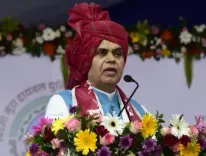
Dr. Jitendra Singh hails 12 years of Modi govt farmer welfare
Synopsis
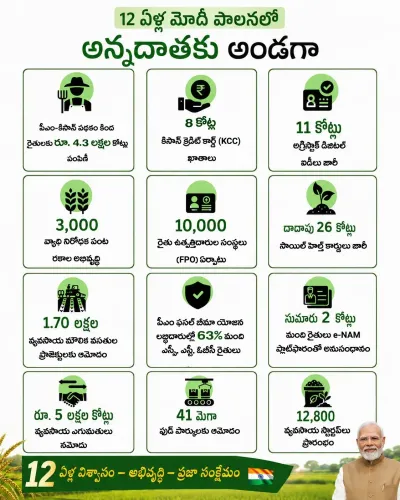
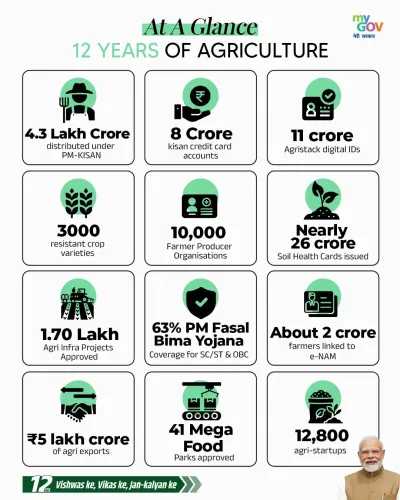
Union Minister Dr. Jitendra Singh marked 12 years of the Modi government by highlighting PM-KISAN, Kisan Credit Card and Pradhan Mantri Fasal Bima Yojana as transformative pillars of farmer empowerment and rural prosperity.
Key Takeaways
Jitendra Singh posted on June 11, 2026 under #12YearsOfKisanSamriddhi celebrating a decade-plus of farmer welfare policy.
PM-KISAN provides Rs 6,000 annual direct income support to landholding farmer families via Aadhaar-linked transfers, launched in February 2019 .
Pradhan Mantri Fasal Bima Yojana , introduced in 2016 , subsidises crop insurance premiums to protect farmers from weather and pest-related yield losses.
The Kisan Credit Card scheme was revamped in 2018-19 with higher credit limits and interest subvention for short-term agricultural loans.
The three schemes together form the government's integrated approach combining direct transfers, formal credit, and risk mitigation for rural households.
Next Union Budget allocations and parliamentary reviews of implementation gaps will be key indicators of continued commitment to these programmes.
Union Science and Technology Minister Dr. Jitendra Singh on Thursday, June 11, 2026, credited the Modi government with transforming farmer welfare over the past 12 years, citing three flagship schemes — PM-KISAN, Kisan Credit Card, and Pradhan Mantri Fasal Bima Yojana — as the pillars of agrarian empowerment.
Posting under the hashtag #12YearsOfKisanSamriddhi, the minister wrote: 'किसान सम्मान निधि से सहयोग, किसान क्रेडिट कार्ड से ताकत और फसल बीमा से भरोसे की सुरक्षा' — translated as 'Support through Kisan Samman Nidhi, strength through Kisan Credit Card, and the security of trust through crop insurance.' He added that the last 12 years had given 'new momentum to the empowerment and prosperity of the annadata' — the provider of food, a term widely used to refer to Indian farmers.
Context
The post is part of a broader ruling-party commemoration marking 12 years of the Narendra Modi-led government at the Centre. Several union ministers have been amplifying the #12YearsOfKisanSamriddhi theme on social media, highlighting agricultural policy achievements. Dr. Jitendra Singh's post specifically anchors the narrative in three concrete policy instruments rather than general rhetoric.
Policy Backdrop
PM-KISAN, launched in February 2019, provides an annual direct income support of Rs 6,000 to landholding farmer families through Aadhaar-linked transfers. The Pradhan Mantri Fasal Bima Yojana, introduced in 2016, replaced earlier national crop insurance frameworks and subsidises premiums to protect farmers against yield losses from weather events and pests.
The Kisan Credit Card scheme was revamped in 2018-19 with enhanced credit limits and interest subvention, extending short-term crop loans and term credit to a larger base of small and marginal farmers. Together, these three instruments represent the government's strategy of combining direct transfers, formal credit access, and risk mitigation to address rural indebtedness.
Stakeholders and Impact
The primary beneficiaries are India's small and marginal farmers, who constitute the majority of the agricultural workforce and have historically faced limited access to formal credit and insurance. Integration with Aadhaar-linked payment systems has been central to reducing leakage in direct benefit transfers under PM-KISAN. State governments serve as co-implementers of all three centrally sponsored schemes.
Opposition parties and independent researchers have previously questioned implementation gaps — including exclusion errors in beneficiary lists and delays in insurance claim settlements — though the minister's post does not engage with those critiques. The research background flags specific numerical achievements cited under the hashtag as unverified.
What's Next
Attention will now turn to the next Union Budget, where scheme-wise outlay allocations for PM-KISAN, Fasal Bima, and Kisan Credit Card interest subvention will signal the government's continued fiscal commitment to these programmes. Parliamentary committee reviews of coverage gaps and claim settlement ratios are also expected to shape the policy conversation in the coming months. The 12-year anniversary messaging is likely to intensify as the ruling party positions its agricultural record ahead of future electoral cycles.
Point of View
With agriculture positioned as a flagship success story. By anchoring the message in three specific, named schemes rather than broad claims, the communication strategy attempts to project policy concreteness over political sloganeering. The framing of PM-KISAN, Kisan Credit Card, and Fasal Bima as a unified 'support-strength-security' triad signals a deliberate effort to consolidate the agrarian welfare narrative ahead of future electoral cycles. However, the absence of any quantitative achievement data in the post — notable given the hashtag's 'Samriddhi' (prosperity) framing — leaves the messaging open to scrutiny from opposition and independent analysts who have flagged implementation gaps in all three schemes.
NationPress
20 Sept 2026
Frequently Asked Questions
What is PM-KISAN and who benefits from it?
PM-KISAN (Pradhan Mantri Kisan Samman Nidhi) is a central government scheme launched in February 2019 that provides Rs 6,000 per year in three equal instalments directly to the bank accounts of landholding farmer families across India.
What is the Pradhan Mantri Fasal Bima Yojana?
Pradhan Mantri Fasal Bima Yojana (PMFBY) is a crop insurance scheme launched in 2016 that protects farmers from financial losses caused by weather events, pests, and other natural calamities by subsidising insurance premiums.
What is the Kisan Credit Card scheme?
The Kisan Credit Card (KCC) scheme provides farmers with short-term crop loans and term credit at subsidised interest rates. It was revamped in 2018-19 with higher credit limits and interest subvention to expand access for small and marginal farmers.
What is #12YearsOfKisanSamriddhi?
#12YearsOfKisanSamriddhi is a hashtag used by BJP leaders and union ministers in June 2026 to mark 12 years of the Modi government, with a focus on agricultural and farmer welfare achievements during this period.
What did Dr. Jitendra Singh say about farmers on June 11 2026?
Dr. Jitendra Singh posted on June 11, 2026 that the Modi government's policies had given 'new momentum to the empowerment and prosperity' of farmers over 12 years, specifically citing PM-KISAN , Kisan Credit Card , and Pradhan Mantri Fasal Bima Yojana as key instruments.