CM MP Hails 12 Years of Farmer Welfare Under Modi
Synopsis
The Chief Minister's Office of Madhya Pradesh on 11 June 2026 marked twelve years of Union government farmer schemes under PM Modi, highlighting PM-KISAN, Kisan Credit Card, and Fasal Bima as instruments of economic security and a shift from welfare to prosperity for the farming community.
Key Takeaways
The CMO Madhya Pradesh posted on 11 June 2026 commemorating 12 years of the Modi government's farmer welfare record.
PM-KISAN provides Rs 6,000 per year in direct transfers to landholding farmers across India.
The Pradhan Mantri Fasal Bima Yojana , launched in 2016 , replaced an older crop insurance scheme with wider coverage and faster claims.
The Kisan Credit Card offers subsidised short-term crop loans, with saturation drives intensified after 2014 .
Madhya Pradesh is a major producer of wheat, soyabean, and pulses, making it a key state for central farm scheme implementation.
The post's framing — from kisan kalyan to kisan samriddhi — signals a government narrative shift from subsidy-focus to income-growth and productivity.
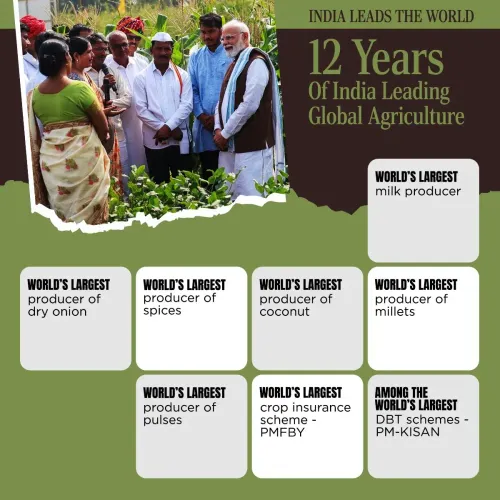
The Chief Minister's Office of Madhya Pradesh on Thursday, 11 June 2026 highlighted twelve years of farmer-focused governance under Prime Minister Narendra Modi, crediting flagship schemes with delivering economic security, dignity, and confidence to the country's farming community.
The post, shared from the official CMO Madhya Pradesh handle, declared: 'Annadata ke sashaktikaran ka sankalp' — 'A resolve for the empowerment of the food-giver' — and stated that schemes such as Kisan Samman Nidhi, the Kisan Credit Card, and Fasal Bima (crop insurance) had transformed the journey 'from farmer welfare to farmer prosperity' over the past twelve years.
Context
The post is tagged with the hashtags #12YearsOfGaribKalyan, #12YearsOfSeva, and #12YearsOfKisanSamriddhi, placing it within a coordinated commemoration of one decade-plus of the BJP-led Union government that took office in May 2014. Chief Minister Mohan Yadav is tagged directly, signalling state-level endorsement of the central government's agricultural record.
The framing — 'kisan kalyan se kisan samriddhi' (from farmer welfare to farmer prosperity) — mirrors the Union government's own communication shift away from subsidy-centric language toward productivity and income-growth narratives.
Policy Backdrop
The three schemes cited have been cornerstones of Union farm policy since 2014. PM-KISAN, launched in February 2019, provides an annual direct benefit transfer of Rs 6,000 to landholding farmers in three equal instalments, functioning as a floor-level income supplement. The Kisan Credit Card facility, which predates 2014 but received renewed saturation drives and interest-subvention enhancements after that year, offers short-term crop loans at subsidised rates.
The Pradhan Mantri Fasal Bima Yojana, introduced in 2016 to replace the older National Agricultural Insurance Scheme, expanded coverage and promised faster claim settlement for yield losses caused by natural calamities. Together, the three instruments address income support, credit access, and risk mitigation — the three structural vulnerabilities most cited by small and marginal farmers.
Madhya Pradesh and the Farmer Welfare Agenda
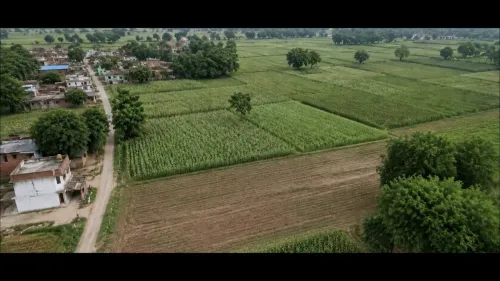
Madhya Pradesh is one of India's leading producers of wheat, soyabean, and pulses, making it a high-stakes implementer of centrally sponsored agricultural schemes. The state government has aligned its extension services and procurement machinery with national guidelines under successive administrations. For small and marginal farmers — who make up the bulk of the state's agricultural workforce — direct transfers under PM-KISAN and subsidised credit through the Kisan Credit Card have been primary points of contact with the welfare architecture.
The CMO's post also tags @AgriGoI and @minmpkrishi, the Union Ministry of Agriculture and the Madhya Pradesh agriculture ministry respectively, underscoring the Centre-state coordination framing of the message.
What's Next
Attention will now turn to Madhya Pradesh's state budget allocations for matching contributions to centrally sponsored farmer schemes and whether the next assembly session produces any state-specific farmer incentives that build on the central framework. The government's emphasis on moving from kalyan to samriddhi suggests future policy announcements may lean toward productivity-linked support rather than expanded direct transfers alone.
Point of View
Slotting into a broader BJP effort to consolidate the rural voter narrative ahead of electoral cycles by quantifying a decade-plus of farm welfare. The 'welfare to prosperity' framing is significant — it signals that the government considers the subsidy-and-safety-net phase complete and wants to be judged on income growth and productivity outcomes, a higher bar. For Madhya Pradesh specifically, where agriculture employs a large share of the workforce, this messaging carries both electoral and policy weight. The tagging of both central and state agriculture ministries points to a coordinated Centre-state communication strategy rather than a routine social media post.
NationPress
26 Oct 2026
Frequently Asked Questions
What is PM-KISAN and how much money do farmers get?
PM-KISAN (Pradhan Mantri Kisan Samman Nidhi) is a central government scheme launched in February 2019 that provides Rs 6,000 per year in three equal instalments of Rs 2,000 directly to the bank accounts of eligible landholding farmers.
What is the Pradhan Mantri Fasal Bima Yojana?
Pradhan Mantri Fasal Bima Yojana is a crop insurance scheme introduced in 2016 to protect farmers against yield losses from natural calamities such as floods, drought, and unseasonal rain, offering broader coverage and faster claim settlement than the scheme it replaced.
How does the Kisan Credit Card help farmers?
The Kisan Credit Card provides farmers with short-term crop loans at subsidised interest rates, giving them timely access to credit for seeds, fertilisers, and other inputs without relying on informal moneylenders.
Why is Madhya Pradesh important for farmer welfare schemes?
Madhya Pradesh is one of India's leading producers of wheat, soyabean, and pulses , and its large smallholder farming population makes it a critical state for the implementation of central schemes like PM-KISAN and Fasal Bima.
What does '12 years of Kisan Samriddhi' mean?
The phrase refers to the period since May 2014 when the BJP-led Union government took office, during which it launched and expanded a package of farmer welfare programmes; the government now frames this as a journey from basic welfare ( kalyan ) to broader prosperity ( samriddhi ) for the farming community.