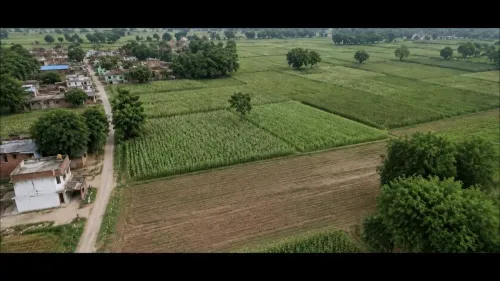
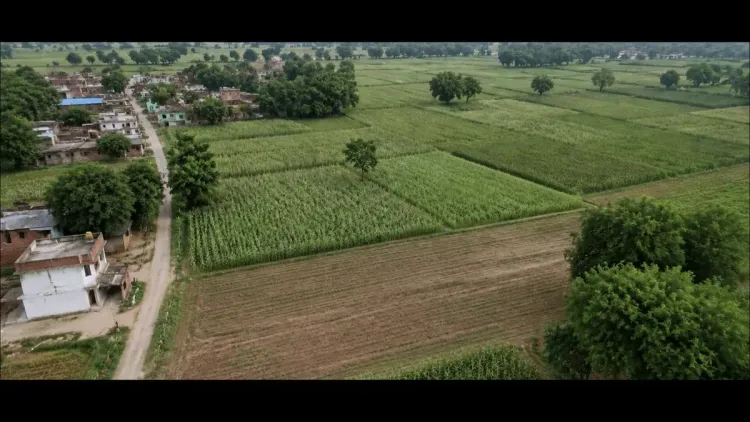
MP CM Office Marks 12 Years of Central Farmer Welfare Schemes
Synopsis
The Chief Minister's Office of Madhya Pradesh marked 12 years of central agricultural welfare schemes — PM-KISAN, Kisan Credit Card, and PMFBY — crediting Prime Minister Modi with delivering economic security and prosperity to farmers across the country.
Key Takeaways
The Chief Minister's Office of Madhya Pradesh posted on June 11, 2026 , marking 12 years of central farmer welfare under PM Modi.
PM-KISAN provides Rs 6,000 per year in direct income support to eligible landholding farmer families.
PMFBY was launched in January 2016 to provide crop insurance against natural calamities, replacing earlier schemes.
The Kisan Credit Card scheme was expanded after 2018 to cover animal husbandry and fisheries alongside crop credit.
The post tags CM Dr.
Mohan Yadav , the PMO , and the Union Agriculture Ministry , underscoring Centre-state political alignment.
The messaging uses the hashtag #12YearsOfKisanSamriddhi , framing the period as a shift from welfare to prosperity for farmers.
The Chief Minister's Office of Madhya Pradesh on Thursday, June 11, 2026, posted a tribute to central government agricultural welfare programmes, marking 12 years of what it described as a journey from farmer welfare to farmer prosperity under Prime Minister Narendra Modi.
Context
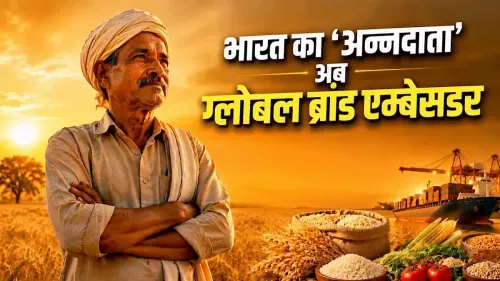
The post, shared under the hashtags #12YearsOfGaribKalyan, #12YearsOfSeva, and #12YearsOfKisanSamriddhi, salutes three flagship central schemes: Pradhan Mantri Kisan Samman Nidhi (PM-KISAN), the Kisan Credit Card (KCC), and Pradhan Mantri Fasal Bima Yojana (PMFBY). The message states that these programmes have provided 'economic security, dignity, and confidence' — aarthik suraksha, samman aur aatmavishwas — to farmers, referred to in the post by the honorific annadata (provider of food).
Chief Minister Dr. Mohan Yadav was tagged in the post alongside the Prime Minister's Office and the Union Ministry of Agriculture, signalling the state government's intent to align publicly with the national political messaging around the anniversary.
Policy Backdrop
PM-KISAN, launched in February 2019, provides an annual direct income transfer of Rs 6,000 to eligible landholding farmer families across India. PMFBY, introduced in January 2016, replaced earlier crop insurance frameworks with broader risk coverage against natural calamities, while the Kisan Credit Card scheme was substantially revamped and expanded after 2018 to extend coverage to animal husbandry and fisheries alongside traditional crop credit.
Together, these three instruments form the core of the Union government's direct-benefit approach to agricultural support — combining income transfers, credit access, and risk mitigation — that has been rolled out across states since 2014.
Stakeholders and Impact
Madhya Pradesh, a large agrarian state in central India, has a substantial population of small and marginal farmers who are the primary beneficiaries of these centrally sponsored schemes. The state government has consistently positioned itself as an active implementer of Union agricultural programmes, frequently invoking convergence between state and national initiatives in its public communications.
The post's framing — 'kisan kalyan se kisan samriddhi' (from farmer welfare to farmer prosperity) — reflects a broader political narrative that the BJP-led governments at both the Centre and in Madhya Pradesh have cultivated over the past decade, presenting welfare transfers as a foundation for long-term rural economic uplift.
What's Next
Attention will turn to state budget allocations for supplementary farmer support programmes and to any parliamentary deliberation on PM-KISAN coverage criteria or PMFBY premium-sharing ratios during the upcoming monsoon session. How Madhya Pradesh translates this political messaging into concrete budgetary commitments for its farmer population will be a key indicator of whether the anniversary rhetoric translates into policy action.
Point of View
The Madhya Pradesh CMO signals active ownership of Union welfare delivery, a posture that serves both accountability optics and electoral positioning ahead of any future state cycle. The 12-year framing is notably ambitious: it anchors the narrative not just in scheme launches but in a cumulative governance legacy, implying a long arc of farmer-first policy that the opposition will contest on implementation grounds. The real test lies in whether state-level supplementary support — beyond central transfers — keeps pace with the rhetoric.
NationPress
21 Sept 2026
Frequently Asked Questions
What is PM-KISAN and how much money do farmers get?
PM-KISAN, or Pradhan Mantri Kisan Samman Nidhi, provides eligible landholding farmer families with Rs 6,000 per year in three equal instalments of Rs 2,000 as direct income support.
What is Pradhan Mantri Fasal Bima Yojana (PMFBY)?
PMFBY is a central crop insurance scheme launched in January 2016 that covers farmers against losses due to natural calamities, pests, and diseases, with low premium rates for farmers.
What did the Madhya Pradesh CM Office post about farmers?
On June 11, 2026 , the Chief Minister's Office of Madhya Pradesh posted a tribute marking 12 years of central farmer welfare schemes including PM-KISAN, Kisan Credit Card, and PMFBY under PM Modi's leadership.
What is the Kisan Credit Card scheme?
The Kisan Credit Card is a subsidised credit facility for farmers that was significantly expanded after 2018 to include animal husbandry and fisheries, providing short-term loans at reduced interest rates.
What does 12 years of farmer welfare under Modi mean?
The reference marks roughly 12 years since the BJP-led government came to power in 2014 , during which PM-KISAN, PMFBY, and the revamped Kisan Credit Card were introduced as the core of Union agricultural policy.