CM Fadnavis launches Mercedes-Benz Electric GLC in Pune
Synopsis
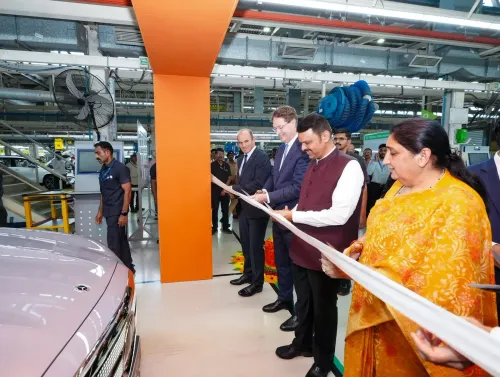
Chief Minister Devendra Fadnavis unveiled the Mercedes-Benz Electric GLC at the Chakan plant in Pune on 4 November 2026, declaring Maharashtra's intent to evolve from a manufacturing base into a global hub for EV technology, battery innovation, automotive software and R&D.
Key Takeaways
CM Devendra Fadnavis formally launched the Mercedes-Benz Electric GLC at the Chakan plant, Pune on 4 November 2026 .
Maharashtra accounts for over 20% of India's total motor-vehicle production, anchored by the Pune–Pimpri-Chinchwad industrial corridor.
The state's EV Policy targets 30% electric vehicle registrations among all new vehicles by 2030 , with charging corridors on the Mumbai-Pune Expressway and Samruddhi Mahamarg.
The Chakan plant supports around 1,200 direct jobs and approximately 18,000 jobs including the supplier and services ecosystem.
CM Fadnavis urged Mercedes-Benz to use Chakan as a base for Asian and global market exports and to prioritise Maharashtra for battery tech and software R&D.
Infrastructure anchors — Navi Mumbai International Airport , Pune-Purandar Airport and Vadhavan Port — are positioned to strengthen Maharashtra's global export connectivity.
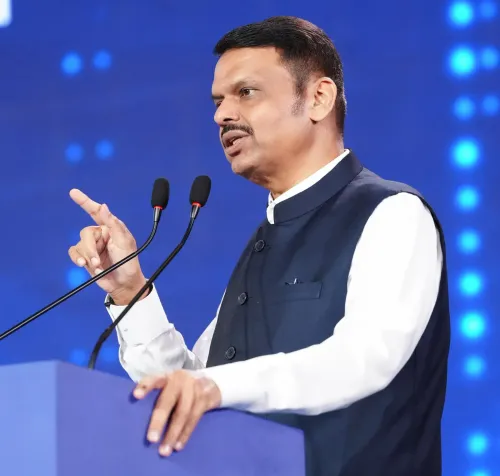
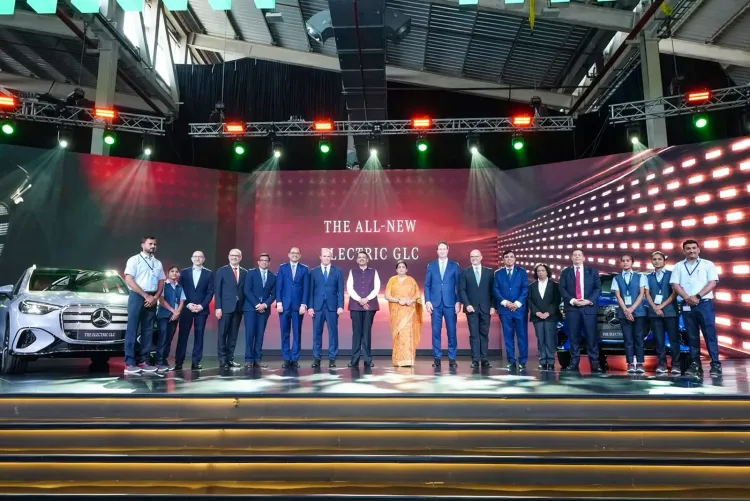
A German luxury badge and an electric powertrain rolled off a Pune assembly line on Wednesday, 4 November 2026 — and Chief Minister Devendra Fadnavis was there to mark the moment. The Chief Minister's Office of Maharashtra announced that CM Fadnavis formally unveiled the Mercedes-Benz Electric GLC at a ceremony in Pune, framing the launch as proof that Maharashtra is ready to lead the world's next mobility revolution, not merely assemble its vehicles.
From 'Make in Maharashtra' to 'Innovate in Maharashtra'
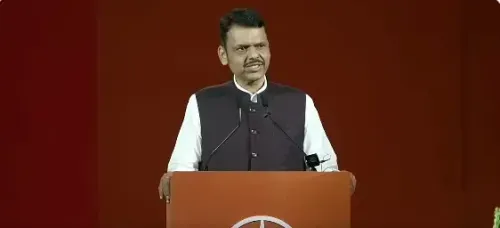
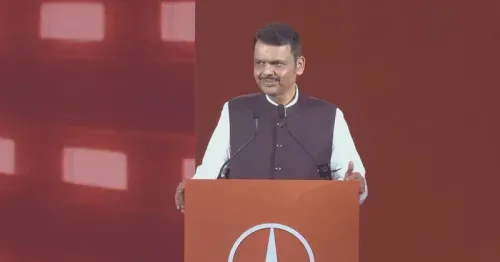
CM Fadnavis drew a deliberate arc in his address: the state's ambition has outgrown the factory floor. 'मेक इन महाराष्ट्र'पासून 'इनोव्हेट इन महाराष्ट्र'पर्यंत — 'from Make in Maharashtra to Innovate in Maharashtra' — was the phrase he used to signal a pivot from volume manufacturing toward research, engineering, software and design. The vehicle of tomorrow, he argued, is not simply a machine on four wheels but 'a combined form of a computer, an energy system and an AI-powered mobility platform.' Maharashtra, he said, intends to lead that transformation.
The ambition is specific: global leadership not just in electric vehicles but in battery technology, power electronics, semiconductors, automotive software, design and R&D. That is a markedly wider target than any previous state industrial policy has set for the auto sector.
Chakan's decade-long journey to the Electric GLC
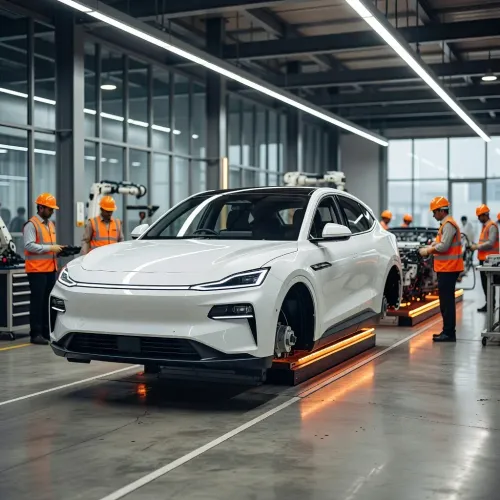
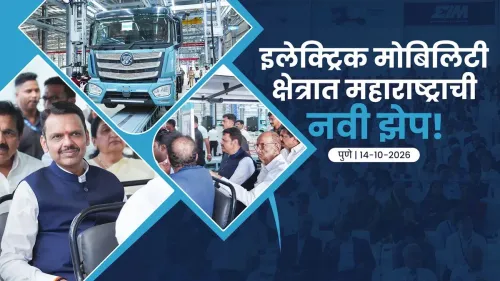
The Mercedes-Benz plant in Chakan, outside Pune, has been building vehicles for a decade. That the same facility now produces the Electric GLC — targeted at both Indian and export markets — is the milestone CM Fadnavis pointed to as a measure of Maharashtra's industrial maturity. The plant directly employs approximately 1,200 people, with the wider supplier and services network extending that number to around 18,000 jobs.
CM Fadnavis used the occasion to publicly urge Mercedes-Benz to go further: manufacture from Chakan for Asian and global markets, and prioritise Maharashtra for future battery technology, software engineering and mobility research investments. The ask was direct, and it was made with the company's own global leadership in the room.
Maharashtra's 20% share and the EV target by 2030
The numbers underpin the pitch. The Pune–Pimpri-Chinchwad corridor anchors a vehicle production cluster that accounts for more than 20% of India's total motor-vehicle output. Under the state's Electric Vehicle Policy — announced in 2021 — the government has set a target of 30% of all new vehicle registrations being electric by 2030. Supporting infrastructure already in motion includes fast-charging stations on expressways, a sustainable mobility corridor on both the Mumbai-Pune Expressway and the Samruddhi Mahamarg, and incentives for battery recycling.
Deputy CM Sunetra Ajit Pawar attended alongside a high-powered Mercedes-Benz delegation: Dr. Martin Brudermüller, Chairman of the Supervisory Board of Mercedes-Benz Group AG; Ola Källenius, Chairman of the Board of Management; Jörg Burzer, Chief Technology Officer; Santosh Iyer, MD and CEO of Mercedes-Benz India; and Manu Saale, MD and CEO of Mercedes-Benz Research and Development India.
Airports, a port, and the export corridor taking shape
Maharashtra is not relying on industrial policy alone. CM Fadnavis pointed to three infrastructure anchors that will deepen the state's global connectivity: the Navi Mumbai International Airport, the proposed Pune-Purandar Airport, and the Vadhavan Port. Together, they form the logistics spine that an export-oriented EV manufacturing hub needs — and their commissioning timelines will be closely watched by investors deciding where to place their next bets.
Maharashtra has long been India's manufacturing heartland. The Electric GLC rolling out of Chakan signals that it is now competing to be something more: the country's gateway to the global electric-mobility economy. The clock on that ambition has started.
Point of View
He is competing directly with rival states and national PLI frameworks for the highest-value layer of the EV supply chain. The pivot from 'Make in Maharashtra' to 'Innovate in Maharashtra' mirrors a broader national pattern where states recognise that manufacturing alone no longer guarantees long-term industrial relevance. Whether the infrastructure timeline — Navi Mumbai airport, Vadhavan port, Pune-Purandar airport — delivers on schedule will determine how credible that ambition looks to global investors over the next three years.
NationPress
4 Nov 2026
Frequently Asked Questions
What is the Mercedes-Benz Electric GLC launched in Pune?
The Mercedes-Benz Electric GLC is a fully electric luxury SUV now being produced at the company's Chakan plant near Pune , intended for both the Indian market and export to Asian and global markets.
What is Maharashtra's EV target for 2030?
Under the Maharashtra Electric Vehicle Policy announced in 2021 , the state aims for 30% of all new vehicle registrations to be electric by 2030 , backed by highway fast-charging networks and battery recycling incentives.
How many jobs does the Mercedes-Benz Chakan plant create?
The Chakan plant provides approximately 1,200 direct jobs and supports around 18,000 livelihoods across the supplier and services ecosystem.
What did CM Fadnavis mean by 'Innovate in Maharashtra'?
CM Fadnavis used the phrase to signal a shift beyond vehicle assembly toward R&D, battery technology, automotive software, semiconductors and AI-powered mobility , positioning Maharashtra as a global innovation hub rather than just a production centre.
Which infrastructure projects will boost Maharashtra's EV export capacity?
Three key projects — the Navi Mumbai International Airport , the proposed Pune-Purandar Airport and Vadhavan Port — are expected to strengthen the state's logistics links to global markets and support export-oriented EV manufacturing.