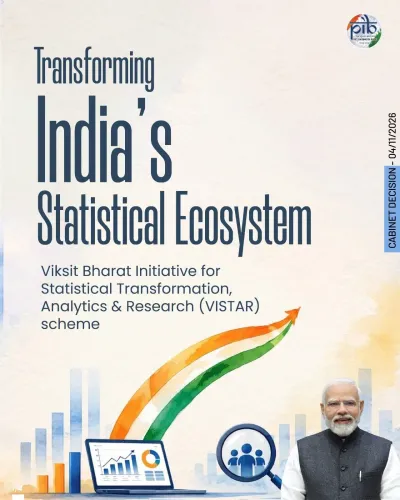
Cabinet Clears VISTAR Scheme to Overhaul India's Stats System
Synopsis
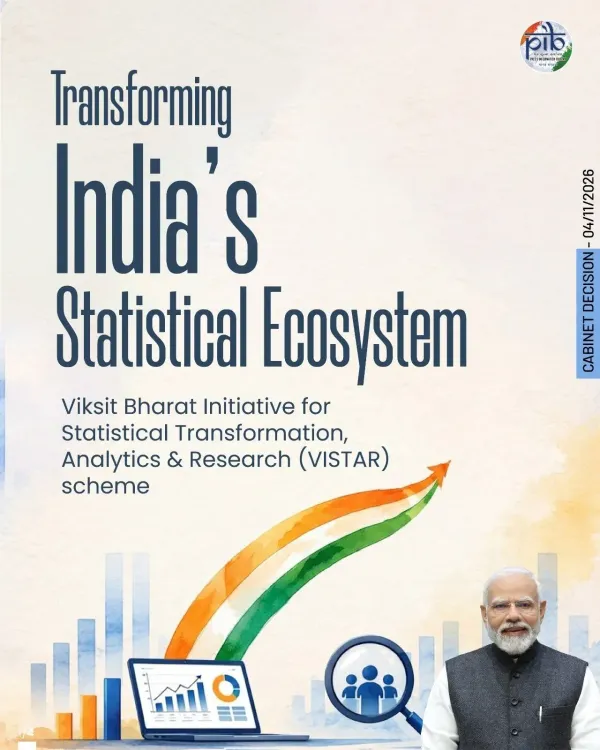
The Union Cabinet chaired by PM Modi approved the VISTAR Scheme on November 4, 2026 — a five-year initiative to transform India's official data collection, analytics, and research systems as part of the Viksit Bharat 2047 framework.
Key Takeaways
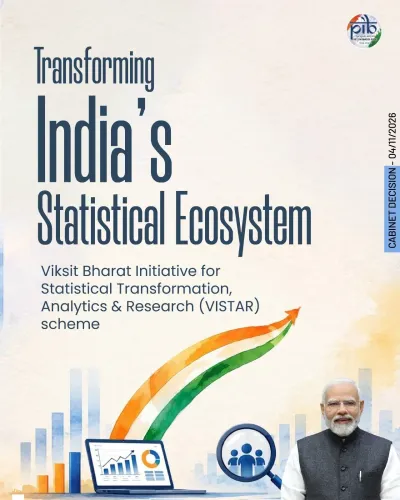
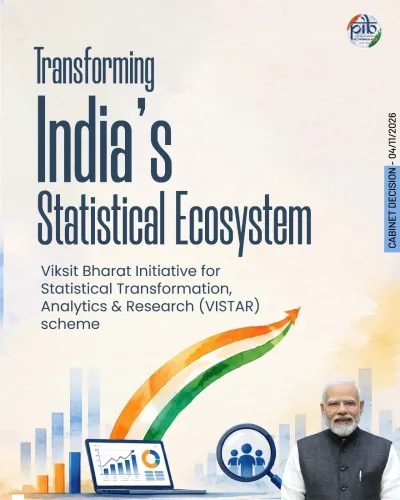
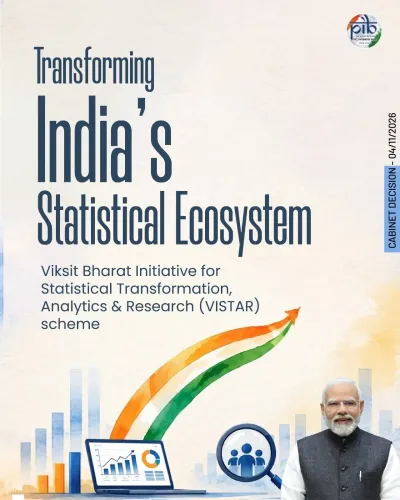
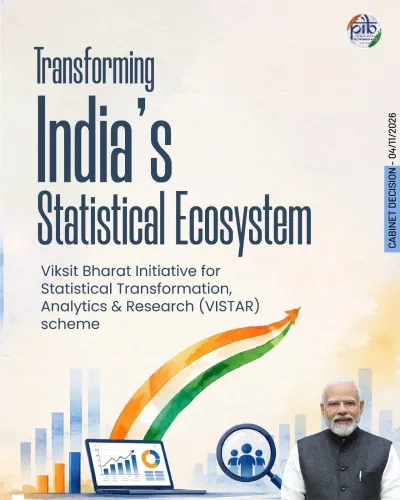
The Union Cabinet on November 4, 2026 approved the VISTAR Scheme (Viksit Bharat Initiative for Statistical Transformation, Analytics and Research).
The scheme runs for five years: 2026–27 to 2030–31 .
Its stated goal is to make India's official data more accurate, timely, and reliable .
VISTAR is embedded within the broader Viksit Bharat 2047 vision of a developed India.
Specific funding size, lead ministry, and operational components have not yet been disclosed.
Improved statistical infrastructure is intended to sharpen government decision-making and public service delivery.
India's official data infrastructure is about to get a structural upgrade. The Union Cabinet, chaired by Prime Minister Narendra Modi, on Wednesday, November 4, 2026, approved the Viksit Bharat Initiative for Statistical Transformation, Analytics and Research (VISTAR) Scheme — a five-year programme running from 2026–27 to 2030–31 aimed at making government data more accurate, timely, and reliable. Union Health Minister J. P. Nadda announced the Cabinet decision on X.
What VISTAR Sets Out to Fix
For years, questions around the quality and timeliness of India's official statistics have shadowed policy decisions — from GDP revisions to population estimates. The VISTAR scheme directly targets this gap. By upgrading data collection methodologies and analytical systems, the initiative promises to sharpen the evidence base on which ministries and planners operate. Better data means less guesswork and more precisely calibrated public spending. The scheme is explicitly framed within the larger Viksit Bharat vision — the government's roadmap for a developed India by 2047 — which has consistently identified modern governance infrastructure, including robust statistics, as a foundational requirement. VISTAR is, in effect, the statistical backbone that the Viksit Bharat architecture has needed.Five Years to Transform Official Numbers
The five-year window — 2026–27 through 2030–31 — signals this is not an incremental patch but a generational reform effort. Stronger statistical systems are the connective tissue of evidence-based governance: without reliable data on agriculture, health, employment, and infrastructure, every welfare scheme and capital outlay operates with a degree of blind risk. India's policymakers, from district collectors to Union ministers, stand to gain a sharper set of instruments once VISTAR's transformation is fully operational. Specific operational components, the scheme's total outlay, and the lead ministry responsible for implementation were not detailed in the Cabinet announcement.A Signal on Governance Ambition
The timing is deliberate. As India accelerates its push through the second half of the decade toward the 2047 centenary target, the gap between political ambition and measurable outcomes demands to be closed. VISTAR positions India's statistical machinery not as a bureaucratic back-office function but as a live instrument of national development. The Cabinet's approval sends a clear signal: data quality is now a governance priority, not an afterthought. Watch for parliamentary debate and eventual budget allocations to reveal the scale and speed of the scheme's rollout — that is where intent becomes architecture.Point of View
Data-driven outcomes rather than aspirational targets. India's statistics architecture has long been a weak link in its governance chain, and a five-year dedicated scheme signals the government recognises that gap as a structural risk. For the BJP, there is also a political logic: credible official data insulates policy claims from opposition challenges. The real test will come in budget allocations and institutional capacity-building — a scheme without adequate funding and trained statistical personnel risks becoming a well-named reform on paper only.
NationPress
4 Nov 2026
Frequently Asked Questions
What is the VISTAR scheme approved by the Union Cabinet?
VISTAR stands for Viksit Bharat Initiative for Statistical Transformation, Analytics and Research. It is a five-year government scheme approved on November 4, 2026, covering 2026–27 to 2030–31, aimed at improving India's official data collection, analysis, and reliability.
Why was the VISTAR scheme approved?
The scheme was approved to address long-standing concerns about the accuracy and timeliness of India's official statistics, which are essential for sound policy decisions, welfare delivery, and national development planning.
How is VISTAR linked to Viksit Bharat?
VISTAR is explicitly framed as part of the Viksit Bharat vision — the government's roadmap for a developed India by 2047. Robust statistical systems are considered a foundational requirement for achieving that goal.
Who approved the VISTAR scheme?
The Union Cabinet, chaired by Prime Minister Narendra Modi, approved the VISTAR scheme. Union Health Minister J. P. Nadda announced the decision on X on November 4, 2026.
What is the budget for the VISTAR scheme?
The specific financial outlay for VISTAR has not been disclosed in the Cabinet announcement. Details on funding and the lead ministry responsible for implementation are yet to be made public.