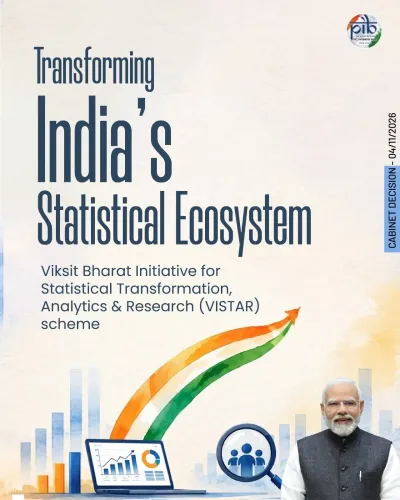
Cabinet clears ₹4,371 cr VISTAR scheme to modernise India's stats
Synopsis
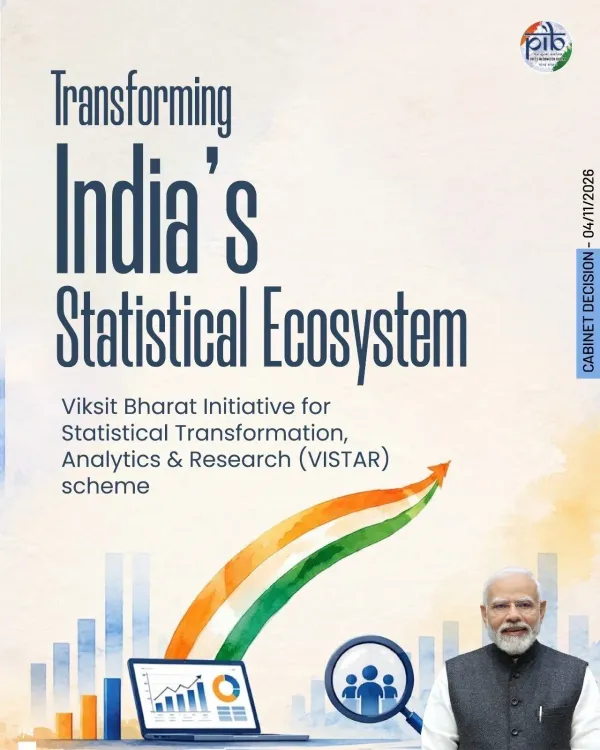
The Union Cabinet has approved VISTAR, a five-year ₹4,371.10 crore scheme running from FY 2026-27 to 2030-31, aimed at modernising India's official statistical system and enabling evidence-based policymaking under the Viksit Bharat vision.
Key Takeaways
The Union Cabinet, chaired by Prime Minister Narendra Modi , approved the VISTAR scheme on 4 November 2026 .
The scheme carries a financial outlay of ₹4,371.10 crore over five years ( FY 2026-27 to 2030-31 ).
VISTAR stands for Statistical Transformation, Analysis and Research for a Developed India ( Viksit Bharat ke liye Sांkhyikiya Parivartan, Vishleshan evam Anusandhan ).
Objectives include modernising the official statistics system, improving data quality and availability, and promoting evidence-based policy decisions.
The scheme aligns with India's Viksit Bharat development goal and continues a statistical reform lineage dating to the 2005 National Statistical Commission .
Detailed component-wise allocations and implementation timelines are awaited as FY 2026-27 approaches.
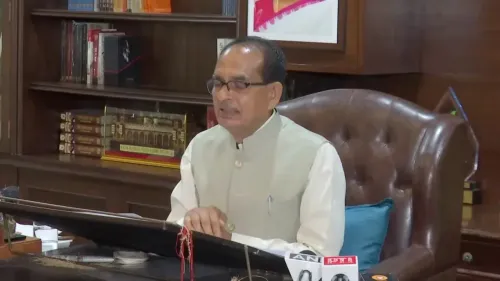
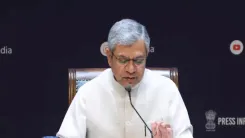
India's official data architecture is getting its most ambitious overhaul in decades. Union Agriculture Minister Shivraj Singh Chouhan announced on Wednesday, 4 November 2026 that the Union Cabinet, under Prime Minister Narendra Modi, has approved the VISTAR — Viksit Bharat ke liye Sांkhyikiya Parivartan, Vishleshan evam Anusandhan (Statistical Transformation, Analysis and Research for a Developed India) — scheme, carrying a financial outlay of ₹4,371.10 crore over five years.
What VISTAR aims to fix — and why it matters now
India's statistical machinery has long been criticised for data lags, inconsistent survey cycles, and quality gaps that complicate both policymaking and economic forecasting. VISTAR targets precisely those fault lines: the scheme is designed to modernise the country's official statistics system, improve the quality and availability of statistical data, and promote evidence-based policy decisions — in the Cabinet's own framing.
The five-year window runs from FY 2026-27 through FY 2030-31, aligning squarely with India's push toward its Viksit Bharat (Developed India) goal by 2047. Better data, the government's logic goes, is the scaffolding on which credible policy is built.
A lineage stretching back to Rangarajan
India's statistical reform journey is not new. The National Statistical Commission, constituted in 2005 on the recommendations of the Rangarajan Commission, was itself an attempt to insulate official data from ad hoc pressures and improve systemic rigour. Successive governments have pursued incremental upgrades through the Ministry of Statistics and Programme Implementation (MoSPI) — from digitising survey pipelines to expanding the coverage of price indices.
VISTAR, with its near-₹4,400 crore envelope, represents the largest single consolidated investment in that lineage, signalling that the Centre views statistical infrastructure not as a back-office function but as a strategic national asset.
What to watch as implementation begins
The Cabinet approval is the starting gun, not the finish line. Watchers will now look for component-wise fund allocations — how much flows to survey modernisation versus analytical capacity versus technology platforms — as well as the timeline for the first disbursements when FY 2026-27 formally kicks off. Whether MoSPI gains staffing depth and digital infrastructure commensurate with the outlay will determine whether VISTAR transforms outputs or merely upgrades spreadsheets.
For policymakers across ministries, from agriculture to finance, the promise is tangible: sharper, faster, more granular data to anchor decisions that touch hundreds of millions of lives.
Point of View
371 crore over five years, it dwarfs earlier incremental MoSPI upgrades and arrives at a moment when the credibility of India's economic data faces intense domestic and international scrutiny. If implementation matches ambition, it could meaningfully close the gap between policy intent and measurable outcome across flagship programmes. The harder test, however, is institutional: money alone will not fix the structural capacity and independence questions that have dogged official statistics for two decades.
NationPress
4 Nov 2026
Frequently Asked Questions
What is the VISTAR scheme approved by the Cabinet?
VISTAR stands for Statistical Transformation, Analysis and Research for a Developed India. The Union Cabinet approved it on 4 November 2026 with a ₹4,371.10 crore outlay spanning FY 2026-27 to 2030-31, aimed at modernising India's official statistics system and improving data quality for evidence-based policymaking.
How much money has been allocated for the VISTAR scheme?
The Cabinet has approved a financial outlay of ₹4,371.10 crore for the VISTAR scheme, to be spent over five financial years from 2026-27 to 2030-31.
What ministry will implement the VISTAR scheme?
The scheme falls under the purview of the Ministry of Statistics and Programme Implementation (MoSPI), which oversees India's official statistical machinery including national accounts and major surveys.
How is VISTAR connected to the Viksit Bharat vision?
VISTAR's full name explicitly references 'Viksit Bharat' (Developed India), the government's overarching goal for 2047. Better official data is seen as essential scaffolding to design, monitor, and evaluate the policies needed to achieve that goal.
What was India's last major statistical reform before VISTAR?
The National Statistical Commission, constituted in 2005 following the Rangarajan Commission's recommendations, was a landmark effort to strengthen and insulate India's statistical system. Successive governments have made incremental upgrades since, but VISTAR represents the largest consolidated investment in that reform lineage.