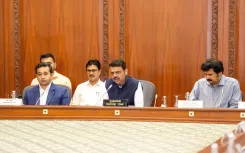
Amit Shah: Cabinet clears ₹7,395 cr PM VGSY for rural India
Synopsis
The Union Cabinet on October 28, 2026 approved PM Viksit Gram Swaraj Yojana at ₹7,395.55 crore, connecting over 2.55 lakh panchayats to AI-powered and digital governance platforms and empowering 32 lakh elected representatives to anchor India's rural development push.
Key Takeaways
The Union Cabinet approved the Pradhan Mantri Viksit Gram Swaraj Yojana (PM VGSY) on October 28, 2026 at a cost of ₹7,395.55 crore .
The scheme will connect more than 2.55 lakh gram panchayats to digital platforms including the e-Gramswaraj portal and the new AI-driven tool 'Pancham' .
It aims to empower 32 lakh elected panchayat representatives through training and digital tools for transparent local planning.
PM VGSY builds on the Rashtriya Gram Swaraj Abhiyan (2018) and the e-Gramswaraj platform introduced under the Ministry of Panchayati Raj.
The scheme is framed as a foundational plank of the Viksit Bharat 2047 national development vision.
State-level rollout and integration of AI platforms with existing panchayat workflows will be key markers to watch.
A ₹7,395.55 crore bet on village democracy — that is what the Union Cabinet placed on Wednesday, October 28, 2026, when it approved the Pradhan Mantri Viksit Gram Swaraj Yojana (PM VGSY), a scheme designed to rewire how India's 2.55 lakh-plus gram panchayats plan, spend, and account for public money. Union Home Minister Amit Shah called it a historic step in empowering rural India and directly tied it to the Modi government's 'Viksit Bharat' mission.
What PM VGSY promises to change on the ground
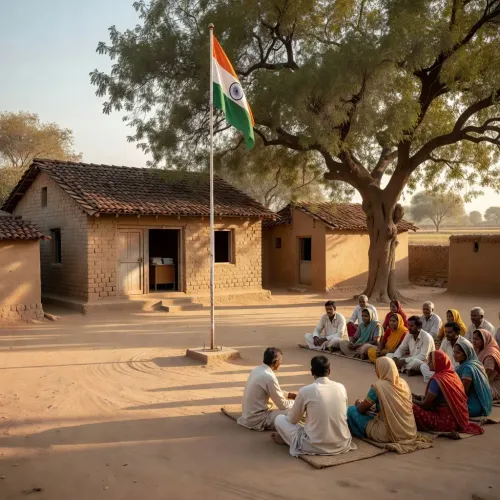
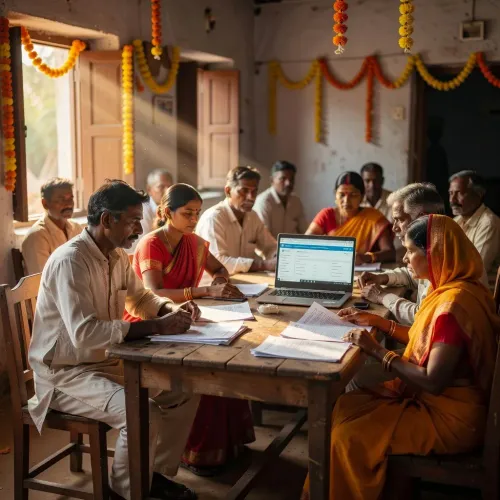
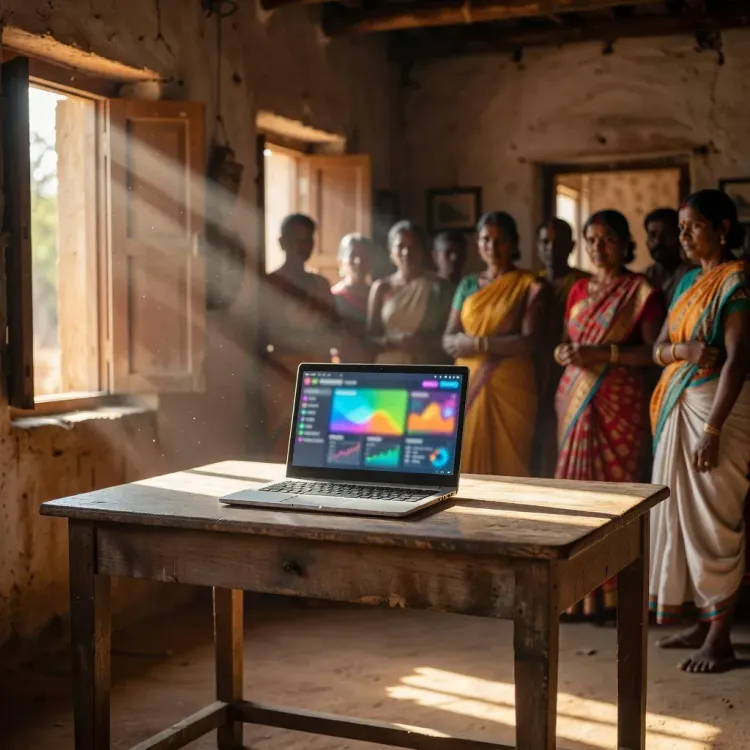
At its core, PM VGSY is a governance-architecture overhaul for the last mile of Indian democracy. The scheme will connect over 2.55 lakh panchayats to next-generation digital platforms — most notably the existing e-Gramswaraj portal and a new AI-driven tool called 'Pancham' — to enable transparent local planning and real-time monitoring of village-level expenditure. The logic is straightforward: sunlight is the best disinfectant, and a digitally legible panchayat is a harder place to hide leakages.
The scheme also zeroes in on people, not just platforms. 32 lakh elected panchayat representatives — sarpanchs, ward members, block-level functionaries — are to be trained and empowered under PM VGSY, turning gram panchayats into genuine centres of integrated village development rather than passive conduits for state spending.
Building on two decades of digital panchayat reform
PM VGSY does not arrive in a vacuum. The 73rd Constitutional Amendment of 1992 gave panchayati raj institutions their constitutional backbone, mandating decentralised self-governance across rural India. Successive governments layered programmes on top — the most recent being the Rashtriya Gram Swaraj Abhiyan, approved in 2018, which focused on panchayat capacity-building for sustainable development goals.
The e-Gramswaraj portal, launched by the Ministry of Panchayati Raj, brought online planning and budgeting to panchayats — but coverage and adoption remained uneven. PM VGSY appears to be the next leap: folding e-Gramswaraj into a wider technology stack, adding AI-assisted governance through 'Pancham', and backing it with a committed outlay that dwarfs earlier capacity-building budgets.
The ₹7,395.55 crore number and what it signals
The approved cost of ₹7,395.55 crore is notable both for its scale and its specificity — a sign that project-planning has moved past the concept stage. Rural governance reforms have historically been underfunded relative to their ambition; a dedicated outlay of this size signals that the Centre is treating PM VGSY as a flagship infrastructure investment, comparable in political weight to schemes in roads or housing, rather than a soft-budget line item.
With Viksit Bharat 2047 as the overarching national goal, the Modi government has consistently argued that no development target is achievable without a functioning, transparent local government layer. PM VGSY is, in effect, the institutional plumbing that ambition requires.
32 lakh representatives and the politics of village democracy
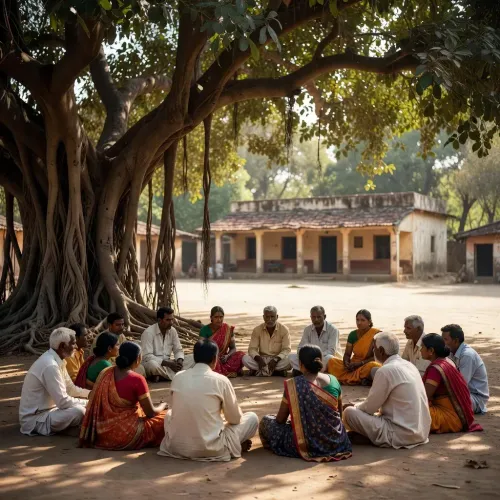
The figure of 32 lakh elected representatives is worth pausing on. India's panchayati raj system is, by raw headcount, one of the largest democratic exercises anywhere in the world. Empowering that base — with digital tools, training, and real planning authority — could reshape how welfare delivery actually works in roughly 640,000 villages. It also concentrates significant political goodwill at the grassroots, a calculation no ruling party ignores.
The rollout across states and the integration of 'Pancham' with existing panchayat workflows will be the real test. Technology adoption in rural local bodies has historically lagged ambition; the quality of implementation will determine whether PM VGSY becomes a landmark reform or another well-funded scheme that stalls at the block-office level.
Point of View
Combining a substantial capital outlay with AI-assisted governance tools — an approach that signals the Centre views digital infrastructure as inseparable from decentralisation. The scheme extends a clear policy lineage from the 73rd Amendment through Rashtriya Gram Swaraj Abhiyan to a fully platform-mediated local governance model. Politically, anchoring 32 lakh elected representatives to a Centre-backed digital ecosystem deepens the BJP's rural grassroots connect ahead of future electoral cycles. The actual test will be adoption rates in low-connectivity districts, where every previous e-governance push for panchayats has historically lost momentum.
NationPress
28 Oct 2026
Frequently Asked Questions
What is the Pradhan Mantri Viksit Gram Swaraj Yojana (PM VGSY)?
PM VGSY is a Central government scheme approved on October 28, 2026 at a cost of ₹7,395.55 crore to digitise and strengthen rural governance by linking over 2.55 lakh panchayats to platforms like e-Gramswaraj and the AI tool 'Pancham', while training 32 lakh elected representatives.
What is 'Pancham' in the context of PM VGSY?
'Pancham' is an AI-driven digital governance platform to be deployed under PM VGSY to assist gram panchayats in transparent local planning and monitoring of village development activities.
What is the total budget approved for PM VGSY?
The Union Cabinet approved ₹7,395.55 crore for PM VGSY at its meeting on October 28, 2026.
How many panchayat representatives will benefit from PM VGSY?
The scheme targets the empowerment and capacity-building of 32 lakh elected panchayat representatives across India's rural local governance bodies.
How does PM VGSY relate to Viksit Bharat 2047?
PM VGSY is positioned as a foundational governance reform under the Modi government's Viksit Bharat mission, which aims to make India a developed nation by 2047 by strengthening institutions at every tier, including the gram panchayat level.