White House Salutes First Responders, Touts Border and Crime Record
Synopsis
The White House posted a tribute to America's first responders on October 28, 2026, coupling the salute with claims of the most secure southern border in history, slashed fentanyl flows, and historically low crime rates, framing it under the banner 'Made America Safe Again.'
Key Takeaways
The White House posted a first-responder tribute on October 28, 2026 , pairing it with domestic safety policy claims.
The post asserts the 'most secure border in history,' historic fentanyl reductions at the U.S.-Mexico border , and record-low crime rates.
The phrase 'Made America Safe Again' ties the ceremonial tribute explicitly to an administration policy narrative.
Federal border enforcement has evolved across multiple administrations since the Secure Fence Act of 2006 , making 'most secure ever' a recurring political claim.
Congressional negotiations on FY2027 border security and first-responder grant funding are ongoing, giving the message immediate legislative context.
Independent verification of the specific superlative claims — 'most secure border in history,' 'historic crime lows' — is not available from current public records.
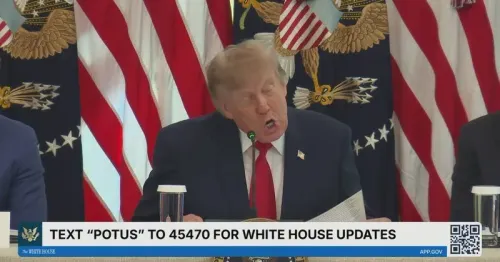
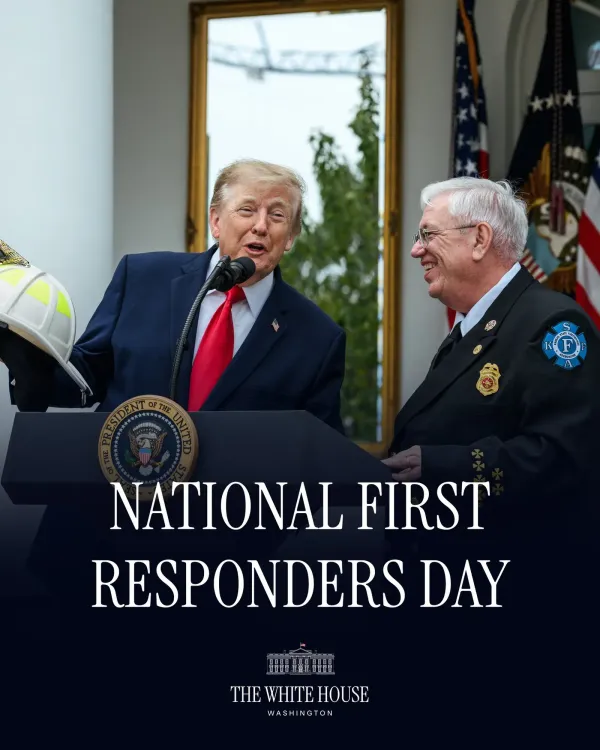
On Wednesday, October 28, 2026, The White House used its official X account to deliver a sweeping tribute to America's first responders — law enforcement officers, firefighters, and emergency medical personnel — while simultaneously asserting that joint efforts with these frontline workers have produced record border security, a dramatic drop in fentanyl trafficking across the southern border, and historically low crime rates across the country.
A tribute wrapped in a policy claim
The post's core message pairs appreciation — 'To every fearless first responder hero who answers the call every day, THANK YOU' — with a set of bold governance assertions: the 'most secure border in history,' fentanyl slashed at the U.S.-Mexico border, and crime driven to 'historic lows.' The phrase 'Made America Safe Again' frames the tribute explicitly within a domestic-safety policy argument, not merely a ceremonial salute.
This dual structure — honouring the people while crediting an administration's agenda — is a well-worn playbook in American politics. What makes the October 2026 post notable is its timing: congressional negotiations over FY2027 border security appropriations and first-responder grant programmes are ongoing, lending the message fresh political relevance beyond ceremony.
The long arc of U.S. border and safety policy
Federal border enforcement has been a rolling legislative project for two decades. The Secure Fence Act of 2006 first authorised additional fencing and barriers along the southern border. The 2017–2021 Trump administration expanded wall construction and interior enforcement. Each successive administration has built — and argued over — that inherited architecture, making 'most secure ever' a claim that surfaces in nearly every political cycle.
Fentanyl interdiction at the southern border became a defining public-health-meets-border-security issue through the early 2020s, as the synthetic opioid overtook all other drugs as the leading cause of overdose deaths in the United States. Attributing measurable reduction to any single policy set remains contested among analysts, since supply-chain disruptions, enforcement surges, and demand-side shifts all play roles simultaneously.
First responders: the human face of every safety statistic
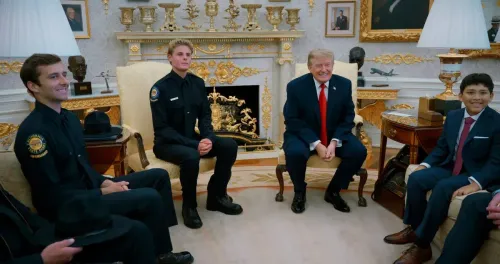
Stripping away the political framing, the post is also a genuine institutional thank-you to roughly 4 million first responders across the country — a workforce that spans municipal police departments, county sheriff's offices, state police, federal border agents, fire departments, and paramedic services. These workers operate at the intersection of every metric the White House cited: border crossings, drug seizures, violent crime response.
The recurring political pattern of pairing first-responder praise with domestic safety claims reflects how central this constituency has become to executive-branch messaging across party lines — a recognition that the public's trust in safety institutions often travels with its trust in the personnel who staff them.
With FY2027 funding debates ahead, the White House's salute to America's frontline workers doubles as a signal of where the administration intends to plant its flag going into the next budget season.
Point of View
Making it difficult to contest without appearing to criticise the honoured group. By invoking first responders as co-authors of border and crime achievements, the administration distributes credit while reinforcing a law-and-order identity ahead of FY2027 budget negotiations. The 'Made America Safe Again' framing signals that domestic security will remain a central legislative bargaining chip. For observers tracking U.S. governance, the post is as much a budget-season positioning move as it is a ceremonial salute.
NationPress
29 Oct 2026
Frequently Asked Questions
What did the White House say about the southern border in October 2026?
The White House claimed on October 28, 2026 that, together with first responders, it had achieved the 'most secure border in history' and significantly reduced fentanyl trafficking across the southern border, though these claims have not been independently verified.
Who are America's first responders?
America's first responders is a collective term covering roughly 4 million U.S. law enforcement officers, firefighters, emergency medical personnel, and border agents who respond to public safety incidents across the country.
What is 'Made America Safe Again'?
'Made America Safe Again' is a political slogan used in the White House's October 2026 post to describe claimed achievements in border security, fentanyl reduction, and lower crime rates, echoing earlier campaign-era safety messaging.
What is the history of US southern border security policy?
Federal border enforcement has been shaped by multiple laws and administrations, starting with the Secure Fence Act of 2006 , which authorised additional fencing, and expanded significantly during the 2017–2021 period with wall construction and stricter interior enforcement.
Why does the White House tie first-responder tributes to policy claims?
Pairing first-responder appreciation with domestic safety statistics is a recurring political strategy across administrations — it anchors abstract policy data to trusted, popular public servants, making the narrative more compelling to a broad audience.