Amit Shah Salutes CAPF Jawans on Every Front
Synopsis
Union Home Minister Amit Shah on 21 October 2026 saluted CAPF personnel for their round-the-clock deployment across elections, festivals and border security, reaffirming the Home Ministry's recognition of the five-force paramilitary umbrella's indispensable role in India's internal security architecture.
Key Takeaways
Union Home Minister Amit Shah posted a tribute to CAPF jawans on 21 October 2026 on X.
The CAPF comprises five forces: BSF, CRPF, CISF, ITBP and SSB , all under the Ministry of Home Affairs .
Shah highlighted three core CAPF duties: election security, festival security and border guarding .
CAPF units were deployed nationally during the 2019 and 2024 Lok Sabha elections .
The post continues a Home Ministry tradition of publicly acknowledging paramilitary contributions, intensified since the 2014–2019 MHA reorganisation.
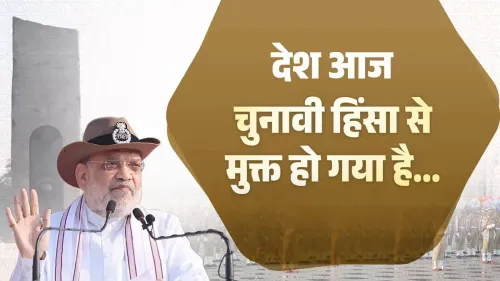
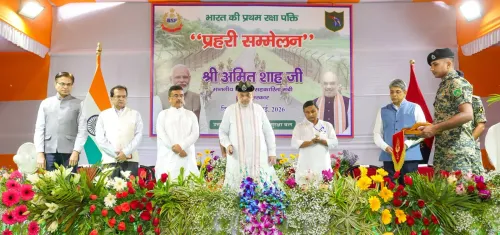
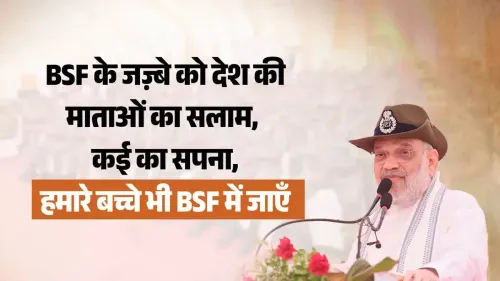
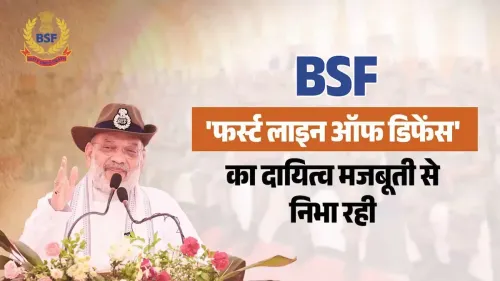
From the last polling booth to the most exposed border post, the men and women of India's Central Armed Police Forces stand watch — and on Wednesday, 21 October 2026, Union Home Minister Amit Shah made sure the country took a moment to recognise exactly that.
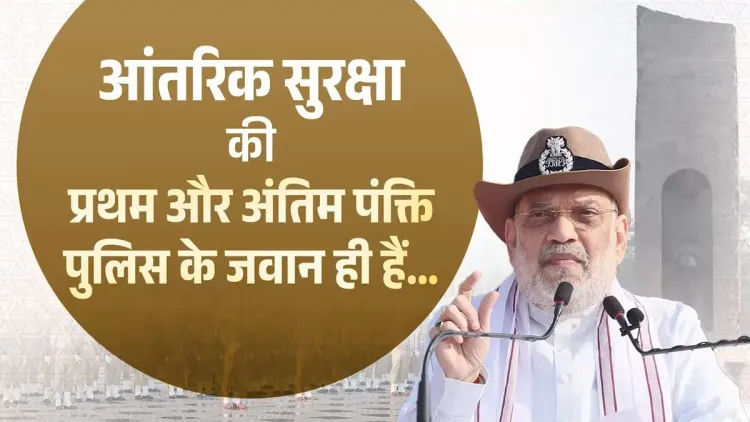
Posting on X, Shah wrote: 'Chunav ho, tyohar ho ya seema ki suraksha, CAPF ke jawan har morche par poori mustaidee se date rahkar desh ki aantarik suraksha ko mazboot banate hain' — 'Whether it is elections, festivals or border security, CAPF jawans remain deployed on every front with complete alertness, strengthening the country's internal security.'
The three-front force: elections, festivals, borders
The tribute captures the remarkable breadth of the Central Armed Police Forces mandate. Under the Ministry of Home Affairs, the CAPF umbrella brings together five distinct forces: the Border Security Force (BSF), Central Reserve Police Force (CRPF), Central Industrial Security Force (CISF), Indo-Tibetan Border Police (ITBP), and Sashastra Seema Bal (SSB). Together they guard thousands of kilometres of international frontier, secure critical infrastructure, and pour into states during elections and high-tension public events.
During the 2019 and 2024 Lok Sabha elections, CAPF units were deployed across constituencies in bulk — often the visible guarantors of free and fair polling in sensitive districts where local law enforcement alone cannot ensure order. The same units rotate to festival-season duties, managing crowd and communal security at large religious gatherings.
A pattern of public acknowledgement from the Home Ministry
Shah's post is consistent with a long-standing Home Ministry practice of publicly recognising paramilitary contributions — a practice that gained momentum during the 2014–2019 reorganisation of the ministry, which expanded and formalised CAPF roles in internal security architecture. Such acknowledgements carry institutional weight: for a force whose deployments are often thankless and logistically gruelling, a statement from the Union Home Minister serves as both morale and message.
The post also signals the ministry's continued emphasis on CAPF visibility — framing these forces not as background machinery but as frontline defenders of India's democratic and social fabric.
When the next round of state assembly elections is notified, or when a major festival cycle demands augmented security, the CAPF machinery will move again — quietly, methodically, and at scale. That is the point Shah is making.
Point of View
Multi-role force rather than a collection of specialised units. By publicly linking elections, festivals and borders in a single sentence, he underlines the argument that internal and external security are a continuum, not separate domains. This framing has been central to the BJP government's approach to the Home Ministry since 2014 and continues to shape how CAPF deployments are communicated and legitimised to the public. Watch for any follow-up security directives or deployment announcements as state election seasons or major festival windows approach.
NationPress
21 Oct 2026
Frequently Asked Questions
What is CAPF in India?
CAPF stands for Central Armed Police Forces, a group of five paramilitary organisations — BSF, CRPF, CISF, ITBP and SSB — under the Union Ministry of Home Affairs, responsible for border guarding, counter-insurgency and internal security.
Why did Amit Shah praise CAPF jawans?
Union Home Minister Amit Shah posted a tribute on 21 October 2026 recognising CAPF personnel for their continuous deployment across elections, festivals and border security duties.
What role does CAPF play in Indian elections?
CAPF units, particularly CRPF and BSF companies, are deployed across sensitive constituencies during national and state elections to ensure free and fair polling, a practice prominent in the 2019 and 2024 Lok Sabha polls.
Which forces are part of CAPF?
The five forces under CAPF are the Border Security Force (BSF), Central Reserve Police Force (CRPF), Central Industrial Security Force (CISF), Indo-Tibetan Border Police (ITBP) and Sashastra Seema Bal (SSB).
What ministry controls CAPF in India?
All CAPF forces are under the administrative control of the Union Ministry of Home Affairs, headed by Union Home Minister Amit Shah.