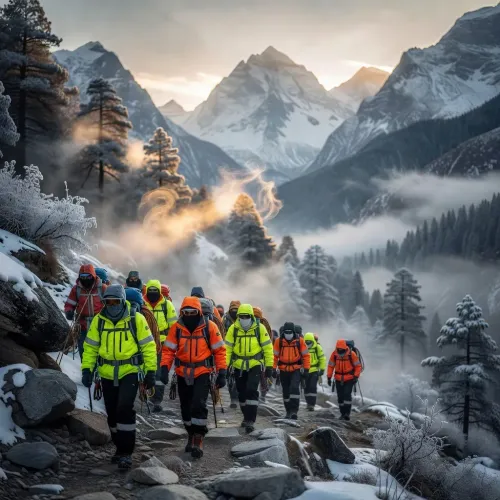
CM Dhami Salutes ITBP's Himveers on Raising Day
Synopsis
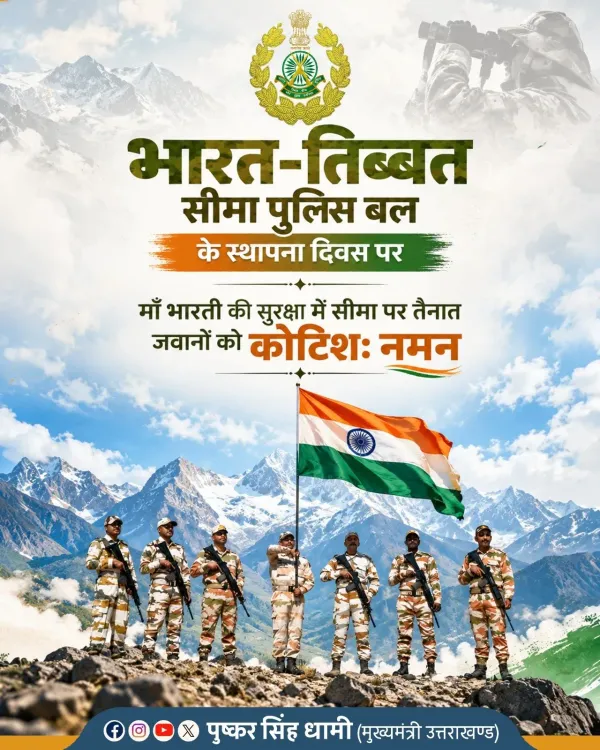
Uttarakhand Chief Minister Pushkar Singh Dhami honoured the Indo-Tibetan Border Police on its 64th Raising Day, saluting the Himveers for their courage and sacrifice guarding India's Himalayan border with China since 1962.
Key Takeaways
24 October 2026 marks the 64th Raising Day of the Indo-Tibetan Border Police (ITBP).
CM Pushkar Singh Dhami paid tribute to ITBP's Himveers for their valour, sacrifice, and dedication in extreme conditions.
The ITBP was established on 24 October 1962 in the wake of the Sino-Indian War to guard the India-China Himalayan border.
Uttarakhand shares a border with China, making the ITBP's role directly relevant to the state CM Dhami governs.
The force's mandate includes both border security and civilian welfare in remote high-altitude border villages.
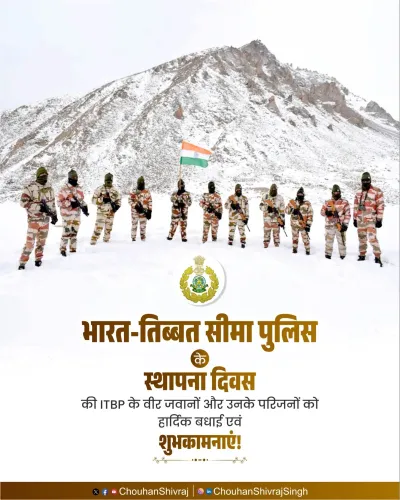
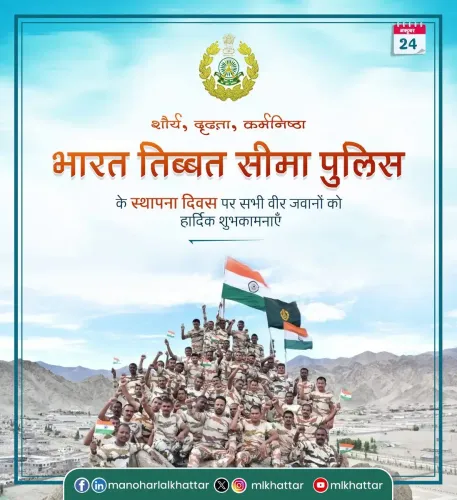
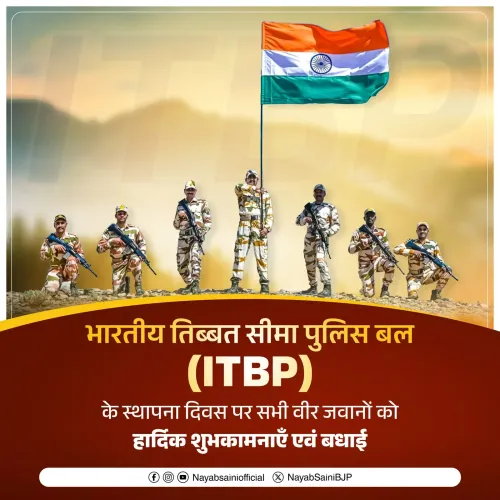
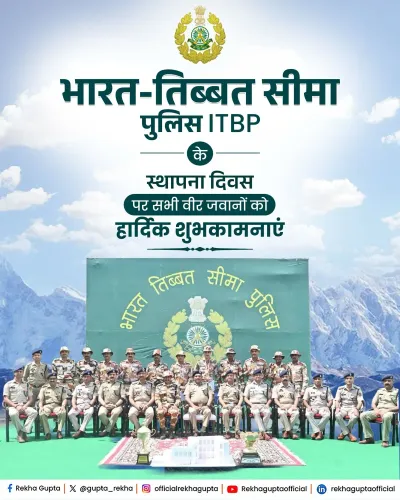
On the 64th Raising Day of the Indo-Tibetan Border Police, Uttarakhand Chief Minister Pushkar Singh Dhami paid tribute on Saturday, 24 October 2026 to the force's soldiers — the Himveers — who stand guard over India's most forbidding Himalayan frontier.
Posting on X in Hindi, CM Dhami wrote: 'kotishah naman' — a salute a thousandfold — to the 'indomitable courage, valour, prowess, sacrifice, and dedication' of the ITBP's soldiers who serve as 'unwavering sentinels in the protection of Mother India.' He added that their 'unbreakable devotion to national security even in the most adverse conditions is a source of inspiration for all of us.'
A Force Born From the 1962 Sino-Indian War
The Indo-Tibetan Border Police was raised on 24 October 1962, in direct response to the Sino-Indian conflict that shook the nation that same month. Tasked with guarding the 3,488-kilometre India-China border across the high-altitude Himalayas, the ITBP operates at elevations where oxygen is thin, temperatures plunge far below zero, and supply lines stretch to their limits. These are not postings — they are tests of human endurance.
For Uttarakhand — a state whose northern districts share a live border with China — the ITBP is not an abstract symbol of national security. The force's posts dot terrain that CM Dhami's own constituents know by name. His tribute carries the weight of geography.
Why Himalayan States Mark This Day With Particular Gravity
Tributes to the ITBP from political leaders are an established feature of India's public calendar, but chief ministers of Himalayan states — Uttarakhand, Himachal Pradesh, Sikkim, Arunachal Pradesh — invest them with a sharper edge. These are governments whose territories the ITBP directly protects, whose residents live closest to flashpoint terrain, and whose administrations coordinate with the force on border-village welfare and infrastructure.
The ITBP's mandate also extends beyond combat readiness: the force runs schools, conducts medical camps, and maintains connectivity in remote border villages — a civilian footprint that makes it a neighbour, not just a guardian, in these mountain communities.
Sixty-four years after its founding, the Himveers remain on the same ridgelines — older in service, undiminished in purpose. That is the story CM Dhami put on record today.
Point of View
Sensitive border with China, his salute to the ITBP carries a geographic specificity that purely Delhi-based tributes do not. It also reinforces the BJP's consistent messaging around border security and military honour — a political language that resonates strongly in Himalayan states where the armed forces are a visible, everyday presence. At a moment when India-China border management remains an active diplomatic and strategic concern, public affirmations from frontier-state chief ministers serve a quiet signalling function beyond ceremonial courtesy.
NationPress
24 Oct 2026
Frequently Asked Questions
When was the ITBP established and why?
The Indo-Tibetan Border Police was established on 24 October 1962 , in direct response to the Sino-Indian War of that year. It was created to guard India's high-altitude border with China across the Himalayas.
What did CM Dhami say about ITBP on its Raising Day 2026?
CM Pushkar Singh Dhami posted a tribute on X saluting the 'indomitable courage, valour, sacrifice, and dedication' of ITBP's Himveers, calling their devotion to national security an inspiration for all Indians.
What is the full form of ITBP?
ITBP stands for Indo-Tibetan Border Police , a Central Armed Police Force responsible for guarding India's border with China in the Himalayan region.
Why is ITBP called Himveers?
ITBP soldiers are called Himveers — meaning 'heroes of the Himalayas' — reflecting their deployment in extreme high-altitude conditions along the India-China border.
What is Uttarakhand's connection to the ITBP?
Uttarakhand shares a border with China, making it one of the key states where ITBP personnel are deployed. The force guards high-altitude passes and remote border villages across the state's northern districts.