CM Bhupendra Patel Marks World Polio Day, Urges Full Vaccination
Synopsis
On World Polio Day, Gujarat CM Bhupendra Patel called building a polio-free world humanity's highest priority, urged timely vaccination for every child, and highlighted India's landmark victory over polio achieved through mass campaigns and administrative commitment.
Key Takeaways
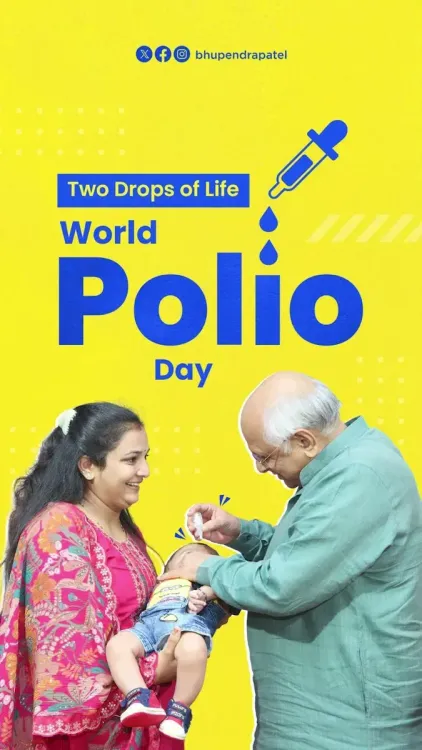
Gujarat CM Bhupendra Patel marked World Polio Day on 24 October 2026 with a Gujarati-language post calling polio eradication humanity's supreme priority.
India was certified polio-free by the WHO in 2014 , with the last wild poliovirus case recorded in 2011 .
The Pulse Polio Immunization Programme , launched in 1995 , drove nationwide supplementary vaccination rounds that underpinned India's eradication success.
Global polio cases have fallen by more than 99 percent since the Global Polio Eradication Initiative launched in 1988 .
CM Patel stressed that no newborn or child should miss routine immunization, warning that sustained coverage is essential to prevent reintroduction.
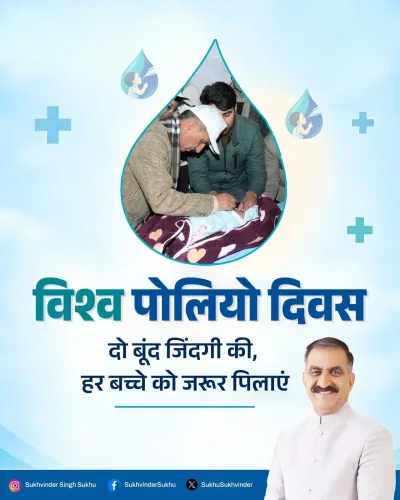
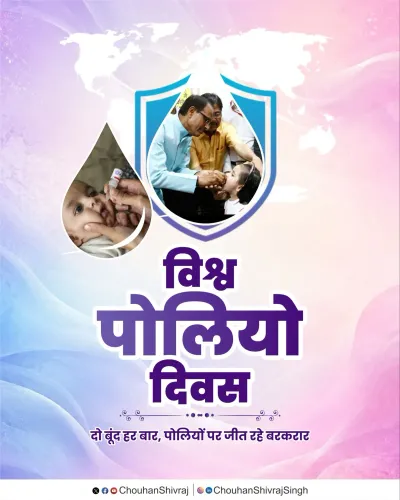
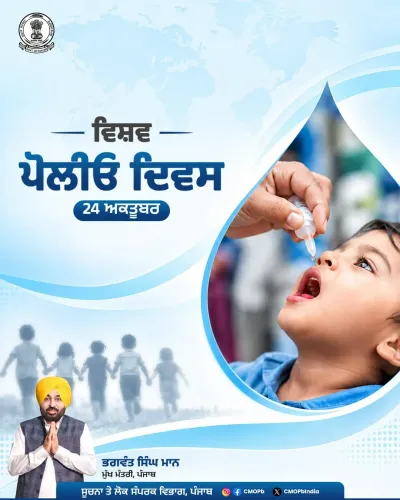
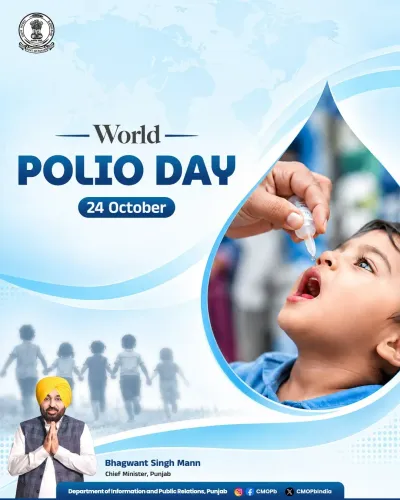
A disease that once paralysed hundreds of thousands of children every year is now a memory in India — and on World Polio Day, 24 October, Gujarat Chief Minister Bhupendra Patel used that hard-won victory as a springboard to call for renewed vigilance, urging every family to ensure their newborns and young children complete their full vaccination schedule.
Writing in Gujarati, CM Patel described building a polio-free world as 'સમસ્ત માનવજાતની સર્વોચ્ચ પ્રાથમિકતા' — 'the supreme priority of all humankind' — and framed World Polio Day as an occasion both to review the historic gains made against the disease and to renew a collective commitment to its complete global eradication. He credited India's victory over polio to three forces working in concert: mass public awareness, administrative determination, and wide-reaching vaccination campaigns.
India's Long Road to the 2014 WHO Certification
The story behind that victory is one of the most ambitious public-health mobilisations the world has ever seen. India launched the Pulse Polio Immunization Programme in 1995, rolling out nationwide supplementary vaccination rounds that reached even the most remote corners of the country. The last recorded wild poliovirus case occurred in 2011, and the World Health Organization certified India polio-free in 2014 — a moment that stunned global health experts who had long considered the country among the hardest to clear given its population density and healthcare access gaps.
That achievement did not happen in isolation. Since 1988, when the Global Polio Eradication Initiative was launched, global polio cases have been reduced by more than 99 percent. The strategy everywhere has been the same: repeated mass campaigns, strong routine immunization coverage, and relentless surveillance to catch reintroduction early.
Why 'Polio-Free' Is Not the Same as 'Polio-Safe'
CM Patel's message carries a warning tucked inside its celebration. Eradication is fragile. Regions that eliminate a disease can lose that status the moment vaccination coverage slips and the virus finds an unimmunized child. His call — that 'no child should be left out of routine immunization' — is precisely the kind of sustained administrative pressure that keeps cleared regions clear.
For Gujarat, and for India as a whole, the watch item is straightforward: routine immunization data for infants and any supplementary polio rounds that state health departments announce. Numbers matter. Coverage gaps, even small ones, are the cracks through which eliminated diseases return.
Twelve years of being polio-free is a milestone worth marking. Staying polio-free for the next twelve — and the twelve after that — is the harder, quieter work. CM Patel's message on World Polio Day 2026 is a reminder that the job is never truly finished until the last case on earth is gone.
Point of View
Which matters in states where coverage can vary sharply by district. The real test of such messaging is whether it translates into updated district-level immunization targets and supplementary round schedules.
NationPress
24 Oct 2026
Frequently Asked Questions
When was India declared polio-free?
The World Health Organization certified India polio-free in 2014 , three years after the last wild poliovirus case was recorded in 2011 .
What is World Polio Day and when is it observed?
World Polio Day is observed every year on 24 October to mark progress in the global fight against polio and to reinforce commitment to its complete eradication.
What was India's Pulse Polio Programme?
India launched the Pulse Polio Immunization Programme in 1995 , conducting repeated nationwide supplementary vaccination rounds that reached children across even remote areas and were central to eliminating the disease.
Why is polio vaccination still important if India is already polio-free?
Polio can be reintroduced if routine vaccination coverage drops, as the virus can travel from regions where it still circulates. Sustained high coverage among infants and young children is the only way to keep a polio-free country safe.
How much has global polio been reduced since 1988?
Since the Global Polio Eradication Initiative was launched in 1988 , global polio cases have been cut by more than 99 percent , largely through mass vaccination campaigns and surveillance.