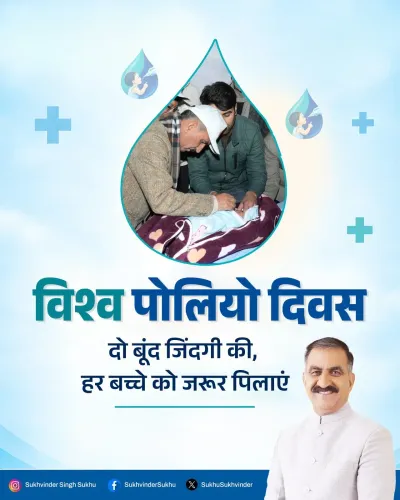
CM Sukhu Marks World Polio Day, Hails 2014 WHO Certification
Synopsis
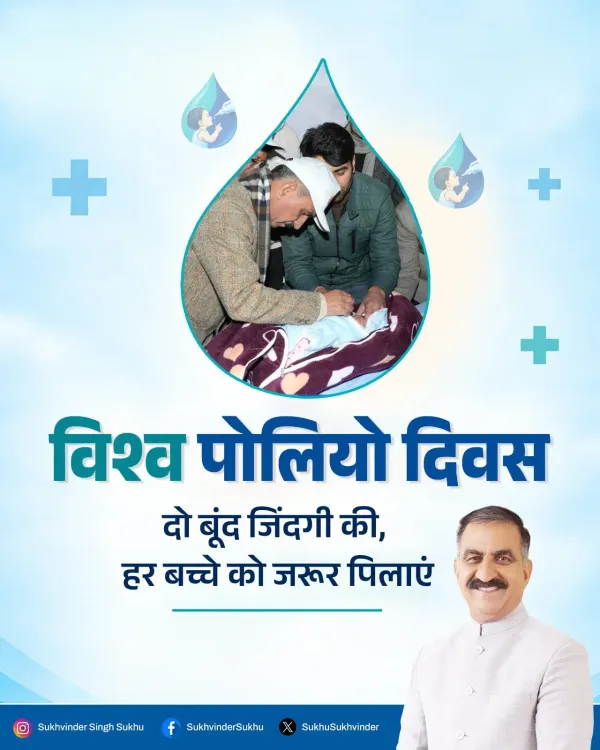
On World Polio Day 2026, HP CM Sukhvinder Singh Sukhu honoured the health workers behind India's polio-free certification by WHO on 27 March 2014, crediting the Congress-era Pulse Polio campaign as a landmark national achievement.
Key Takeaways
27 March 2014 : WHO officially declared India polio-free after three years of zero wild poliovirus cases.
The Pulse Polio Immunization Programme , launched in 1995 , was the backbone of India's eradication effort.
CM Sukhu credited the achievement to the Congress government's tenure at the Centre during the certification period.
India's last wild poliovirus case was recorded in January 2011 in West Bengal.
Environmental surveillance and border vaccination remain active to prevent re-importation of the virus.
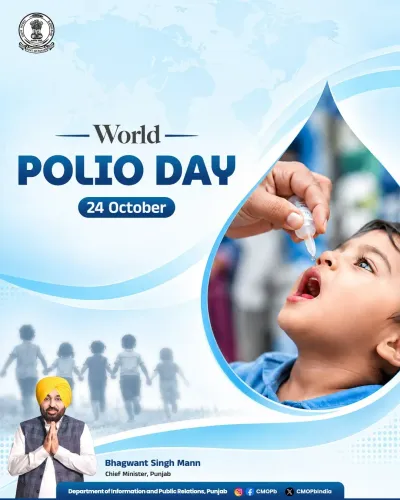
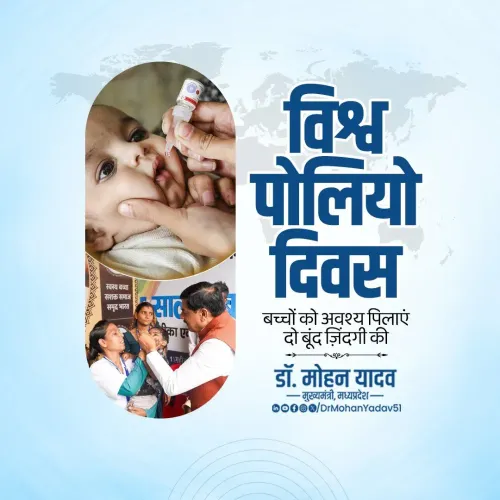
World Polio Day is observed annually on 24 October to sustain global awareness and action.
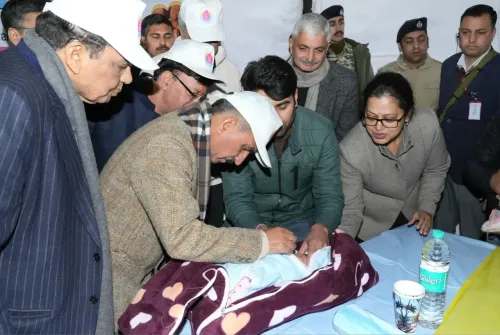
Twelve years after the World Health Organization erased India's name from the list of polio-endemic nations, the milestone still resonates — and on World Polio Day, 24 October 2026, Himachal Pradesh Chief Minister Sukhvinder Singh Sukhu invoked it to honour the frontline health workers who made it possible.
In a post in Hindi, CM Sukhu wrote: 'On 27 March 2014, WHO declared India polio-free. This achievement, accomplished during the Congress government's tenure, was a moment of pride for the country. On the occasion of World Polio Day today, I bow to the spirit of service of all the health workers and collaborators who contributed to making the polio eradication campaign a success.'
A decades-long campaign that finally crossed the finish line
India's road to the 2014 certification was anything but short. The Pulse Polio Immunization Programme, launched in 1995, anchored the effort — deploying repeated rounds of oral polio vaccine to children under five in a country of over a billion people. The campaign ran through scorching summers and monsoon floods, with health workers fanning out across urban slums, remote hill villages, and railway stations to reach every child.
The WHO's Global Polio Eradication Initiative provided the global framework, but the ground-level execution fell to lakhs of ASHA workers, auxiliary nurse midwives, anganwadi staff, and volunteers who turned immunisation into a door-to-door operation spanning decades. India's last detected case of wild poliovirus was reported in January 2011 in West Bengal — three years of clean surveillance followed before the WHO made it official.
Why the tribute still matters in 2026
Certification is not a permanent seal. Health authorities continue environmental surveillance at sewage sites and maintain border vaccination posts to guard against re-importation from regions where poliovirus still circulates. Every World Polio Day is, in part, a reminder that the effort is ongoing — vigilance is the price of staying polio-free.
CM Sukhu's tribute also carries a political undertone: by anchoring the achievement to the Congress government's tenure at the Centre, he frames a public-health victory within a broader narrative about the party's governance record. The post does not name opponents; it lets the achievement speak.
For the health workers saluted in the post, the recognition — however brief — is the point. The anonymous nurse who woke before dawn to run a booth, the volunteer who tracked down a hesitant family a second time: these are the people a Prime Time anchor would put in the chair if the cameras were rolling. Today, at least, a chief minister named them.
Point of View
He turns a ceremonial occasion into a soft credibility marker. The tribute to health workers adds moral weight and broadens appeal beyond party loyalists. More broadly, the post reflects a Congress pattern of reclaiming the 2004-2014 UPA era's social-sector record — from MGNREGA to polio eradication — as a counter-narrative to rivals' governance claims.
NationPress
24 Oct 2026
Frequently Asked Questions
When did WHO declare India polio-free?
The World Health Organization officially declared India polio-free on 27 March 2014 , after three consecutive years with no detected wild poliovirus cases.
What is the Pulse Polio Immunization Programme?
The Pulse Polio Immunization Programme is a national campaign launched in 1995 that administered oral polio vaccine to children under five through repeated immunisation rounds, and was central to eliminating polio in India.
What is World Polio Day and when is it observed?
World Polio Day is observed every year on 24 October to raise awareness about polio eradication efforts globally and to honour the health workers who drive vaccination campaigns.
Why does India still monitor for polio after being declared polio-free?
Even after certification, India maintains environmental surveillance at sewage sites and border vaccination posts to prevent re-importation of poliovirus from countries where wild transmission still occurs.
Which government was in power when India became polio-free in 2014?
The Indian National Congress -led UPA government was at the Centre when WHO certified India as polio-free on 27 March 2014 , a point CM Sukhu highlighted in his World Polio Day post.