Nadda hails Cabinet nod to PM VGSY with ₹7,395 cr outlay
Synopsis
The Union Cabinet cleared PM VGSY with a ₹7,395.55 crore outlay for 2026-31, aiming to strengthen grassroots governance across 2.55 lakh panchayats through digital capacity building and transparent planning, J. P. Nadda announced.
Key Takeaways
The Union Cabinet approved the Pradhan Mantri Viksit Gram Swaraj Yojana (PM VGSY) on 28 October 2026 .
The scheme carries a total outlay of ₹7,395.55 crore spanning 2026-27 to 2030-31 .
It targets more than 2.55 lakh panchayats and approximately 32 lakh elected representatives and stakeholders .
Key pillars include holistic planning, digital capacity building , and transparent resource management at the gram panchayat level.
PM VGSY succeeds the Rashtriya Gram Swaraj Abhiyan (2018) and extends the panchayat empowerment lineage rooted in the 73rd Constitutional Amendment of 1992 .
The scheme is positioned within the Viksit Bharat 2047 framework, linking local governance reform to national development targets.
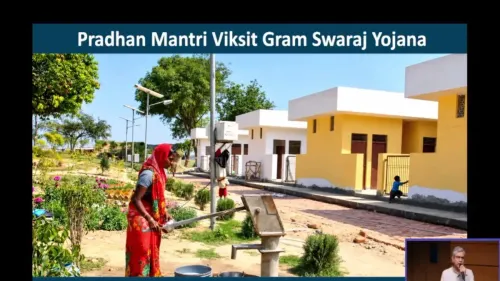
A ₹7,395.55 crore bet on India's villages just cleared the highest table in government. The Union Cabinet, meeting under Prime Minister Narendra Modi on Wednesday, 28 October 2026, approved the Pradhan Mantri Viksit Gram Swaraj Yojana (PM VGSY) — a five-year scheme running from 2026-27 to 2030-31 — designed to rewire grassroots governance from the ground up. Union Health Minister J. P. Nadda welcomed the decision in a post on X, calling it a pivotal step toward accountable, self-reliant villages.
What PM VGSY promises to 2.55 lakh panchayats
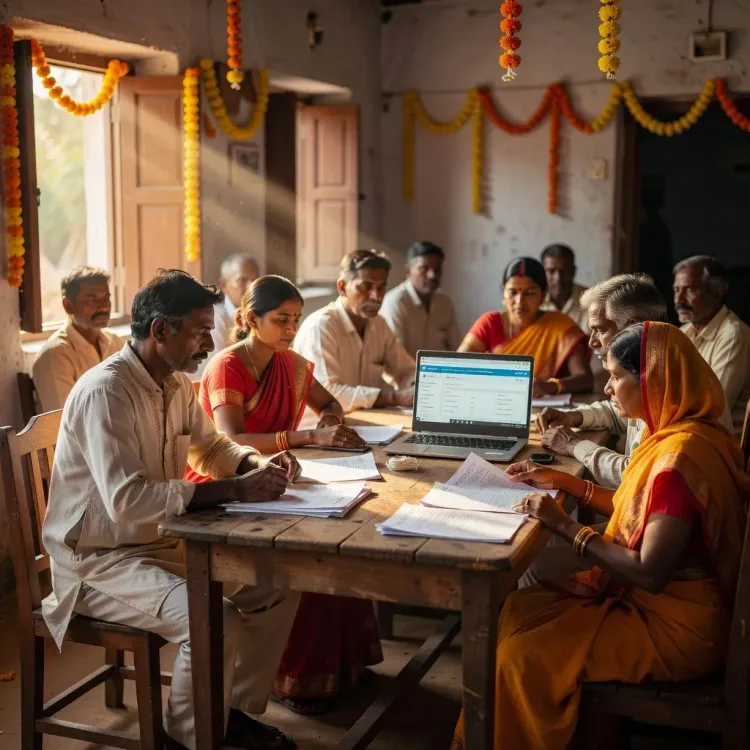
The scheme's declared ambition is sweeping: reach more than 2.55 lakh panchayats and train or support roughly 32 lakh elected representatives and stakeholders at the grassroots level. The three pillars are holistic planning, digital capacity building, and transparent resource management — a combination designed to close the long-standing gap between national policy design and village-level delivery.
Nadda framed the scheme's logic plainly in his post: 'rashtriya praathamikataaon ko sthaaniya aakankshaaon se jodna' — linking national priorities with local aspirations. The goal, in concrete terms, is a panchayat system that can hold itself accountable and generate self-reliant villages, not just receive central transfers.
A lineage rooted in the 73rd Amendment
India's panchayat empowerment story stretches back to the 73rd Constitutional Amendment of 1992, which formally embedded local self-government in the Constitution and gave elected gram panchayats a legal spine. For three decades, successive governments built on that foundation — the most recent predecessor being the Rashtriya Gram Swaraj Abhiyan, approved in 2018, which focused on capacity building and training for improved panchayat governance.
PM VGSY inherits that lineage and sharpens it. Where earlier schemes emphasised training alone, the new programme layers in digital tools for financial planning and resource tracking — a reflection of how significantly India's digital infrastructure has matured at the village level over the past decade.
The ₹7,395 crore question: rollout and accountability
Cabinet approval is the starting gun, not the finish line. The immediate watchpoints are the release of operational guidelines and state-wise fund allocations ahead of the 2026-27 rollout. With 32 lakh beneficiaries spread across a quarter-million panchayats, implementation fidelity — who gets trained, how quickly, and whether digital tools actually reach gram sabhas in aspirational districts — will determine whether the scheme's promise is redeemed.
Nadda closed his post with a signature of the Modi government's rural vocabulary: 'sashakt panchayatein, samriddh gaon aur viksit Bharat' — 'empowered panchayats, prosperous villages, and a developed India.' That phrase is not incidental; it slots PM VGSY squarely into the broader Viksit Bharat 2047 framework, anchoring local governance reform to India's centenary independence target.
When the smallest unit of democracy is equipped to plan, spend, and account for itself, the argument goes, the largest national ambitions finally have a fighting chance at the last mile.
Point of View
Consciously building on the 2018 Rashtriya Gram Swaraj Abhiyan while adding a digital-transparency layer that reflects the UPI-era village economy. The ₹7,395.55 crore outlay and the 32-lakh-beneficiary target signal that the Centre sees local government capacity — not just infrastructure spend — as the missing variable in rural development. Politically, the scheme feeds directly into the Viksit Bharat 2047 narrative, giving the ruling party a concrete, trackable rural governance story to run on across five assembly-election cycles. The real test, as with every panchayat scheme since 1992, will be whether state governments and district administrations translate central design into village-level accountability.
NationPress
28 Oct 2026
Frequently Asked Questions
What is PM Viksit Gram Swaraj Yojana (PM VGSY)?
PM VGSY is a central government scheme approved by the Union Cabinet on 28 October 2026 with an outlay of ₹7,395.55 crore for 2026-27 to 2030-31, aimed at strengthening grassroots governance through holistic planning, digital capacity building, and transparent resource management in panchayats.
How much money is allocated under PM VGSY?
The Union Cabinet approved a total outlay of ₹7,395.55 crore for PM VGSY covering the five-year period from 2026-27 to 2030-31.
How many panchayats will benefit from PM VGSY?
PM VGSY is designed to benefit more than 2.55 lakh panchayats and approximately 32 lakh elected representatives and stakeholders across India.
How is PM VGSY different from the Rashtriya Gram Swaraj Abhiyan?
The Rashtriya Gram Swaraj Abhiyan, approved in 2018, focused primarily on training and capacity building for panchayats. PM VGSY extends that framework by adding digital tools for financial planning, transparent resource management, and explicit linkage between village-level priorities and national development targets under the Viksit Bharat 2047 vision.
When will PM VGSY be implemented?
PM VGSY is set to run from 2026-27 to 2030-31. Operational guidelines and state-wise fund releases are expected ahead of the 2026-27 rollout following the Cabinet approval on 28 October 2026.