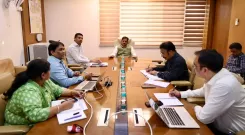
CM Sai Launches Infrastructure Mission-2026 for Chhattisgarh
Synopsis
Chhattisgarh CM Vishnu Deo Sai announced cabinet approval of the 'Mukhyamantri Adhosamrachna Mission-2026' on 28 October 2026, committing the state to quality-first, transparent and time-bound execution of infrastructure projects — a governance shift after the BJP's 2023 election victory.
Key Takeaways
Cabinet approval granted on 28 October 2026 for the Mukhyamantri Adhosamrachna Mission-2026 in Chhattisgarh.
The mission is built on four pillars: better planning, transparency, quality assurance, and time-bound execution .
CM Vishnu Deo Sai framed development as contingent on the long-term utility of infrastructure, not just the volume of new construction.
The initiative follows the BJP government's post-December 2023 election emphasis on governance reform in public works.
Detailed guidelines, selection criteria and budget allocations are yet to be released and are expected in upcoming cabinet meetings or the next state budget.
Quality over quantity — that is the governing principle behind Chhattisgarh Chief Minister Vishnu Deo Sai's latest policy push. On Wednesday, 28 October 2026, the state cabinet gave its approval to the 'Mukhyamantri Adhosamrachna Mission-2026' (Chief Minister Infrastructure Mission-2026), a framework designed to make every brick laid in the state count for the people who live there.
In his post on X, CM Sai laid out the philosophy in plain terms: 'Pradesh ka vikas kewal nayi adhosamrachnaaon ke nirmaan se nahin, balki unki gunavatta, upyogita aur deerghkaalik laabh se sunishchit hota hai' — 'The development of the state is not ensured by merely building new infrastructure, but by its quality, utility and long-term benefit.' It is a pointed departure from the older model of counting projects launched over projects delivered.
What the Mission Actually Mandates
The cabinet-approved mission targets four pillars: better planning, transparency, quality assurance, and time-bound execution of public works. Rather than announcing a fresh flood of construction contracts, the framework builds in accountability mechanisms aimed at ensuring that existing and new projects deliver measurable benefit to citizens. CM Sai stated the government's resolve that 'every construction in the state must strengthen public amenities, make citizens' lives easier, and lay a strong foundation for Chhattisgarh's bright future.'
The emphasis on 'deerghkaalik laabh' — long-term benefit — signals that the mission is as much about governance reform in public works as it is about physical construction. Detailed operational guidelines, selection criteria, and budget allocations are expected to emerge in subsequent cabinet meetings or the next state budget.
The Post-2023 Infrastructure Governance Turn
Since the BJP returned to power in Chhattisgarh after the December 2023 assembly elections, the state government has consistently flagged infrastructure quality and governance reform — not just spending velocity — as its headline priority. The new mission formalises that posture into a named, cabinet-endorsed programme.
The approach mirrors quality-focused public works frameworks adopted across several other BJP-governed states, and aligns with central government schemes that reward transparent, time-bound project delivery. For a state with significant mineral wealth and a large tribal population historically underserved by public infrastructure, the stakes of getting execution right are particularly high.
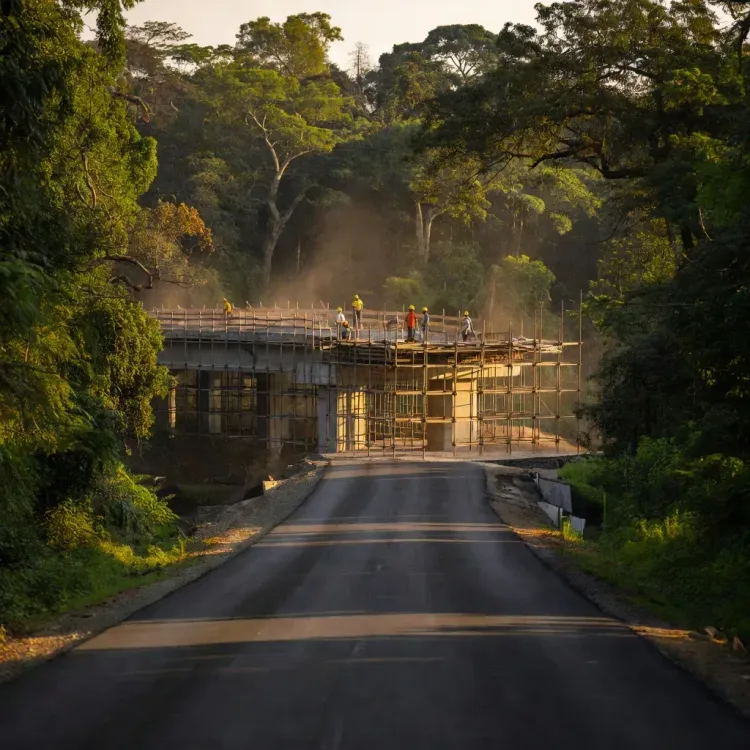
The real test will arrive when the mission's guidelines hit the ground — and when citizens in Chhattisgarh's districts start measuring new roads, bridges, and civic facilities not by ribbon-cutting ceremonies, but by whether they hold up a year later.
Point of View
Cabinet-backed infrastructure mission signals that CM Sai's government is trying to institutionalise accountability in public works — a perennial weak point for state governments across India. By centering quality and long-term utility rather than project count, the BJP in Chhattisgarh is repositioning itself ahead of the mid-term review period as a governance-focused administration, not merely a construction-spend government. The mission's credibility will ultimately rest on whether independent audits and citizen grievance mechanisms are embedded in its operational guidelines — details still awaited. If robustly designed, it could become a template; if it stays at the level of stated intent, it risks being another announcement cycle.
NationPress
28 Oct 2026
Frequently Asked Questions
What is the Mukhyamantri Adhosamrachna Mission-2026 in Chhattisgarh?
It is a state cabinet-approved initiative announced on 28 October 2026 by CM Vishnu Deo Sai , aimed at improving the quality, planning, transparency, and time-bound delivery of infrastructure projects across Chhattisgarh .
When was the Chief Minister Infrastructure Mission-2026 approved?
The Chhattisgarh cabinet approved the mission on Wednesday, 28 October 2026 , as announced by Chief Minister Vishnu Deo Sai on X.
What are the four pillars of the Chhattisgarh Infrastructure Mission-2026?
The mission focuses on four core pillars: better planning, transparency, quality assurance, and time-bound execution of public works and development projects in the state.
What is the budget or funding for the Mukhyamantri Adhosamrachna Mission-2026?
Specific funding size and budget allocations have not yet been publicly released. Detailed guidelines and financial provisions are expected to be announced in subsequent cabinet meetings or the next state budget.
Why did CM Vishnu Deo Sai launch an infrastructure mission in 2026?
After the BJP 's return to power in Chhattisgarh following the December 2023 assembly elections , the government identified infrastructure quality and governance reform as core priorities, and this mission formally institutionalises that commitment.