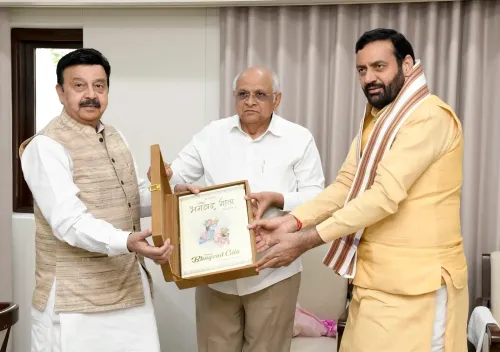
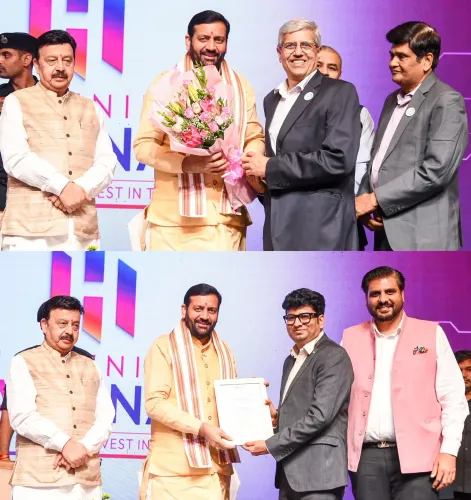
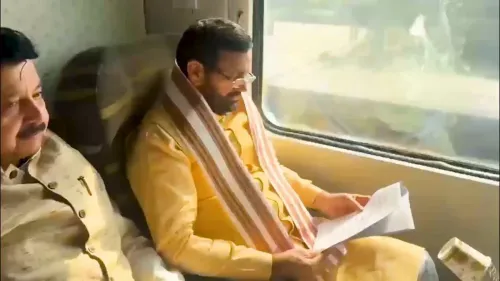
CM Nayab Saini Signs ₹50,000+ Cr MoUs on Gujarat Visit
Synopsis
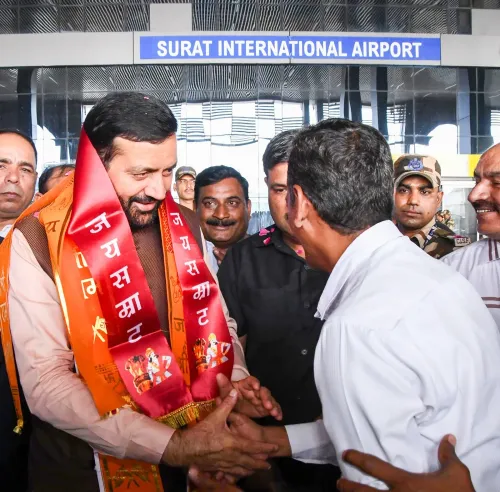
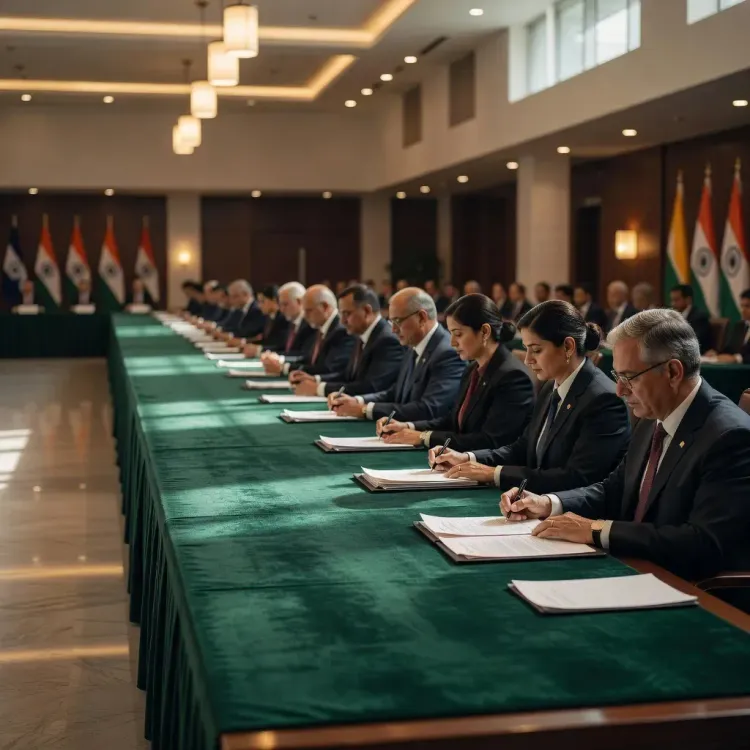
Haryana Chief Minister Nayab Saini signed investment MoUs exceeding ₹50,000 crore during a Gujarat visit on 28 October 2026, continuing the state's strategy of out-of-state investment promotion to diversify its industrial base beyond the NCR region.
Key Takeaways
Nayab Saini signed MoUs worth over ₹50,000 crore during his Gujarat visit on 28 October 2026 .
The deals were announced by the Chief Minister's Office of Haryana via official channels.
Haryana has run out-of-state investment roadshows since 2015 to diversify beyond the NCR industrial corridor.
Exact company names and sector breakdown were not disclosed in the official announcement.
MoU-to-project conversion over the next 12–24 months will determine actual economic impact and employment generation.
The visit reflects India's broader pattern of competitive federalism among states racing to attract domestic and foreign manufacturing capital.
Fifty thousand crore rupees. That is the headline number Haryana Chief Minister Nayab Saini carried home from Gujarat on Wednesday, 28 October 2026 — a clutch of investment agreements signed during a targeted business outreach visit that signals Chandigarh's intent to pull industrial capital well beyond the NCR corridor.
What the Gujarat visit delivered
The Chief Minister's Office of Haryana confirmed that CM Nayab Saini signed Memoranda of Understanding worth more than ₹50,000 crore during the Gujarat tour. While the precise sectoral breakdown and full list of investor partners remain to be disclosed by the state government, the aggregate figure places this among the larger single-visit investment commitments Haryana has announced in recent years. The CMO's post described the outcome as '₹50,000+ करोड़ के निवेश समझौतों (MoU) पर हस्ताक्षर' — 'signing of investment agreements (MoUs) worth over ₹50,000 crore.'
Haryana's competitive-federalism play
Nayab Saini, who took charge as Chief Minister in July 2024 succeeding Manohar Lal Khattar, has inherited a state that has run out-of-state investment roadshows since at least 2015 under successive BJP administrations. The logic is straightforward: Haryana's industrial base — historically strong in auto components, textiles and electronics — sits in the shadow of Delhi and needs proactive marketing to diversify its geography of investment. Gujarat, home to the biennial Vibrant Gujarat summit and one of India's most active investor ecosystems, is a natural hunting ground for such deal-making.
India's states have sharpened this competitive-federalism model over the past decade, racing to offer land banks, power guarantees and fiscal incentives to domestic and foreign manufacturers. A visit by a chief minister to personally anchor MoU signings is now a standard move in that playbook — and the optics of a ₹50,000 crore headline carry political weight at home even before a single factory breaks ground.
The gap between signature and shovel
The harder question — the one Haryana's state investment cell will face over the next 12 to 24 months — is conversion. Across Indian states, MoU-to-execution rates have historically been uneven; large announced commitments frequently take years to translate into actual capital expenditure, jobs, or operational units. Haryana has faced that challenge in previous investment cycles too, with sectors such as auto components and electronics seeing variable follow-through. Tracking how many of Wednesday's ₹50,000+ crore worth of pledges clear land acquisition, environmental clearance and financial closure will be the real test of this Gujarat swing.
For now, the number gives the Saini government a tangible talking point on industrial ambition — and puts investors, industry bodies and opposition benches on notice that the state is actively marketing itself on the national stage.
The factories these MoUs eventually build — or don't — will tell the real story.
Point of View
Distinct from the Khattar-era legacy and ahead of any future electoral reckoning on economic performance. Signing MoUs in Gujarat — rather than waiting for Delhi-proximate summits — signals a willingness to compete on the national investor circuit on BJP's most industrially credible home turf. However, the announcement's credibility will ultimately rest on conversion data: Haryana's previous investment cycles show that large headline numbers can mask slow-moving execution pipelines. If the state publishes transparent MoU-tracking dashboards in the months ahead, that alone would represent a governance upgrade worth watching.
NationPress
29 Oct 2026
Frequently Asked Questions
What did Haryana CM Nayab Saini achieve during his Gujarat visit?
Haryana CM Nayab Saini signed investment MoUs worth over ₹50,000 crore during his Gujarat visit on 28 October 2026, aiming to attract industrial capital to the state.
What sectors are covered by Haryana's ₹50,000 crore MoUs?
The exact sectoral breakdown has not been officially disclosed. Haryana's industrial base historically covers auto components, textiles and electronics, which have featured in previous investment drives.
Who is Nayab Saini and when did he become Haryana CM?
Nayab Saini is a BJP politician who became Chief Minister of Haryana in July 2024, succeeding Manohar Lal Khattar.
Are MoUs signed at investment summits guaranteed to result in actual projects?
No. Across Indian states, MoU-to-execution rates have historically been uneven. Actual capital expenditure and job creation depend on follow-up processes including land acquisition, environmental clearances and financial closure.
Why do Indian state governments visit Gujarat to sign investment deals?
Gujarat hosts the biennial Vibrant Gujarat summit and is one of India's most active investor ecosystems, making it a strategic destination for state governments seeking to attract domestic and foreign industrial investment.