CM Sai Reviews Chhattisgarh Infrastructure Mission, Eyes 2047 Vision
Synopsis
Chhattisgarh CM Vishnu Deo Sai reviewed the state's infrastructure mission on 13 October 2026, directing officials to frame a long-term road master plan and align all public works with the Anjor Vision 2047 framework targeting livability, trade growth, and job creation.
Key Takeaways
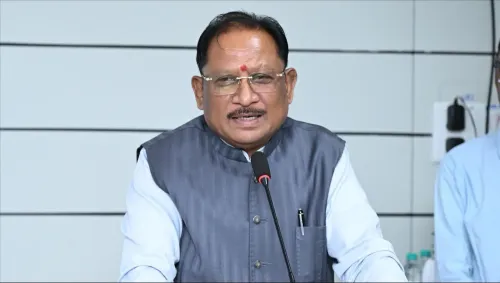
CM Vishnu Deo Sai chaired a high-level review of the Mukhyamantri Adhoasanrachna Mission at the state secretariat on 13 October 2026 .
Officials were directed to prepare a long-term road network master plan aligned with the state's future infrastructure needs.
Key mandates include completing construction within deadlines, enforcing quality standards, and ensuring regular maintenance.
The mission is framed under Anjor Vision 2047 , the state's centenary development roadmap.
Three stated goals: easing everyday life, accelerating trade and industry , and generating new employment opportunities.
A formal road master plan and related budget or tender announcements are expected in the coming months.
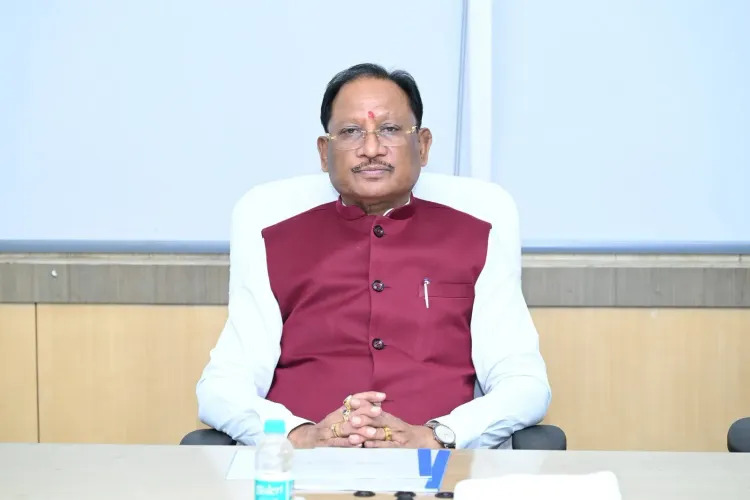
Roads that move goods, buildings that serve citizens, and a master plan built to last a generation — Chhattisgarh Chief Minister Vishnu Deo Sai chaired a high-level review meeting of the Mukhyamantri Adhoasanrachna Mission (Chief Minister Infrastructure Mission) at the state secretariat on Tuesday, 13 October 2026, laying out the state government's long-range blueprint for public infrastructure.
What the review meeting directed
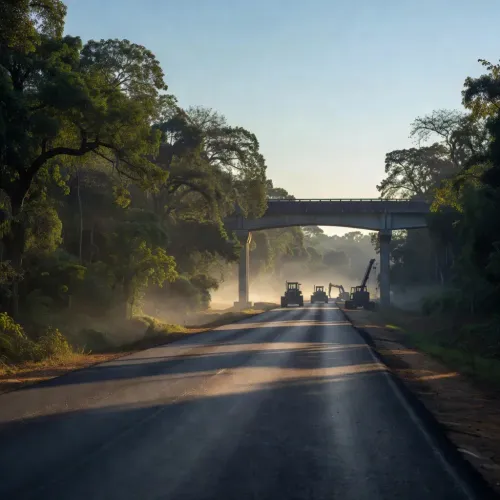
In the meeting, CM Sai instructed senior officials to prepare a long-term road network master plan for the state — one calibrated to bhavishy ki jaruratein (future needs) rather than just present demand. The directives covered three explicit priorities: completing ongoing construction projects within set deadlines, enforcing quality standards, and ensuring regular maintenance of existing infrastructure.
The CM also sought detailed briefings on planned development of roads, public buildings, and civic amenities across Chhattisgarh. The emphasis on maintenance is notable — it signals a shift from merely building new assets to keeping what already exists fit for purpose.
'Anjor Vision 2047' and the three-pillar promise
Framing the session, Sai invoked Anjor Vision 2047, the state's long-term development framework that charts a course to the centenary of independent India. The stated objective, in his own words, goes beyond laying asphalt and erecting walls: the goal is infrastructure that 'janjeevan sugam ho, vyapar-udhyog ko gati mile aur rozgar ke naye avsar srijit hon' — eases everyday life, accelerates trade and industry, and generates new employment opportunities.
That three-part formula — livability, economic velocity, jobs — mirrors the template BJP-governed states have increasingly adopted when pitching infrastructure spend as an economic multiplier rather than a welfare expenditure.
Chhattisgarh's infrastructure context
Chhattisgarh, carved out of Madhya Pradesh in 2000, built its road and public-works machinery largely from scratch after statehood. The state's geography — mineral-rich interiors, tribal hinterlands, and connectivity gaps in districts once affected by left-wing extremism — has made road access a development imperative, not merely a convenience. Improving road networks in such terrain directly unlocks economic activity and access to services for millions of residents.
CM Sai, who took office in December 2023 after the BJP's victory in the state assembly elections, has positioned infrastructure investment as a centrepiece of his administration's economic agenda. The Adhoasanrachna Mission is the institutional vehicle carrying that agenda forward.
What comes next: the master plan to watch
The meeting's most consequential output may not be immediately visible — it is the road-network master plan officials have now been asked to draft. Once released, that document will set the investment and tender pipeline for years. Watch for accompanying budget provisions and project announcements in the months ahead as the plan moves from directive to drawing board to ground.
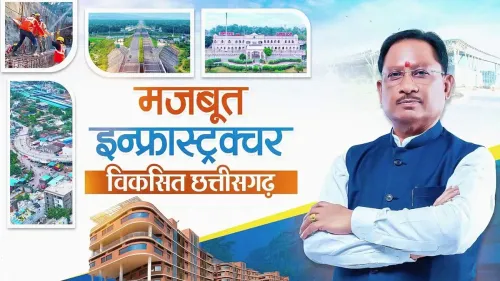
As Sai put it plainly: 'Majboot adhoasanrachna hi viksit Chhattisgarh ki majboot neenv hai' — strong infrastructure is the strong foundation of a developed Chhattisgarh. The question now is how quickly that foundation gets poured.
Point of View
Long-horizon investment pipeline — a governance shift that reflects the broader BJP playbook of tying state capital expenditure to the national 'Viksit Bharat 2047' narrative. By anchoring the session to Anjor Vision 2047, the administration is also staking an electoral-cycle-transcending claim on development continuity. The emphasis on maintenance alongside new construction is politically savvy: it addresses a persistent public grievance about roads deteriorating within months of inauguration. The real test will be whether the master plan that officials have been asked to prepare gets released with binding timelines and transparent procurement — or remains a policy statement.
NationPress
13 Oct 2026
Frequently Asked Questions
What is the Mukhyamantri Adhoasanrachna Mission in Chhattisgarh?
The Mukhyamantri Adhoasanrachna Mission is a Chhattisgarh state government initiative focused on the planned development of roads, public buildings, and civic amenities. CM Vishnu Deo Sai held a high-level review of the mission on 13 October 2026 to align it with the state's long-term infrastructure goals.
What is Anjor Vision 2047?
Anjor Vision 2047 is Chhattisgarh's long-term state development framework, designed to guide planning up to the centenary of India's independence in 2047. It encompasses sectors including infrastructure, trade, and employment generation.
What did CM Vishnu Deo Sai direct officials at the infrastructure review meeting?
CM Sai directed officials to prepare a long-term road network master plan, ensure all construction projects are completed within set deadlines, maintain quality standards, and carry out regular maintenance of existing infrastructure.
Why is road infrastructure important for Chhattisgarh?
Chhattisgarh's mineral-rich and geographically diverse terrain — including areas historically underserved by connectivity — makes road access a critical enabler of economic activity, trade, and public services for millions of residents across the state.
When did Vishnu Deo Sai become Chief Minister of Chhattisgarh?
Vishnu Deo Sai became Chief Minister of Chhattisgarh in December 2023, after the BJP won the state assembly elections held that year.