Tamil Nadu CM Vijay meets AP CM Chandrababu Naidu
Synopsis
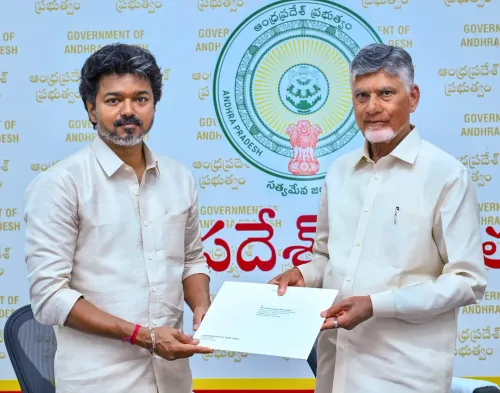
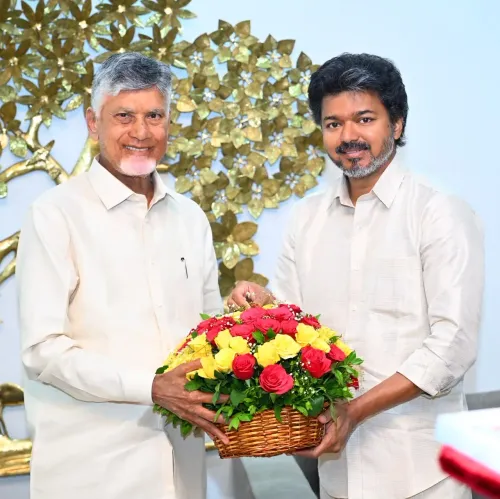
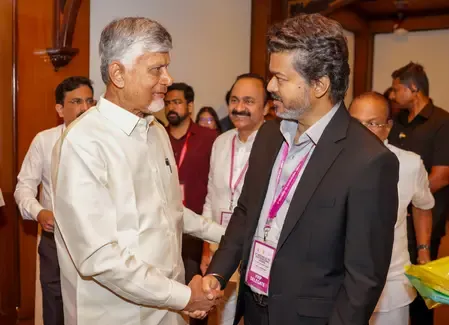
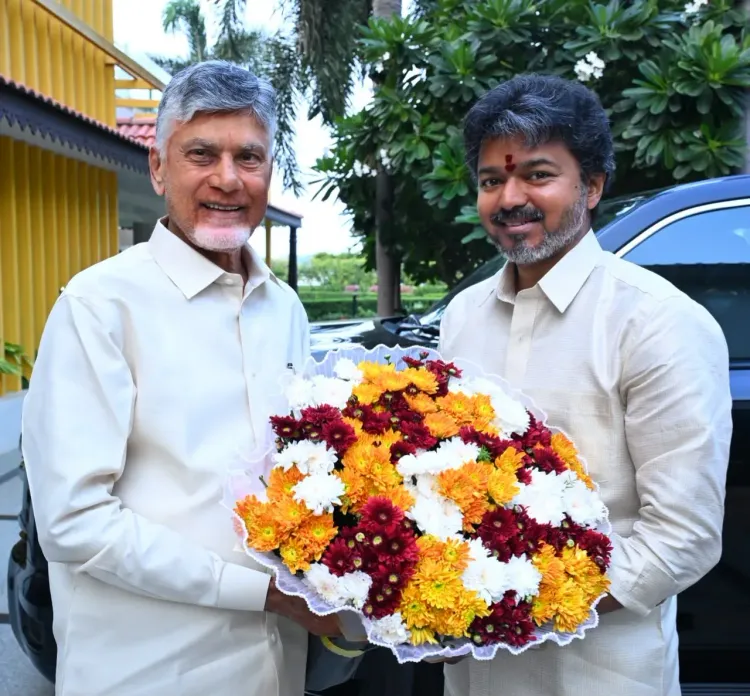
Tamil Nadu Chief Minister Joseph Vijay visited AP CM Chandrababu Naidu at his residence on 13 October 2026. Minister Nara Lokesh welcomed him; Ministers P. Narayana, Nimmala Ramanayudu, and MP Magunta Srinivasareddy also attended the inter-state meeting.
Key Takeaways
Tamil Nadu CM Sri Joseph Vijay paid an official visit to AP CM Sri Nara Chandrababu Naidu on 13 October 2026 .
Minister Nara Lokesh personally received the visiting chief minister at the CM's official residence.
The meeting was attended by Ministers P.
Narayana and Nimmala Ramanayudu , and MP Magunta Srinivasareddy .
No formal joint statement was released; both offices are expected to follow up on outcomes.
The visit reflects the routine but significant channel of inter-state diplomacy between two major southern neighbours.
Two chief ministers, one meeting — and a signal that the politics of south India's neighbourhood diplomacy is very much alive. The Chief Minister's Office of Andhra Pradesh announced on Tuesday, 13 October 2026 that Tamil Nadu Chief Minister Sri Joseph Vijay called on Andhra Pradesh Chief Minister Sri Nara Chandrababu Naidu at the latter's official residence in what marks a notable inter-state visit between two southern neighbours.
Lokesh opens the door, ministers flank the welcome
Minister Nara Lokesh, son of the Chief Minister and a minister in the Andhra Pradesh government, personally received the visiting Tamil Nadu chief minister at the residence — a gesture that underlines the protocol weight the AP administration attached to the occasion. The gathering was not a two-person affair: Minister Sri P. Narayana, Minister Sri Nimmala Ramanayudu, and MP Sri Magunta Srinivasareddy were also present, lending the meeting a broader political and administrative character.
Why southern neighbours keep the channel open
Andhra Pradesh and Tamil Nadu share a long border, intertwined river systems, and deep cultural ties — making periodic chief ministerial contact more than courtesy. The two states have historically navigated shared concerns around water-sharing, coastal connectivity, and cross-border infrastructure. Chandrababu Naidu, the Telugu Desam Party veteran and longtime champion of Andhra's development agenda, has consistently pursued bilateral engagement with neighbouring state leadership as part of his governance approach. A meeting of this kind, flanked by cabinet ministers and a sitting MP, typically signals that the agenda stretches beyond a handshake.
What the visit could set in motion
No joint statement or specific outcome was detailed in the official communication. Yet the presence of multiple ministers from key portfolios alongside a federal MP suggests the two sides may be laying groundwork for coordinated action on matters of mutual interest — whether infrastructure corridors, investment facilitation, or regional connectivity. The next indicator to watch: whether a follow-up communiqué or joint initiative emerges from either CM's office in the days ahead.
Southern India's two most populous Telugu- and Tamil-speaking states just made sure the line between their capitals stays open — and in Indian federal politics, that itself is the story.
Point of View
Cultivating warm ties with Tamil Nadu — a key southern economic anchor — fits the broader TDP governance strategy. The high-profile welcome extended by Nara Lokesh also signals a deliberate effort to project the next generation of AP leadership in a statesman-like role. Watch for whether this visit translates into a concrete bilateral initiative, which would mark it as consequential rather than merely cordial.
NationPress
13 Oct 2026
Frequently Asked Questions
Why did Tamil Nadu CM Joseph Vijay meet Andhra Pradesh CM Chandrababu Naidu?
Tamil Nadu CM Joseph Vijay visited AP CM Chandrababu Naidu at his official residence on 13 October 2026 for an inter-state bilateral meeting. No specific agenda was officially disclosed, but such visits typically cover shared regional concerns like infrastructure, water, and investment.
Who welcomed the Tamil Nadu CM at Chandrababu Naidu's residence?
Minister Nara Lokesh, son of CM Chandrababu Naidu and a minister in the AP government, personally received Tamil Nadu CM Joseph Vijay at the residence.
Which other officials attended the meeting between the two chief ministers?
Ministers P. Narayana and Nimmala Ramanayudu, along with MP Magunta Srinivasareddy, were also present at the meeting.
What is the significance of an AP–Tamil Nadu chief ministerial meeting?
Andhra Pradesh and Tamil Nadu share a border, river systems, and deep economic ties. Chief ministerial meetings between the two states often address inter-state coordination on infrastructure, water-sharing, and regional connectivity.
Who is Nara Lokesh and what role did he play?
Nara Lokesh is a minister in the Andhra Pradesh government and the son of CM Chandrababu Naidu. He extended a formal welcome to the visiting Tamil Nadu chief minister, reflecting the protocol significance the AP government attached to the visit.